The radio arrived in the village like a rumour. No one could remember exactly who had brought it, only that one evening it was there, sitting on a wooden stool in the corner of the schoolteacher’s house, its dark casing catching the last light of day. It was not large, nor ornate. Its knobs were worn smooth by other hands, its wire trailing like a thin, nervous vein toward a socket that rarely held power for long. Yet the villagers gathered around it as though it were a visiting holy relic, something that had travelled far and deserved reverence simply for having survived the journey.
Outside, the fields lay quiet. January had thinned the air, sharpened it. Dry leaves whispered against each other as if rehearsing secrets. Somewhere, a dog barked once and fell silent. The world seemed to be waiting.
The Unseen Witness stood at the back of the room, leaning against a peeling wall, breathing in the mixed smells of chalk dust, kerosene, damp wool, and boiled lentils. He had walked three miles to be here, careful to avoid the main road, his ears attuned to the sound of patrols and questions asked too often. He had been told only this, that tonight a voice would travel farther than any man could.
The schoolteacher adjusted the antenna, his fingers trembling slightly. Static burst and fell, burst again, a restless sea of sound. Someone coughed. Someone else muttered a prayer. The children were shushed gently, their eyes wide, their bodies stiff with the unfamiliar discipline of silence.
Then the voice came. At first, it was faint, almost swallowed by interference. A crackle, a rise, a fall. The teacher leaned closer, turning the knob with infinite care, as though tuning not a machine but a living thing. And then, suddenly, the voice found its footing. Clear. Steady. Unmistakable. “This is the Azad Hind Radio calling.”
The room inhaled as one. The Unseen Witness felt the words strike something deep inside him, not like thunder, but like the low, resonant toll of a bell heard across water. The voice carried a cadence that felt both intimate and distant, shaped by exile, sharpened by resolve. It did not shout. It did not plead. It spoke as though it knew it would be heard, eventually, somewhere.
Far away, in a city dressed in uniforms and urgency, Subhas Chandra Bose leaned toward a microphone. Berlin at night was restless. Even when the streets slept, engines murmured, boots echoed, radios hummed behind closed doors. The studio was small, utilitarian, its walls lined with dull panels meant to swallow sound. A single bulb glowed overhead, casting sharp shadows across Bose’s face. He sat upright, shoulders squared, his hands resting lightly on the desk, fingers close to notes he barely needed.
He listened to the silence before he spoke. The silence was never empty. It held the weight of distance, of oceans crossed and borders burned behind him. It held Calcutta’s narrow lanes, the smell of wet earth, the sound of tram bells fading into the night. It held the memory of letters written and not sent, of footsteps that had learned how to disappear.
When he spoke again, his voice was calm. He spoke of freedom, not as an abstract promise, but as a discipline. He spoke of courage that did not always wear the uniform of spectacle. He spoke of unity, of the necessity of shedding fear the way a traveller sheds excess baggage. He spoke to soldiers and students, to mothers and labourers, to anyone who had ever listened to the world and felt it could be otherwise.
The radio carried his words outward, flinging them across continents, letting them ride invisible currents through night skies and sleeping villages. They slipped past borders guarded by guns, past censorship and suspicion, entering homes quietly, like a trusted guest.
In the village, the children leaned forward. One of them reached out, fingertips brushing the wooden casing of the radio, as though trying to feel the voice through grain and polish. The schoolteacher closed his eyes, nodding slowly, his lips moving soundlessly in agreement. Outside, the wind shifted, carrying the scent of dry grass and distant smoke.
The Unseen Witness listened. He listened not only to the words, but to the sounds beneath them, the slight pause before a phrase, the measured breath between sentences. He understood instinctively that this voice had learned the cost of speaking too quickly. This was a voice shaped by listening.
Elsewhere, in a cramped room above a textile shop in Patna, a woman turned the radio down low and pressed her ear close. Her husband had been taken months earlier, questioned and released with warnings that lingered like bruises. She held the radio as if it were a sleeping child, afraid that too much noise might wake danger. The voice reached her anyway, threading itself into the spaces fear had not yet claimed.
In Lahore, a group of students gathered in a hostel room, one standing watch at the door while the others crowded around a borrowed set. They exchanged glances as the broadcast continued, their excitement tempered by caution. Outside, footsteps passed. Inside, something irreversible settled into place.
Back in Berlin, Bose removed his headphones briefly and flexed his fingers. The studio air smelled faintly of metal and warm dust. He glanced at the clock, then back to the microphone. Time was always an adversary, always running ahead, demanding urgency without chaos.
He spoke again. He spoke of the Indian National Army, of the need to prepare not just arms but minds. He spoke of dignity, of the refusal to be defined by the narratives imposed upon them. He spoke of a future that required participation, not waiting. Between sentences, he listened to the faint hum of the equipment, the soft click of relays. He imagined the sound travelling, imagined it finding ears in places he would never see. This imagining sustained him more than applause ever could.
The Unseen Witness felt his throat tighten. He did not cheer. He did not clap. He simply stood there, committing the moment to memory, knowing that no record would note his presence, that history would count listeners but never name them. He accepted this with a strange gratitude. Witnessing was enough.
Outside the schoolteacher’s house, a patrol passed. Boots scraped against the dirt road, voices low and bored. Inside, no one moved. The radio continued, its volume steady, its confidence almost audacious. The patrol lingered, then moved on, their footsteps dissolving into the larger night.
When the broadcast ended, the silence that followed was different. It was not empty. It was full. No one spoke for a long moment. The children looked at the adults, the adults at one another, each searching for language that felt adequate. Finally, the teacher reached out and turned the radio off. The room exhaled.
The Unseen Witness stepped outside. The sky was clear, stars sharp and indifferent. He listened to the village settle back into its familiar rhythms, the rustle of bedding, the murmur of late conversations, the distant creak of a cart wheel. Somewhere, a train whistle cut through the night, long and mournful.
In Berlin, Bose rose from his chair. He gathered his papers, his movements precise, economical. Outside the studio, aides waited, faces attentive, questions ready. He nodded briefly, acknowledging their presence without ceremony. There would be meetings, discussions, and strategies to refine. The work never paused.
Yet for a moment, alone in a narrow corridor, he allowed himself to listen inward. He imagined the radio sets glowing in darkened rooms, imagined faces leaning close, imagined the quiet courage required simply to hear him. This knowledge steadied him. It reminded him that while armies marched and governments plotted, another kind of force was moving, less visible, harder to extinguish. Sound.
The Unseen Witness walked home under a sky that seemed newly vast. He did not know what would come of the words he had heard. He did not know how many would answer the call, or what price would be paid. He only knew that something had been set in motion that could not be recalled.
In the days that followed, the radio would be discussed in hushed tones, its broadcasts anticipated, its timing memorised. People would adjust their routines, their courage growing incrementally, quietly. The Empire would note an increase in unrest, an edge in conversations, a restlessness difficult to quantify.
They would not hear the roar. Because the roar did not announce itself as such. It moved beneath the surface, in kitchens and classrooms, in train compartments and fields at dusk. It lived in pauses, in listening, in the decision to lean closer rather than turn away.
History would later write of speeches and strategies, of alliances forged and broken. It would not record the exact quality of that voice as it travelled through static, nor the way it felt to hear it for the first time. But the air remembered. And so did those who listened.
Other stories in this series of six stories sorrounding the life and time of Netaji Subhash Changda Bose:
1st Story: The Lost Letter To RSS: The monsoon had not yet slipped fully into the memory of summer…
2nd Story: Three Disguises To Berlin: The night Calcutta learned how to hold its breath was not…
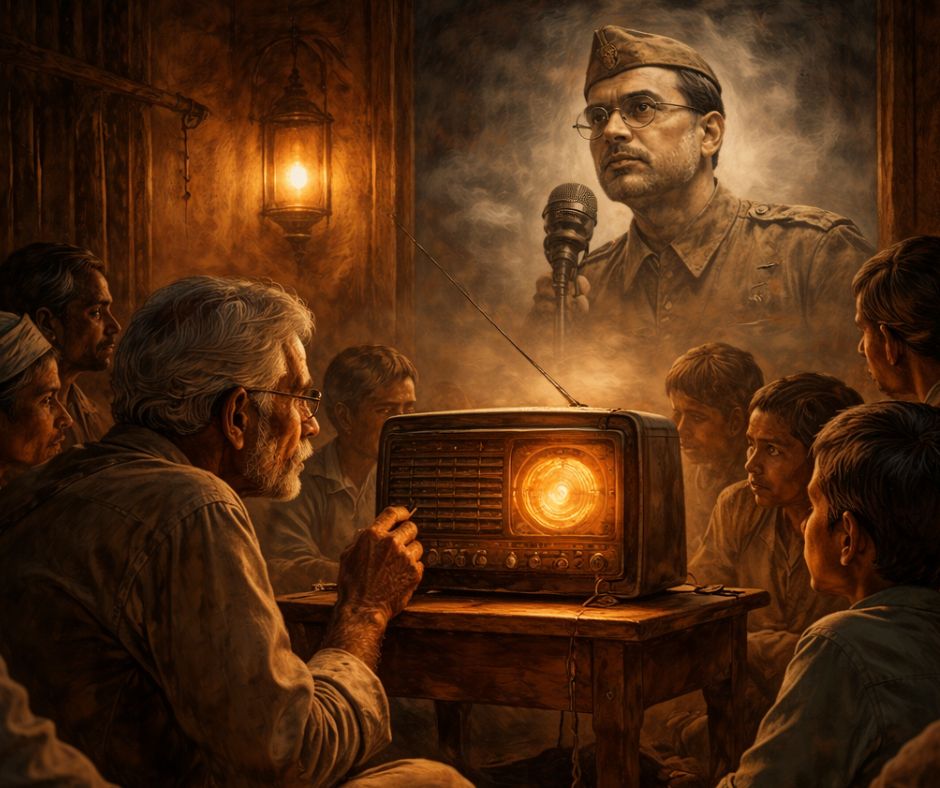
3rd Story: The Radio That Roared: The radio arrived in the village like a rumour. No one could …
4th Story: The Secret Voyage Aboard U-180: The sea does not announce itself when it decides to…
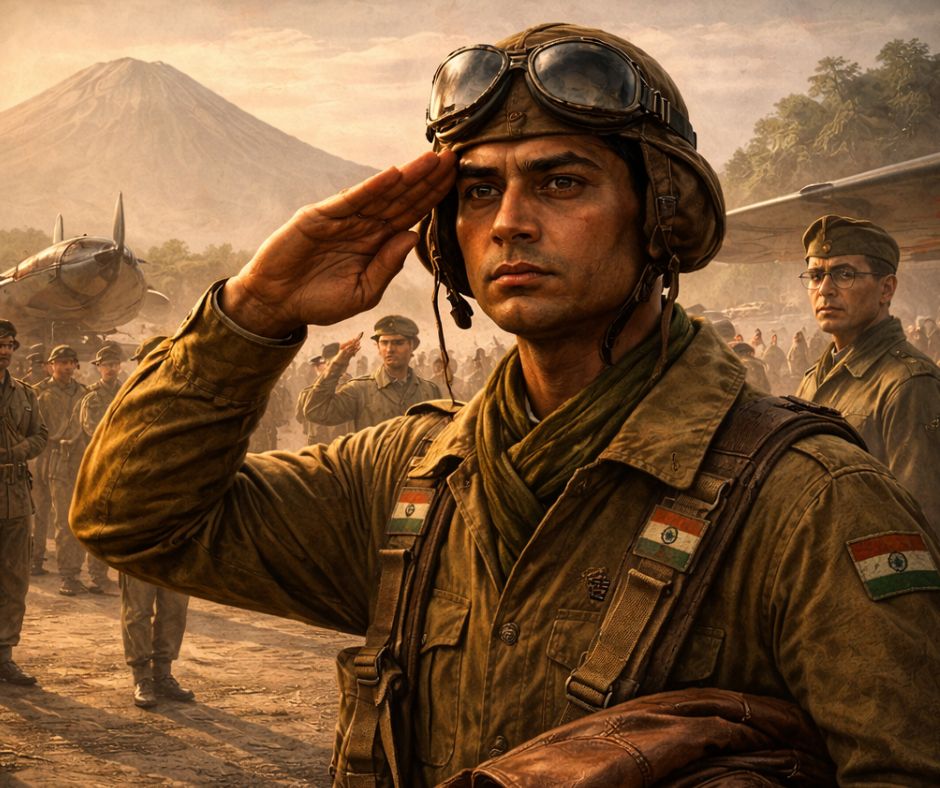
5th Story: The Tokyo Cadets: They arrived in Tokyo carrying the smell of salt, sweat, and old paper…

6th Story: The Shadow of Renko-ji: The temple does not face the street. It turns inward, as though…
Copyright © 2026 TRISHIKH DASGUPTA
This work of fictionised history, written by Trishikh Dasgupta, is the author’s sole intellectual property. It draws inspiration from documented broadcasts, lived silences, and the transnational echoes of Netaji Subhas Chandra Bose’s voice during the Indian freedom movement. While this story can be read and experienced independently, it also forms the third part of a six story narrative arc, where each piece stands alone yet together reveals a deeper, more layered understanding of Netaji’s evolving role, convictions, and the enduring mysteries that surround his journey. Some characters, incidents, places, and facts may be real, while others are imaginatively reinterpreted.
All rights are reserved. No part of this story may be reproduced, distributed, or transmitted in any form or by any means, including printing, photocopying, recording, or other electronic or mechanical methods, without the prior written permission of the author, except in the case of brief quotations embodied in critical reviews and certain other noncommercial uses permitted by copyright law. For permission requests, send an email to the author at trishikh@gmail.com or get in touch with Trishikh on the CONTACT page of this website.
ABOUT THE AUTHOR
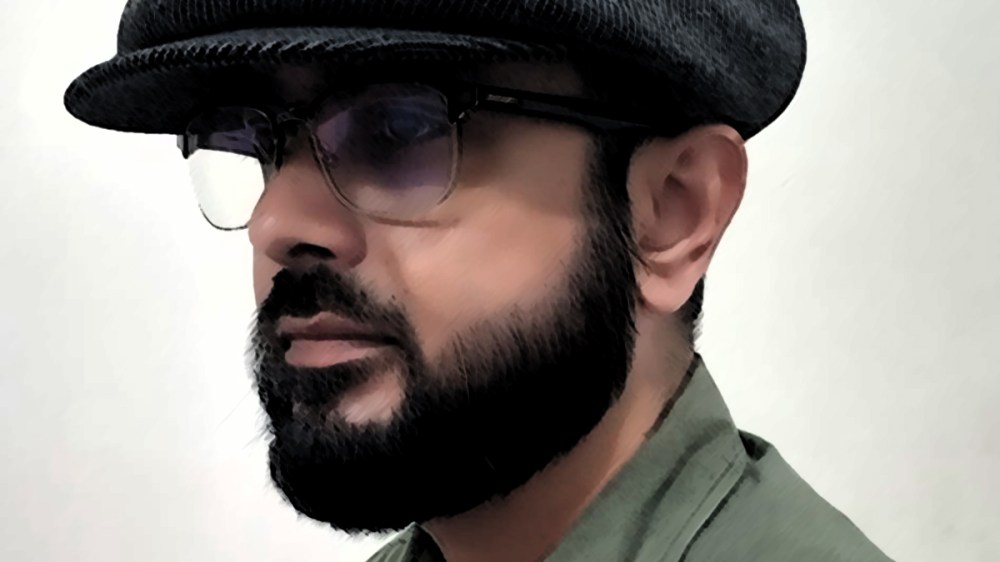
Trishikh Dasgupta
Adventurer, philosopher, writer, painter, photographer, craftsman, innovator, or just a momentary speck in the universe flickering to leave behind a footprint on the sands of time... READ MORE
These stories are Free and if you have found something here that stayed with you, some of my other books (collection of short stories, novels, and more) are now available in print and digital editions. They gather many unique journeys, quieter questions, and stories that continue beyond this page.

You may also like to read my1st Published novel now available on Kindle and Paperback versions.
 Weekend Stories by Trishikh
🙏
Aum Shanti
LikeLiked by 4 people
Thank you so much.
LikeLiked by 2 people
Interesting
LikeLiked by 3 people
Thank you.
LikeLike
I have ordered your book, Trishikh, and it will arrive tomorrow.
Joanna
LikeLiked by 3 people
Wow, that is such an awesome news for me. Where are you based? I want to knwo this because the book is priced differently for different countries, the kindle version is ofcourse much cheaper, whereas the paperpback can be much costlier for some countries. It is the cheapest is US, as it is printed in the US.
LikeLiked by 1 person
I live in England, but the cost doesn’t matter as it is a paperback, and it looks very interesting. I wondered about your family as you write so knowledgeably about everything.
Joanna
LikeLiked by 2 people
Okay great. Soon I plan to print collections of my short stories. Till now I have written around 100 short stories, so I would perhaps print collections of 20 to 25 stories each. You will come to know once they are printed.
LikeLiked by 1 person
Thank you, Trishikh!
Joanna
LikeLiked by 1 person
Hauntingly beautiful!
LikeLiked by 1 person
Wonderful writing!
LikeLiked by 2 people
Thank you so much Vanya. So glad that you enjoyed the story so much.
LikeLiked by 2 people
This is quietly powerful and beautifully restrained. The way you let history breathe through small, human moments—the hush around a radio, a held breath, a listener who leaves no name—makes the impact feel intimate rather than grand. Your prose carries the weight of courage without ever announcing it, and the idea of sound as an unstoppable force is especially haunting. A deeply evocative piece that honors Netaji not just through action, but through listening, memory, and unseen resolve.
LikeLiked by 3 people
Dear Verma’ji, thank you, as always, for such a generous and attentive reading. I am deeply moved by how you felt the courage in the hush rather than in the announcement, and by your reading of sound as something that moves irresistibly without spectacle. That idea of honouring Netaji through listening and memory, through unnamed resolve, was central to this piece, and I am grateful that it reached you in that quiet, human way.
LikeLiked by 2 people
Thank you for such a moving response. Your words affirm something I felt deeply while reading—that the true power of this piece lies in its restraint, in the courage that lives quietly and travels without proclamation. You honoured Netaji not by amplifying the noise of history, but by listening to its undercurrents, where resolve takes shape in ordinary hearts
LikeLiked by 1 person
Thank you Verma’ji.
LikeLiked by 1 person
This is quietly powerful. The stillness, the listening, the unnamed witnesses… all of it makes history feel intimate rather than loud. A beautiful reminder that change often begins not with a roar, but with people leaning closer and choosing to listen.🙏🏻💛
LikeLiked by 3 people
Thank you so much for reading it with such sensitivity. I am glad the stillness and the unnamed witnesses spoke to you, because this story was meant to remind us that history often shifts in those quiet moments, when people lean closer and choose to listen. I am grateful that you felt that intimacy and carried it with you.
LikeLiked by 2 people
The story makes listening feel like an act of courage, and I’m grateful to have leaned in and shared that quiet moment with it. 🙏🏻💛
LikeLiked by 1 person
Thank you so much.
LikeLiked by 1 person
🙏🏻💛
LikeLiked by 1 person
Your stories always take one back in time- to the exact place and it felt as though I was witnessing everything here. Those were the toughest times we experienced as a nation and it is nice to read again the same through your posts. About courage, sacrifice and unity of the people of India. And the brave men and women who guided them towards victory. Then other interesting things neatly weaved by you. Nice really..
LikeLiked by 4 people
Dear Savitha, I am so glad that my stories feel so real to you, that they are able to transport you to a time and place in history. This makes writing these stories so worthwhile.
LikeLike
I could almost sense the urgency, the secrecy, the pressure of the moment when the radio cackled. It was like livewire.
You have not only related but lived history.
Did I tell you I had the privilege of knowing a member of my extended family who was a soldier in Azad Hind Fauj?
She was a lady. One day I must write about her.
LikeLiked by 3 people
Thank you for liking the story so much. I am so glad that you could really feel the moments described.
A woman soldier in the Azad Hind Fauj, that is the kind of story that you should certainly say.
LikeLiked by 1 person
Is your book available in India ?
LikeLiked by 2 people
Well the book is printed in the US, so it’s the cheapest in the US.
The good news is that the book is available globally, so yes anyone can buy it in India from Amazon.com (not amazon.in).
But, yes there’s a but, which is a not so good news. Since it is printed in the US, for buying it in India one has to pay a high Shipping charge.
You can buy it at: https://a.co/d/ftciGhK
LikeLiked by 1 person
The link you’ve given, though of amazon.com, but shows prince in US currency and paperback is not available. I am not a Kindle Unlimited subscriber.
LikeLiked by 1 person
Yes it will show the price in dollars. $3 for Kindle ebook and $6 for Paperback. However for buying from Amazon.com you have to add your Amazon.com (which mainly caters to the IS market) account to a Debit or Credit card that is international transaction enabled. Then though the price is shown in dollars, it will be charged in Rupees.
I bought a copy for myself right from here in India from this link from the Amazon.com website. It worked. It should work for you as well. I think you have to figure it out a bit.
But it’s very costly in India the conversion comes to around $ 6 or around Rs.545 (price of book) + $16 or around Rs.1,553 (shipping and import charges). The price will vary depending on the conversion rate on the day of purchase. So for me the total cost came to Rs. 2,107/-.
LikeLiked by 1 person
The Kindle version you can buy for Rs. 242/-. Even if you don’t have a kindle device, you can download the Kindle app on your mobile from your Play store, and read the book.
Kindle Unlimited customers can read this book for free.
LikeLiked by 1 person
Sending words out into the world, hoping they’ll be heard, that somewhere somehow they’ll make a difference to someone we’ve never met . . . sounds familiar, Trishikh🙂
LikeLiked by 2 people
Nicely done!
LikeLiked by 2 people
Thank you so much.
LikeLike
These growing moments of solidarity are so important. Today is one such day in Minneapolis, where I am from originally.
LikeLiked by 1 person
Dear Rebecca,thank you, for sharing this. It means a great deal to know the story could resonate with a living moment of solidarity from where you are, because these quiet acts of listening and standing together are never confined to one time or place. They keep finding new ground, new voices, and new courage, and I am grateful you brought that connection into this space.
LikeLiked by 1 person
Your stories have prompted me to read a bit about Mr Bose. He was a very interesting fellow
LikeLiked by 2 people
Thank you for sharing that. I am really glad the story nudged you toward reading more about Netaji, because he remains one of the most complex and compelling figures of our history. If the story could spark curiosity beyond its own pages, then it has already done something meaningful.
LikeLiked by 2 people
He was a true patriot.
LikeLiked by 2 people
Indeed, he was. What moved me most while writing this was not only his patriotism, but the way he carried it with discipline, courage, and a deep sense of responsibility. If the story could reflect even a fraction of that spirit, then it has found its purpose.
LikeLiked by 2 people
Dear Trishikh,
What stayed with me most was not the voice itself, but the way you wrote listening as a shared discipline — something practiced quietly, collectively, and at real personal cost. The radio here is not a symbol of announcement, but of risk: the risk of leaning closer, of allowing sound to enter a life already shaped by fear and restraint.
I was especially struck by how the Unseen Witness no longer carries or follows, but simply remembers. In that shift, listening becomes a form of responsibility rather than response. The words do not demand action; they ask for readiness.
This piece feels like a continuation of the earlier silences — the unsent letter, the vanished body — now finding resonance without spectacle. History does not roar here because it does not need to. It settles, quietly, in those who choose to hear.
Thank you for trusting listening to do such careful work.
LikeLiked by 4 people
Dear Livora, thank you for such a deeply attentive and generous reading, which you always do. Your sense of listening as a shared discipline, practiced quietly and at real personal cost, goes to the heart of what I was trying to hold in this piece. I am especially moved by your observation that the Unseen Witness now simply remembers, because that shift from carrying to holding felt like a natural evolution of responsibility rather than response. If the story could allow history to settle without spectacle, finding resonance in readiness rather than demand, then it has done the careful work it set out to do. I am truly grateful for the way you listened to it.
LikeLiked by 2 people
Thank you for another wonderful story and history lesson. I love the images of the shared intimacy of those gathered round the radio with hope in their hearts
LikeLiked by 2 people
Dear Katelon, thank you for reading it with such warmth. I am glad the shared intimacy around the radio stayed with you, because that closeness, that quiet hope held together, felt like the true centre of the story for me. If it could offer both a sense of history and a moment of human connection, then it has done what I hoped it might.
LikeLiked by 1 person
Thank you for the continuation of fine story telling. Your story also touches on the issues of contemporary world affairs, where we once again faced with the destructive forces of neo-imperialism, the curbing of democratic and individual rights of nations.
LikeLiked by 3 people
Thank you for reading it so thoughtfully and for drawing that connection. I am glad the story could speak not only to its own moment, but also to the patterns we continue to face in the contemporary world. History has a way of returning in new forms, and perhaps listening closely to past struggles can help us recognise, and question, the forces that seek to curtail freedom and dignity today.
LikeLiked by 2 people
https://www.youtube.com/watch?v=EAndlx6CprI , Trishikh, So young.
LikeLiked by 2 people
Ha ha, you were very close, however this is not me, it’s someone I know very well. He is much younger to me, and his name is Rohit Pal. He is the son of one of my mentors.
LikeLiked by 2 people
I was pleasantly surprised and delighted to see your photos on YouTube, which is why I featured them on my homepage. If you have any videos (from your country) worth recommending, or any creative videos, please let me know.
LikeLiked by 1 person
I will share some worthy videos, if I come across them.
LikeLiked by 1 person
Good, waiting for your video.
LikeLiked by 1 person
Nature of human conflicts don’t appear to change, technologies however do. Your story bears testimony to the times when Radio made and unmade history.
LikeLiked by 1 person
Dear Kajoli, you are very right. I remember a bit of the good old radio days. They were indeed very special.
LikeLike
This passage beautifully captures the magic of small wonders—the radio becomes more than an object; it’s a bridge between worlds, carrying voices, stories, and anticipation into the quiet of the village. Truly enchanting. 🌙✨
LikeLiked by 1 person
Thank you, Safia, for such a lovely reading. I am glad you felt that sense of the radio as a bridge rather than just an object, because for me it carried not only a voice, but anticipation, risk, and quiet courage into those shared moments. If the passage felt enchanting, it is because readers like you are willing to lean into those small wonders and listen closely.
LikeLike
You accomplished, again, to draw me into the atmosphere of anticipation, growing excitement, but also weariness because of the secrecy. I am fascinated by Bose’s, and therewith India’s history.
LikeLiked by 2 people
Your fascination towards Netaji Subhash Chandra Bose and India is highly admirable, and if my stories have aided in fuelling this passion, then writing them has achieved one of its purposes.
I am so glad that you liked the atmosphere that I created around my story.
I always treasure your appreciation and encouragement. They have played their part in helping me write these stories over the years.
LikeLiked by 1 person
The British empire acknowleged that they had to leave India because of Subhash Chandra Bose. They knew that it was impossible to put out the fire that Bose ignited in the hearts.
LikeLiked by 2 people
Thank you.
LikeLiked by 1 person
You are most welcome.
LikeLiked by 1 person