The temple does not face the street. It turns inward, as though whatever it guards is not meant to be seen in passing. Renko-ji stands quietly in Tokyo, its wooden bones darkened by years of incense and weather, its steps worn smooth by feet that have arrived carrying questions heavier than luggage. There is no grand announcement at the gate, no insistence on reverence. The bell waits. The courtyard listens.
The Unseen Witness arrived in the late afternoon. He was older now, his gait slower, his breath measured not by urgency but by care. He carried no documents, no letters, no proof of who he had once been. Only memory, folded and refolded until the creases no longer showed.
The air smelled of moss and smoke. Somewhere within the temple grounds, a bell rang, low and unhurried, its sound expanding outward, thinning as it travelled, settling into places the ear could not fully follow. The Witness paused, allowing the sound to pass through him, as he had learned to do long ago.
He had not planned this visit. Some journeys announce themselves in advance, marked by dates and reasons. This one had arrived quietly, like a thought that refuses to be dismissed. He had found himself standing at the gate without quite knowing when the decision had been made.
Inside the temple, a monk swept fallen leaves into a neat pile. The motion was practised, almost meditative. Each stroke of the broom produced a soft, rhythmic sound, bristles against stone, a counterpoint to the distant city hum that never entirely disappeared.
The Witness removed his shoes. The floor was cool beneath his feet, grounding. He walked slowly, aware of each step, each breath. Along the wall hung photographs, modestly framed. Faces looked out from another time, their expressions fixed somewhere between confidence and expectation. He stopped before one of them. Subhas Chandra Bose.
The image was familiar and unfamiliar at once. The lines of the face he knew well, the gaze direct, unyielding. And yet here, in this quiet space, the image felt less like a declaration and more like a question.
He had carried India differently from others. Not as a petition, but as a summons. Where many sought freedom through negotiation, he insisted on dignity through action. He had broken from comfort, from consensus, from the safety of familiar alliances, choosing exile over obedience, uncertainty over submission. He gave the freedom movement a vocabulary of resolve when patience alone began to feel like acquiescence. Through the Indian National Army, through his call to organise, to prepare, to act, he reminded a colonised people that freedom was not only a moral right, but a responsibility that demanded sacrifice, discipline, and courage. Whether one agreed with his methods or not, he altered the grammar of resistance, expanding what Indians believed themselves capable of imagining and attempting.
The Witness closed his eyes. Memory arrived not as sequence, but as sensation. The smell of cold wool in Calcutta. The pressure of steel walls beneath the sea. The sound of engines warming at dawn. A radio crackling into life in a village far away. Young men lifting into the sky, their courage louder than their voices. He had seen so much without ever being seen himself.
A soft footstep approached. The monk stood a respectful distance away, hands folded. He did not ask questions. He simply waited. “They say,” the monk said finally, his voice gentle, “that the ashes here belong to a man who did not accept the ending offered to him.” The Witness opened his eyes. “They also say,” the monk continued, “that endings are a habit of history, not of people.” The Witness nodded. He had learned this truth slowly, over years. History required conclusions, neatness, labels. People did not.
He moved toward the small altar. There was no grandeur to it. Just an urn, simple, unadorned. Incense sticks burned nearby, their smoke rising and dispersing without hurry. Offerings lay at the base, flowers, folded paper, coins from many countries. The Witness knelt. He did not pray. Prayer implied certainty, an address, a recipient. What he felt now was something quieter, a listening that had no object. He allowed the silence to settle around him, not as absence, but as presence.
The bell rang again. Its sound seemed to gather the space, drawing together past and present, belief and doubt. The Witness remembered another silence, deep beneath the sea, where breath had been counted and faith measured in restraint. He remembered how Bose had listened then, not for reassurance, but for alignment.
He remembered the last time he had seen him. It was not dramatic. No final words. Just a figure receding into purpose, into yet another beginning disguised as an ending. The Witness had understood even then that whatever followed would not belong to clarity.
Time passed differently inside the temple. Outside, Tokyo moved on, trains arriving and departing, lives intersecting briefly and parting again. Inside, the air remained steady, holding its quiet. The monk returned, carrying a small cup of tea. He placed it beside the Witness without comment. The tea was warm, slightly bitter, grounding.
“You are not the first to come,” the monk said softly. “And you will not be the last.” The Witness almost smiled. He thought of all the others, known and unknown, who had stood where he stood, each carrying their own version of the story. Some arrived convinced of survival, others resigned to loss. Some wanted proof. Others wanted permission to doubt. What united them was not belief, but need. The need to place memory somewhere that would not demand resolution.
The Witness rose slowly. He bowed, not to the urn, but to the space itself. To the discipline of holding without claiming. To the courage of not knowing. As he turned to leave, his reflection caught briefly in the polished wood of a pillar. Older, thinner, nearly transparent. He realised then that he had been fading for some time, dissolving into the role he had chosen long ago. Witnesses are not meant to linger forever.
Outside, dusk had settled. The temple bell rang once more, its sound folding into evening. The Witness put on his shoes and stepped back onto the path. Fallen leaves crunched softly beneath his feet, a small, ordinary sound that anchored him firmly in the present. He walked away without looking back.
Somewhere, far beyond the temple grounds, debates continued. Books were written. Arguments sharpened and softened. The question of what happened to Subhas Chandra Bose remained suspended, pulled between evidence and desire, fact and faith. In official records, it was stated that he perished in an aeroplane crash near Taihoku in August 1945, his body cremated, and the remains enshrined at Renko-ji Temple in Tokyo, which has quietly held an urn believed by many to be his ever since.
Yet other voices persisted. Some historians and researchers argued that the plane crash narrative was incomplete, pointing to inconsistencies and gaps in the records and suggesting that he might have survived only to vanish into obscurity, perhaps seeking refuge beyond the gaze of the world. Others claimed he had gone underground entirely, assuming a new life or identity, a figure whispered about in distant places and times, a testimony to how myth can grow alongside memory.
Still more theories found traction in the spaces between official archives and public imagination. Some believed he had been spirited away to the Soviet Union, his final days spent in a distant land he once considered an ally, his fate known only to those who held power and silence in equal measure. Others pointed to sightings and claims that he lived later as a hermit in northern India, a man called Gumnami Baba whose quiet presence drew curious glances and quiet reverence, a figure between fact and folklore.
Even his own family remained deeply engaged in the mystery, with voices urging the scientific testing of the remains held in Tokyo, hoping that DNA might finally turn speculation into something closer to truth. And as political and cultural interests intersected with personal longing, some argued that global and domestic agendas had brushed against this story, manipulating memories as readily as they had rewritten histories.
The Witness knew now that the question itself had become a shelter. As long as the ending remained open, the journey could not be closed. For some, the absence of certainty was a wound; for others, it was a loom on which they wove meaning. And amid it all, the silent courtyard of Renko-ji stood as a quiet testament to a life that refused to be confined to chronology alone.
That night, in a small room overlooking a narrow Tokyo street, the Witness lay down to rest. He listened to the city settling, the distant murmur of voices, the soft rattle of a passing train. The sounds did not disturb him. They reassured.
Before sleep took him, he thought of the letter that was never delivered. Of the voice that travelled through static. Of the sea that carried resolve in darkness. Of the young men who learned to fly without guarantees. All of it connected, not by chronology, but by intention.
In the morning, the Unseen Witness would be gone. No one would remark upon it. No record would be made. His room would be cleaned, his presence erased with polite efficiency. That was as it should be. History would continue its work of shaping conclusions. But somewhere, beneath that effort, something quieter would persist. A shadow at a temple. A bell whose sound never fully disappeared. And a dream that did not require proof in order to endure. The shadow lengthened as night deepened. And the world, listening in its own imperfect way, carried on.
Author’s Note
This story brings to rest a series of six works drawn from lesser known moments, silences, and contested intersections in the life and times of Subhas Chandra Bose and the Indian freedom movement. Each piece was written to stand on its own, yet to listen quietly to the others, bound not by chronology alone, but by intention.
These stories do not seek to resolve history, nor to flatten its contradictions. They are offered instead as acts of attention, to what was spoken, what was withheld, and what continues to echo beyond evidence. If the series leaves questions unanswered, it is because some truths endure precisely by remaining open, carried forward by memory rather than proof.
I am grateful to the readers who chose to linger, to listen, and to become witnesses themselves. The journey does not end here. It only steps aside, allowing the bell to fade in its own time.
Other stories in this series of six stories sorrounding the life and time of Netaji Subhash Changda Bose:

1st Story: The Lost Letter To RSS: The monsoon had not yet slipped fully into the memory of summer…
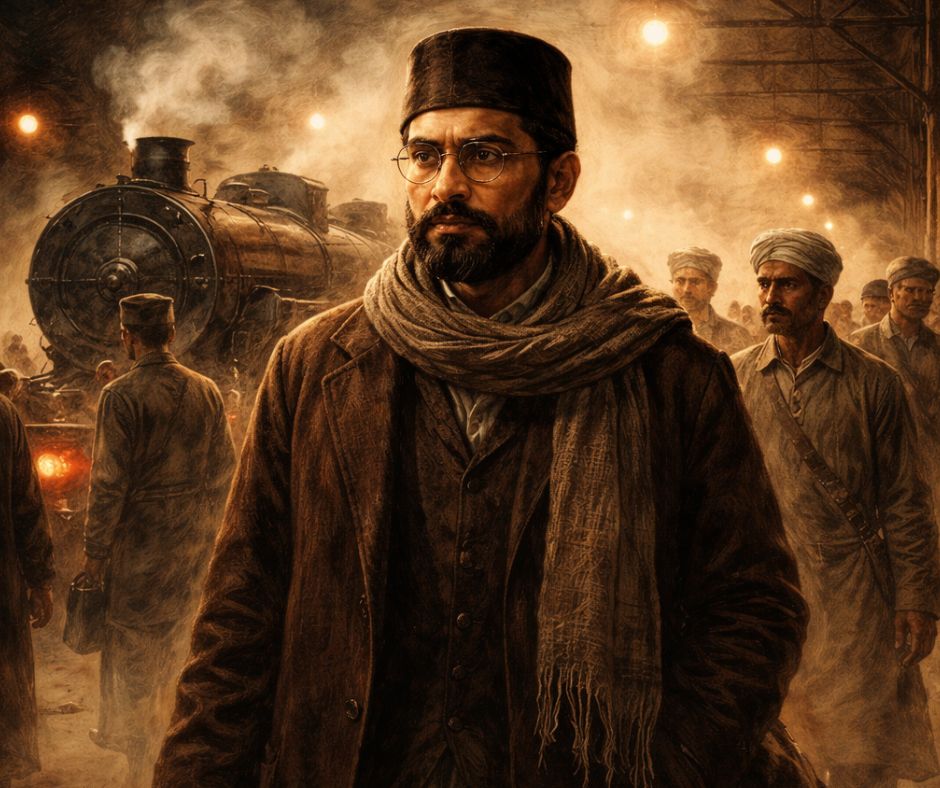
2nd Story: Three Disguises To Berlin: The night Calcutta learned how to hold its breath was not…
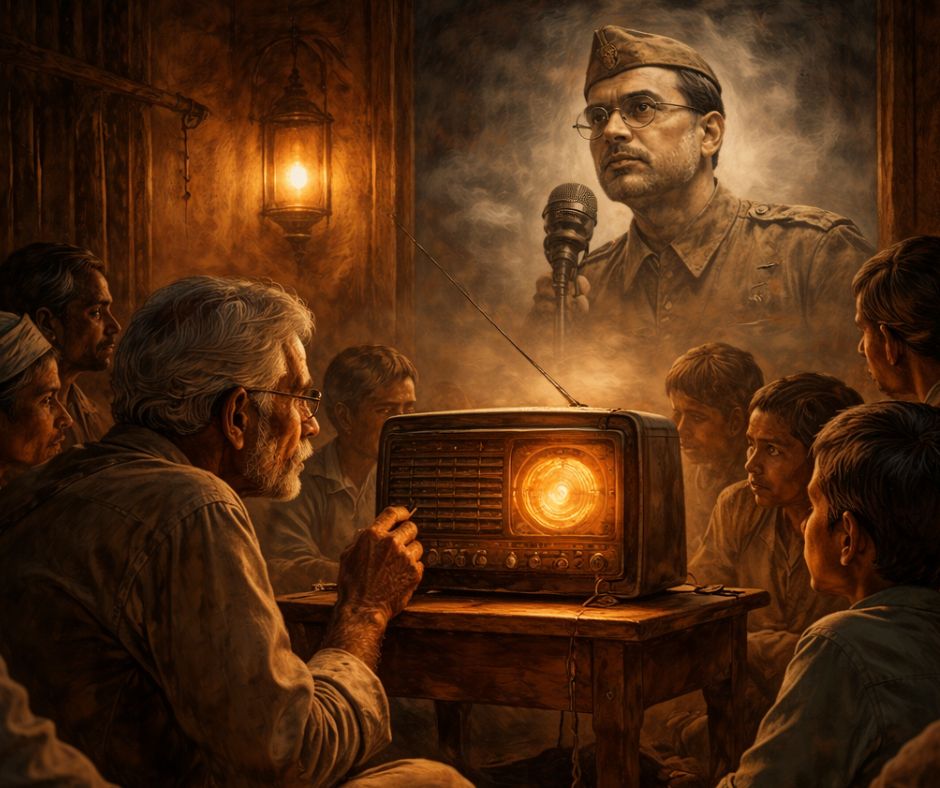
3rd Story: The Radio That Roared: The radio arrived in the village like a rumour. No one could …
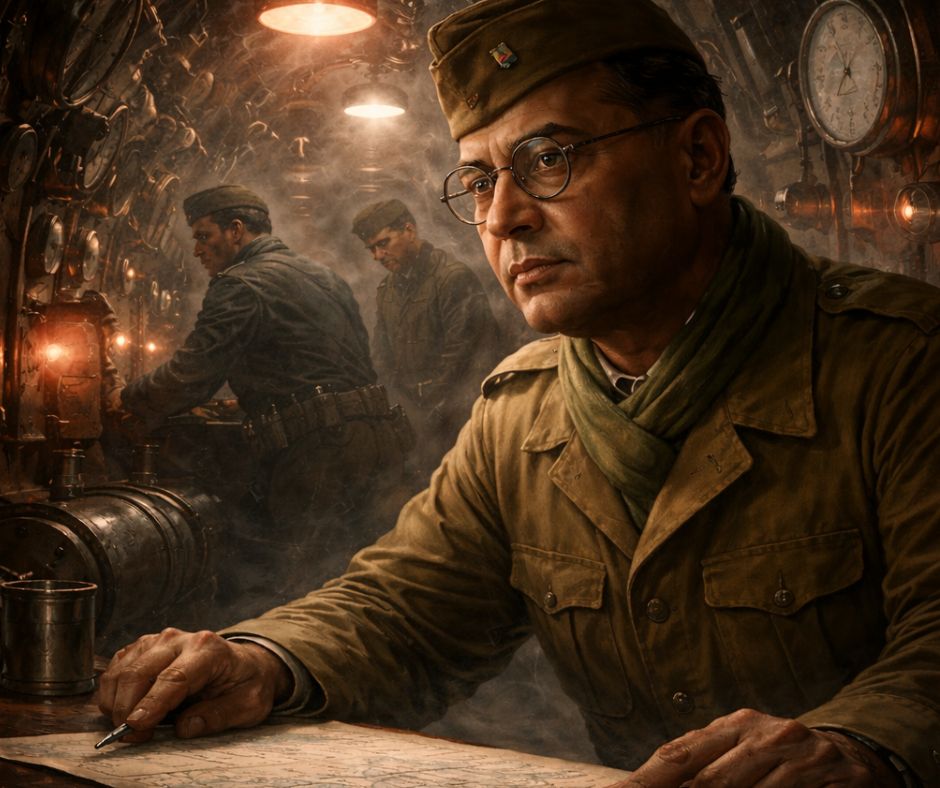
4th Story: The Secret Voyage Aboard U-180: The sea does not announce itself when it decides to…
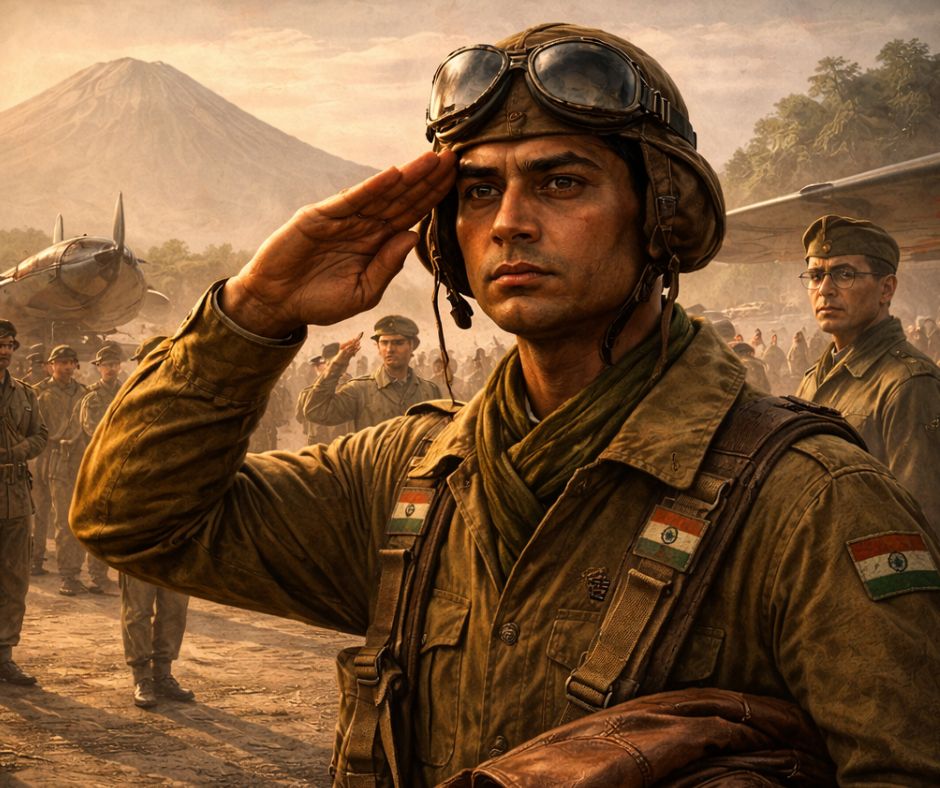
5th Story: The Tokyo Cadets: They arrived in Tokyo carrying the smell of salt, sweat, and old paper…

6th Story: The Shadow of Renko-ji: The temple does not face the street. It turns inward, as though…
Copyright © 2026 TRISHIKH DASGUPTA
This work of fictionised history, written by Trishikh Dasgupta, is the author’s sole intellectual property. It draws inspiration from documented events, unresolved questions, and the enduring silences surrounding the life and fate of Subhas Chandra Bose and the Indian freedom movement. While this story can be read and experienced independently, it also forms the sixth and final part of a six story narrative arc, where each piece stands alone yet together traces Netaji’s journey from intent to action, from voice to voyage, and finally into memory and myth. Some characters, incidents, places, and facts may be real, while others are imaginatively reinterpreted.
All rights are reserved. No part of this story may be reproduced, distributed, or transmitted in any form or by any means, including printing, photocopying, recording, or other electronic or mechanical methods, without the prior written permission of the author, except in the case of brief quotations embodied in critical reviews and certain other noncommercial uses permitted by copyright law. For permission requests, send an email to the author at trishikh@gmail.com or get in touch with Trishikh on the CONTACT page of this website.
ABOUT THE AUTHOR

Trishikh Dasgupta
Adventurer, philosopher, writer, painter, photographer, craftsman, innovator, or just a momentary speck in the universe flickering to leave behind a footprint on the sands of time... READ MORE
These stories are Free and if you have found something here that stayed with you, some of my other books (collection of short stories, novels, and more) are now available in print and digital editions. They gather many unique journeys, quieter questions, and stories that continue beyond this page.
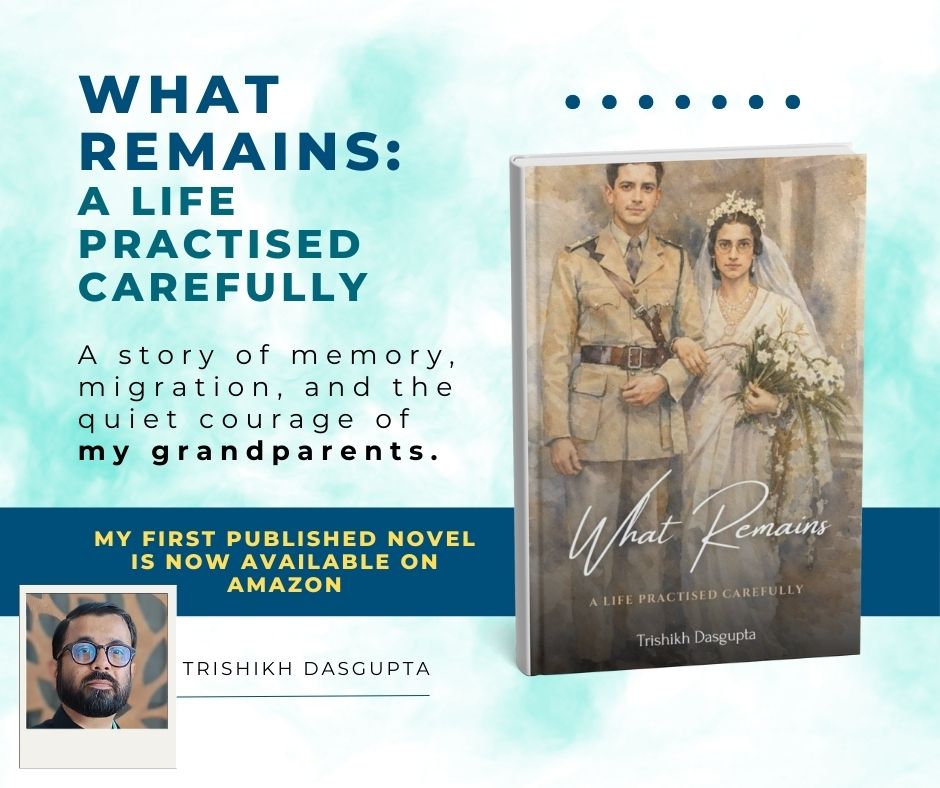
You may also like to read my1st Published novel now available on Kindle and Paperback versions.
 Weekend Stories by Trishikh
Saving this for later tonight. This couldn’t come fast enough.
LikeLiked by 2 people
Yes, this is the last story in the series series of six on Netaji Subhash Chandra Bose and the Indian Freedom Movement. Knowing your kind thought process, I am sure that you would thoroughly enjoy this. This is bound to calm you and bring a lot of peace and tranquility.
LikeLiked by 2 people
Oh my friend. Thank you. This is one of those pleasures I have gained late in life. The true pleasure of a good, gentle, story. The only other story that more or less had this effect on me was a novel called Siddhartha (by Hermann Hesse). It was written in 1922. I picked it up and read it for pleasure. It was gentle and yet portrayed themes of being lost and found again. It was about an Indian man named Siddhartha who had met the Buddha. It’s funny because Siddhartha was the Buddha’s first name. I often wonder if the young man and the older Buddha are meant to be the same character in two different stages of his life. Your writing reminds me of this novel. Except yours feels more alive somehow.
LikeLiked by 2 people
My dear friend, your words mean more than I can easily express. To be placed in the same breath as Siddhartha is humbling beyond measure. I have had the pleasure of reading the book too. That novel carries a quiet river within it, a gentleness that allows one to wander and return without being forced. If this story could offer even a fraction of that contemplative space, then I am deeply grateful.
What moves me most in what you shared is not the comparison, but the phrase “the true pleasure of a good, gentle story.” That is a rare pleasure, and rarer still to discover later in life with full awareness. Gentle stories are not weak; they simply refuse to hurry us. They allow us to sit with uncertainty, to be lost without panic, to find without triumph.
As for Siddhartha and the Buddha, that question of whether they are reflections of one another at different stages of becoming is beautiful. In many ways, we all are. Perhaps that is why stories like these linger, because they trace not conclusions, but transformations.
If this piece felt alive, it is because you read it with aliveness. And for that, I am deeply thankful.
LikeLiked by 2 people
“If this story could offer even a fraction of that contemplative space, then I am deeply grateful,”
My friend, all of your stories make me feel that way. You have such a similar energy of peaceful contemplation. I wish I could get more people to buy your books and read your stories so that they could just let go. And be guided by your stories. As I have been fortunate enough to have been.
LikeLiked by 2 people
Thank you so much. I am so happy for our friendship. I am glad that my stories have found a reader like you and few others. I have full faith that slowly more people will come to read my stories. I will focus on my efforts and actions, the consequences are in the realm of the divine.
I had a question, what do I call you. Do I address you as “Miami Magus” or another name.
Trishikh
LikeLiked by 2 people
My real name is Jose Manuel. Miami Magus is my business name of sorts. I am a Pagan magician in real life. And I live in Miami, Fl. Hence all my articles and blog posts on magic and the supernatural. Though sometimes you will find random posts in there as well. I am glad for your friendship as well Trishikh, if you wish to contact me, email me on the blog and I can talk to you directly from my email,
– MM
LikeLiked by 2 people
Dear MM, it’s so nice of you to share this with me. It is a pleasure for me to continue our conversations over here. Will certainly reach out to you on email if a conversation requires a deeper dive and greater space. You can also reach out to me on email from my contact page on my website: https://storynookonline.com/contact/
Trishikh
LikeLiked by 2 people
🙏 Will do brother
LikeLiked by 1 person
Btw knowing now that this is the last in the series. Are the other stories posted that I may read them all in order?
LikeLiked by 1 person
No the other stories are all independent stories. These six were my first series of connected short stories. Any of the other prior stories you can read in any order, they are not connected.
Perhaps in the future I will write a few more series.
LikeLiked by 1 person
Ah okay in that case I will read this story now
LikeLiked by 1 person
So the last 6 stories on Netaji are a series. The ones before that are all independent stories.
LikeLiked by 1 person
Cool
LikeLiked by 1 person
Wow just finished and this is truly a good story. Now I want to read the others. Thank you for this. I felt a strange sadness inside. Like a journey had ended. So much history passing by. Now I want to learn more about Subhas Chandra Bose.
LikeLiked by 1 person
Dear MM, glad that these stories have peaked an interest in Subhash Chandra Bose in your. There is so much mystery surrounding his life that you will really be intrigued to read.
LikeLiked by 1 person
I can tell. From what I have read he is an intriguing figure. The West mainly focuses on Ghandi. So these are names we never hear over here.
LikeLiked by 1 person
Dear MM, that is very true, the west know the name of “Gandhi” and “Tata” just as the common Indian knows very few American names of eminence. The more we read the more we come to know. Movies also play their part in enlightening us.
LikeLiked by 1 person
Indeed,
LikeLiked by 1 person
Cudownie się czyta Twoje opowieści 🙂
LikeLiked by 2 people
Dear Joanna, thank you so much. I am so happy that you feel wonderful reading my stories.
LikeLiked by 1 person
Yes it is 💕
LikeLiked by 1 person
Your story sent me down a rabbit hole
LikeLiked by 1 person
Thank you for sharing that. If the story sent you down a rabbit hole, then perhaps it has done its quiet work. Some stories are not meant to provide answers, but to open doors into deeper questions and hidden corridors of history. I am glad you were curious enough to wander.
LikeLike
Interesting!😉😎😄
LikeLiked by 1 person
Thank you so much. Glad that you liked the story. There are five more stories in this series, which might give you an enriched reading experience.
The 1st story in this series: https://storynookonline.com/2026/01/09/the-lost-letter-to-rss/
I am sure that you would enjoy all of them.
LikeLike
I’m not sure if my comment made it past the gate here, I will just say this story really moved me. I had no idea the ashes of an Indian patriot were resting in a shrine in Tokyo, nor did I know that Indian airmen were trained in Japan during World War 2. It seems the world is smaller than we assume, and yet more wondrous than any fantasy tale. I enjoy reading your stories; their descriptions of a historic India and other nations, other times, really bring them to life.
LikeLiked by 3 people
Thank you so much for writing again, and yes, your earlier comment did make it through. I approved it and read it with great gratitude. I am especially moved that this story could connect you, living in Japan, to a chapter of history that links our two countries in such unexpected ways.
It is true, the world is far smaller and far more wondrous than we often assume. The presence of Netaji’s ashes at Renko-ji and the training of Indian cadets in Japan during the war are reminders that history is woven across borders in ways that textbooks rarely illuminate. What may seem distant or improbable at first often turns out to be deeply human and interconnected.
I am deeply honoured that you find life in these portrayals of historic India and other nations and times. When readers from different parts of the world feel those connections, the stories themselves feel complete.
Thank you for walking this journey with me.
LikeLiked by 1 person
This is absolutely mesmerizing! 🌸 Your writing captures history, memory, and mystery with such delicate precision. The way the Unseen Witness experiences Bose’s legacy—blending fact, speculation, and quiet reflection—makes the story both haunting and deeply human. Truly immersive and beautifully crafted! 📖✨
LikeLiked by 2 people
Dear Verma’ji, thank you for such a generous and heartening response. I am deeply moved that the story felt immersive and human to you, because this final piece was meant less to conclude and more to listen. Your recognition of how memory, fact, and speculation braid together around Bose’s legacy touches exactly the space I hoped to honour. If it felt delicate, it is because that mystery deserves to be held carefully, not resolved too quickly. I am grateful, as always, for the attention and warmth you bring to these journeys.
LikeLiked by 1 person
Your message truly touched me. Thank you for such thoughtful and gracious words. I’m deeply glad the piece conveyed the quiet listening you intended—it’s rare and beautiful when writing holds history with such care and sensitivity. You’ve created something that doesn’t just tell a story, but invites reflection, and that’s a gift to every reader.
LikeLiked by 1 person
Thank you Verma’ji, your beautiful words of appreciation never fail to keep me motivated and provide great joy and satisfaction.
LikeLiked by 1 person
🙏
Aum Shanti
LikeLiked by 1 person
Thank you so much. Let there be peace in all our endeavours.
LikeLiked by 1 person
Thank you 🙏
Aum Shanti
LikeLiked by 1 person
Yet another interesting tale.. thank you..
sending you a ❤️ for Valentine’s Day ❤️
LikeLiked by 1 person
Dear Fiona, thank you so much. Happy Valentine’s Day to you and your family too from me and my wife in India.
LikeLiked by 1 person
There is a stillness in this final chapter that feels different from the earlier silences. Not the silence of concealment, nor of preparation, but of release. The temple does not argue, and neither does the narrative. It simply holds. The movement from voyage and voice into shadow feels less like an ending and more like a gentle refusal to reduce a life to a conclusion. The space of Renko-ji becomes less a site of answers and more a discipline of attention.
What lingered most was the line that the question itself had become a shelter. That insight quietly shifts the centre of gravity. The uncertainty is no longer a flaw in history, but a human need — a way of keeping intention alive without forcing it into finality. In that sense, the mystery is not unresolved; it is carefully guarded. The journey remains open not because it lacks evidence, but because it refuses to be confined to proof alone.
After six weeks of building this arc — from an unsent letter to a quiet urn — what stands out is the steadiness of your restraint. You have carried atmosphere, moral tension, and historical ambiguity without spectacle or excess. That consistency deserves acknowledgment. Few narratives sustain such intensity without losing tenderness. This one has, and it has done so with care.
LikeLiked by 2 people
Dear Livora, your reading of this final chapter feels like a completion in itself. You sensed exactly the shift I hoped for, from concealment and preparation into release. A stillness that does not defend or declare, but simply holds. That distinction means a great deal to me.
Your reflection on the question becoming a shelter is especially moving. I had come to feel that uncertainty was not an absence of truth, but a way of protecting intention from being flattened into conclusion. When you write that the mystery is carefully guarded rather than unresolved, it feels like you have articulated something the story itself was quietly reaching toward.
Across these six pieces, I tried to let restraint carry the weight, trusting that atmosphere and moral tension could endure without spectacle. To hear you acknowledge that steadiness, and the tenderness within it, is deeply affirming. It tells me the arc held.
Thank you for walking the entire journey with such attention and care.
LikeLiked by 2 people
Thank you for receiving the reflection with such generosity. To feel that the arc held is perhaps the quietest and most meaningful affirmation a reader can hope for.
Walking through all six chapters has been a rare experience. What began with an unsent letter unfolded into voice, voyage, inheritance, and finally into a space that does not insist on resolution. That coherence did not happen by accident. It was built with patience.
You carried intensity without noise, and ambiguity without confusion. That steadiness deserves more than casual praise. Two thumbs up, sincerely. Not for spectacle, but for discipline sustained with care.
LikeLiked by 2 people
Dear Livora, thank you. I am glad that the stories came out the way they did. More good ones to come in the future.
LikeLiked by 1 person
Very enjoyable read, Trishikh. Thank you for sharing your wonderful talent. – Dave
LikeLiked by 2 people
Dear Dave, always a pleasure to share a good story. Writing these becomes more worthwhile when friends like you enjoy them.
LikeLiked by 2 people
what a beautiful story friend, full of imagination and reality..
LikeLiked by 2 people
Thank you so much William. So happy that you liked it.
LikeLiked by 2 people
I enjoy how sensual your stories are, filled with so many sounds, silence, smells, and textures. I have a spiritual practice of connecting with all the objects and aspects of whatever environment I’m in, spirit to spirit. Your stories remind me of that as you ground them with so many sensory details.
I especially appreciated how you wove all the stories together via the few paragraphs linking them together with wisps of remembrance. Thank you for leaving Bose’s life and contributions as a mystery, solid but not pinned down.
LikeLiked by 4 people
Dear Katelon,
First of all you must excuse me for a late reply. Though I usually approve a comment as soon as possible, sometimes I take a bit of time to draft an apt reply. As always I must thank you for such a beautiful and attentive reflection. I am deeply touched by the way you have always shared about your spiritual practice, that way of connecting spirit to spirit with the objects and atmosphere around you. If the sensory details in these stories helped you enter them in that grounded way, then I feel the work has found a kindred space.
Your noticing of the wisps of remembrance that thread the stories together means a great deal to me. I wanted the arc to feel less like a sequence of events and more like breath passing from one moment to another, subtle but continuous. And I am grateful that you received the mystery around Bose not as absence, but as something solid and alive without being pinned down. Some lives resist tidy framing, and perhaps that resistance is part of their enduring strength.
Thank you for walking through this series with such openness and care.
LikeLiked by 2 people
You continue to surprise, after a having written you’re the previous chapters in a rational mood, you creatively finalised your story with a mystical poetic ending and without descending intomoralistic preconceptions.
LikeLiked by 2 people
Dear Michael,
Thank you for reading the arc so closely and for noticing that shift in tone. The earlier chapters needed clarity and structure because they moved through action and decision. But this final one could not end in argument or assertion. It had to loosen its grip a little and step into something quieter, more contemplative.
I am especially grateful that you felt it did not descend into moralistic preconceptions. With a figure like Bose, it is easy to either defend or indict. I wanted instead to listen, to let the mystery remain intact without trying to resolve it into certainty. Sometimes poetry is not an escape from reason, but a way of holding complexity without forcing a verdict.
Your observation means a great deal, especially after having walked through all the chapters with me.
Trishikh
LikeLiked by 2 people
The unseen witness has shared the inner beauty and serenity of a shrine and lent immortality to the spirit of Netaji. It is a blessing to have the chance to observe the life of a remarkable human. You have done that for the reader through your six part story. Thank you.
LikeLiked by 2 people
Dear Kajoli,
Thank you, for such a tender and generous reflection. I am deeply moved by your words. If the Unseen Witness could share even a fraction of the serenity of that shrine and allow readers to glimpse the enduring spirit of Netaji without confining it, then the journey has found its purpose.
To call it a blessing to observe the life of a remarkable human feels especially meaningful. These six stories were my attempt to approach that life with attention rather than assertion, to hold it gently rather than define it. I am grateful that you walked through all six parts and allowed the arc to settle within you.
Trishikh
LikeLiked by 1 person
I believe this is the quiet conclusion to an inconclusive end.
Sometimes to let a mystery continue may have its own worth.
A dynamic personality like Bose to disappear or choose a life of a recluse is not redoubtable.
But his contribution, his endeavour to inject dignity into a race colonized for two centuries speak of humungous conviction and almost super human ability.
As you said just to make a race, used to servitude, believe that they can hold their heads high and rebel in an organized fashion is in itself a mark of remarkable leadership.
Such great men are made of some unknown spirit … Perhaps they bring their strength and power from some other cosmic gallery.
The fading of the Unseen Witness is another very cleverly construed myth dissolving in the changing folds of time.
Either history is all “his story” or truly clinically documented evolution of human civilization.
Who knows?
LikeLiked by 1 person
Dear Geeta,
Your words feel like a meditation in themselves. “A quiet conclusion to an inconclusive end” is beautifully put. That was precisely the tension I hoped to hold, an ending that does not close, but settles.
You are right, sometimes the worth of a mystery lies in allowing it to remain alive. With a personality as dynamic and resolute as Netaji, disappearance feels almost paradoxical. And yet, perhaps it is that very paradox that keeps the spirit active in memory. His greatest contribution, as you so powerfully articulate, was not only strategic or political. It was psychological. To help a colonised people rediscover dignity, to replace inherited servitude with organised defiance, that is leadership of a rare order.
Your reflection on “his story” versus documented evolution is equally resonant. History is shaped by those who record it, but it is lived by many who never appear in its margins. That is why the Unseen Witness had to fade. Myths, too, dissolve, and what remains is the quiet work of intention carried forward.
Thank you for thinking so deeply alongside the story. Your engagement enriches it.
With kind regards,
Trishikh
LikeLiked by 1 person