This story stands complete on its own, but if you wish to start at the beginning, you may read the prequel, The Last Click, first:
There are photographs that capture a moment, and then there are photographs that wait. They wait in darkness, in drawers that smell of camphor and old paper, in forgotten corners of homes where memory gathers like dust. They wait not for light, but for the right pair of eyes. This is the story of one such waiting, and of the light that finally found its way back.
The building on Chowringhee still stood, though it had forgotten how to stand proudly. Its ancient cement bevelled sign had chipped and faded into a tired whisper of what it once declared, its wooden staircase creaked not out of weakness, but out of remembrance, and its walls held the breath of a thousand unspoken stories. Bourne & Shepherd had once taught the city how to pause, how to allow a second to stretch into something eternal. Now it merely remained a charred memory, nearly engulfed in a fire in 1991, while outside, the city rushed past in glass and glare, unaware that time inside this building still moved like film through a camera, slowly, deliberately, truthfully.
The girl had grown up. Ira, her name was, though her mother had once called her something softer, something that felt like a word spoken only between heartbeats. That name stayed longer than anything else, longer than the small house filled with the smell of mustard oil and monsoon damp, longer even than her mother’s presence. She did not remember much of her childhood, not in complete frames, but in flickers of light, in unfinished impressions. She vaguely remembered the hazy masked face of a doctor and strong lights on the ceiling slowly blurring into an unconscious darkness.
She also remembered a man with a camera, though not his face, only the stillness he carried, not always the pleasant kind, until the day she never saw her again. She remembered her mother’s hand, always warm, always hurried. And somewhere between these fragments, she remembered a feeling that something important had once happened, something that had never fully left her.
Ira did not become a photographer. She became something quieter, something that worked in the spaces between moments. She painted, but not the kind of paintings that hung easily on walls. Her canvases carried pauses, unfinished glances, silences that seemed to stretch beyond the frame. Those who saw her work often felt a strange pull, as if they were standing on the edge of a memory they could not fully enter. Ira never explained it. She knew she was not painting imagination; she was painting something that had already lived and was waiting to be seen again.
Her mother’s passing came like a slow dimming of light, not sudden, not loud, but inevitable. The house remained the same, yet everything within it shifted. Silence deepened, objects gathered meaning, and the past began to surface in quiet, insistent ways. It was during one such afternoon, when the air itself seemed to be remembering, that Ira found it. Not a box, but a small red velvet jewellery bag, tucked away behind old sarees, nearly dissolved into threads. It was torn, tattered, its edges frayed as though time itself had tried to erase it but failed. Something about it felt alive, as if it had been waiting.
When she opened it, the faint, chemical smell rose gently, like a memory stepping forward. Inside lay a roll of film, and wrapped around it, a folded note. The handwriting was unfamiliar, yet deeply personal, as if it belonged to a moment that had once been hers without her knowing. Ira unfolded it. She read. And as she read, something within her broke open. Tears did not fall gently; they arrived with urgency, with the weight of something long withheld. She did not know why she wept, only that she had been meant to read those words, meant to feel them, meant to carry them forward.
The city had forgotten film. It no longer believed in waiting for images to emerge from darkness. It preferred immediacy, certainty, control. But Ira was not looking for any of those things. She was looking for what resisted them. It took her days to find a place that still understood the language of negatives and light, a small, ageing studio hidden in a lane where time had chosen not to hurry. The man there did not ask questions. He took the roll, examined it with quiet reverence, and simply said, “Come back tomorrow.”
That night stretched endlessly. Sleep came in fragments, and in those fragments came dreams that felt less like imagination and more like recollection. She saw her mother again, not as she had known her, but as someone caught in motion, running, searching, escaping. And somewhere, just beyond clarity, there was another man holding a camera, watching, waiting, understanding, not the same man in her memories but a stranger with a connection stronger than kin.
The next day, when Ira returned, the envelope was already waiting for her. She did not open it there. Some truths need a space that can hold them. She walked instead to the abandoned Bourne & Shepherd building nearby, drawn not by decision but by something quieter, something inevitable. She did not know why she entered the spooky place, but she did. The building welcomed her through a flopping tin sheet, its bolts long loosened and lost. It invited her the way old places do, without surprise, without question. She climbed the staircase slowly and entered a room where light moved carefully, as if aware of what it was about to reveal.
When she opened the envelope, the past unfolded. There were thirty-six photographs. The first thirty-five were unlike anything she had ever seen. They were not merely images of Calcutta; they were moods, breaths, fleeting emotions of the city captured in ways that felt almost impossible. Streets did not appear as streets but as living, shifting presences. Faces held stories that seemed to extend beyond the frame. Light did not fall; it conversed. These were not photographs that documented a city. The artist in her knew, without hesitation, that they were priceless. And then there was the thirty-sixth. Her mother.
Captured mid-motion, running out of a camera shop. Her face held a kind of urgency that bordered on desperation. Her eyes were searching for something beyond the frame, something that could not be seen but could be felt. There was no composed beauty in that photograph, no stillness, no intention. It was raw, unguarded, almost intrusive in its honesty.
Ira sat down without realizing it. The photographs lay before her like a conversation she had just learned how to hear. Thirty-five images that felt like a city being remembered. And one that felt like a life unravelling.
Days passed, and the photographs did not leave her. They demanded space, not just physical but emotional, historical, human. The idea did not arrive suddenly. It grew, slowly, persistently, like light finding its way through a closed window. Bourne & Shepherd had not been waiting to be restored. It had been waiting to be understood.
The years that followed were not easy. There were doubts, refusals, questions that had no immediate answers. But there were also those who saw what Ira saw, who felt what she felt, who believed that some stories must be held, not just told. The building changed, not into something new, but into something remembered correctly.
When it finally opened, it did so quietly. The doors parted, and light entered as if it had always belonged there. The thirty-five photographs found their place in the central room, arranged not as a display but as a journey. And at the heart of it all, the thirty-sixth photograph stood alone, not elevated, not explained, but undeniable.
Visitors came. They paused. They felt something they could not name. And then, one afternoon, a man walked in. He moved slowly, not with hesitation, but with familiarity. His eyes travelled across the photographs, not as a visitor’s would, but as someone revisiting something he had once known intimately. He lingered before each frame, and when he reached the last one, he stopped. For a long time, he did not move.
Ira watched him from a distance. She did not recognize him. And yet, something about him unsettled her, a quiet, persistent feeling that he belonged to this moment in a way she did not yet understand. She walked towards him, gently, almost cautiously.
“Do you know this woman in the photograph?” she asked. The man did not turn immediately. When he finally spoke, his voice carried both distance and intimacy. “My name is Chitrokoot,” he said. “I used to work here, in Bourne & Shepherd, many years ago. These thirty-five photographs you see… they feel like the work of my mentor, Shorkar’da. He had a way of seeing the city that no one else did. A way of listening to light. But this last photograph… I took it. On the street just outside. It was the last frame on my camera. The camera had thirty-five of his moments, and one of mine.”
Ira felt something shift within her, something aligning quietly, almost inevitably. She looked at the photograph again, then back at him, and asked, as though she already knew, “Was it a priceless camera? Did you sell it? Did you get good money for it? What did you do with the money?”
Chitrokoot smiled, not with nostalgia, but with something deeper, something that had already made peace with time. “Some things,” he said softly, “are never sold for money. They are only exchanged for life. That day, I did not sell a camera. I gave away a memory so that another could continue breathing. The price was never counted, because what I received was something no photograph could ever hold… the quiet knowledge that a moment, if given away at the right time, can become someone else’s entire future.”
Ira did not speak. Outside, the city moved on, unaware, restless, alive. Inside, in a room where thirty-six moments had found their place, light rested gently on a photograph of a woman running, a man who had once clicked without knowing why he must, and a story that had travelled through time only to arrive exactly where it was meant to. Not as an ending. But as the first light of something that would never fade.
Copyright © 2026 TRISHIKH DASGUPTA
This work of fiction, written by Trishikh Dasgupta, is the author’s sole intellectual property. The story is an original narrative set in Kolkata and explores themes of memory, time, loss, and the enduring power of images to carry life across generations. While the story reflects the author’s imaginative interpretation of the city’s photographic legacy, certain elements may draw upon the historical presence of institutions such as Bourne & Shepherd and the broader cultural evolution of photography in India.
All characters, events, and situations in this story are products of the author’s imagination. Any resemblance to real persons, living or dead, or to actual events or locations is purely coincidental or used fictionally for narrative effect.
All rights are reserved. No part of this story may be reproduced, distributed, or transmitted in any form or by any means, including printing, photocopying, recording, or other electronic or mechanical methods, without the prior written permission of the author, except in the case of brief quotations embodied in critical reviews and certain other noncommercial uses permitted by copyright law.
For permission requests, send an email to the author at trishikh@gmail.com or get in touch with Trishikh on the CONTACT page of this website.
ABOUT THE AUTHOR
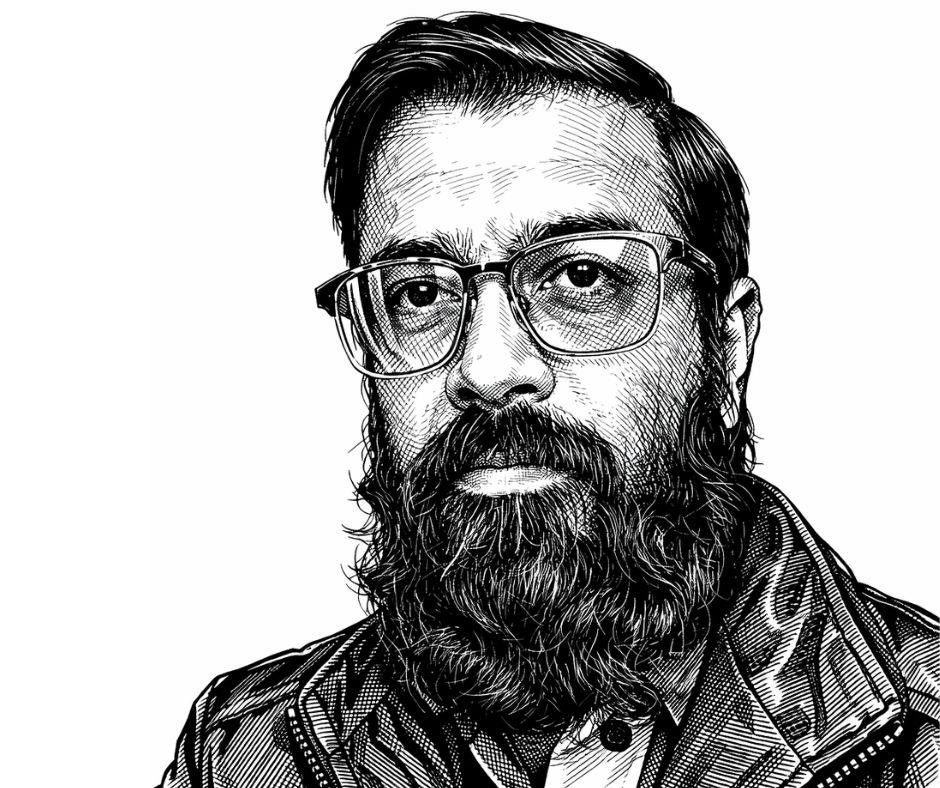
Trishikh Dasgupta
Adventurer, philosopher, writer, painter, photographer, craftsman, innovator, or just a momentary speck in the universe flickering to leave behind a footprint on the sands of time... READ MORE
This story is Free, and if you have found something here that stayed with you, some of my other books (collection of short stories, novels, and more) are available in print and digital editions. They gather many unique journeys, quieter questions, and stories that continue beyond this page.
 Weekend Stories by Trishikh
Thanks Ned for sharing my story on your website.
LikeLike
This is beautifully written and hauntingly evocative. 🌹
I love how the story captures memory, time, and the quiet weight of the past. The imagery of forgotten photographs, the old building, and Ira’s delicate relationship with moments and light creates a sense of nostalgia and mystery that draws the reader in. It’s a subtle, soulful narrative that lingers long after reading—truly compelling and poetic.
LikeLiked by 1 person
Dear Verma’ji,
Thank you so much for reading the story with such depth and sensitivity. Your words carry the same quiet attentiveness that the piece itself attempts to hold.
What you noticed, that gentle weight of memory and the way time settles into spaces and objects, is very close to what I was trying to explore. Some stories are not meant to move forward in a straight line, but to linger, to return, to be felt more than explained. I am glad the imagery and Ira’s relationship with light and moments could create that sense of stillness and echo for you.
Also, here is the prequel to this story, The Last Click, which I wrote on 2nd October 2021. If you haven’t read it already, you may want to visit it: https://storynookonline.com/2021/10/02/the-last-click/
LikeLike
I listen to a podcast called Northern Disclosure, with Rob Morrow and Janine Turner, who were the leads on Northern Exposure. Janine was told by a favorite cinematographer to ask whether you are taking a photo or making a photo. The photos you describe were “made”, to tell a story, hold a memory.
Beautiful story, thanks for sharing.
LikeLiked by 1 person
That is such a beautiful way to see it, Katelon.
“Taking” a photo feels like borrowing a moment, but “making” one… that feels like staying with it long enough for it to reveal something deeper. I think Chitrokoot, and even Shorkar’da, lived in that second space, where the photograph is not just seen, but understood.
I’m so glad the story resonated with you in that way. And thank you for bringing in that thought from Northern Exposure. It adds another layer to how I will now think about these images myself.
Also, here is the prequel to this story, The Last Click, which I wrote on 2nd October 2021. If you haven’t read it already, you may want to visit it: https://storynookonline.com/2021/10/02/the-last-click/
LikeLike
You are a great writer.
LikeLiked by 1 person
Thank you Tangie. Always a pleasure to receive your appreciation.
LikeLike
🙏👍
Aum Shanti
LikeLiked by 1 person
Thank you so much.
LikeLike