This story stands complete on its own, but if you wish to start at the beginning, you may read the prequel, Ramkingkong, first:
The lane had not changed. Or perhaps it had changed only in the way a battlefield heals, by covering its scars with ordinary life while never quite forgetting the violence that once lived there. The bend of the lane where winter sunlight still gathered in a soft slant remained the same. The cracked walls, the rusted balconies, the sagging wires that stretched from house to house like tired veins still held their place. Yet beneath this familiarity ran something else, something quieter and heavier, as if the air itself carried the memory of a night when this very lane had burned. It was not visible to the eye, but it revealed itself in pauses, in the way people looked at certain corners and then looked away, in the way conversations slowed when a name hovered unspoken.
I had not intended to return, but stories have a way of circling back to those who leave them unfinished. Years ago, I had written about a man who seemed too large to belong to memory alone. A giant had not stayed on the page. A giant who had fought against the Japanese Imperial Army in the jungles of Nagaland. The only Indian soldier in the British Indian Army to carry a wooden mace. A stalwart of physical culture, who had helped shape many a body and mind. He had lingered, like smoke that refuses to leave a room even after the fire has long died. And so, on a winter afternoon when Kolkata felt briefly tender, I found myself standing once again at the mouth of that lane, holding a bhaar of overboiled tea at an old tea stall, and listening to the quiet hum of a place that remembered more than it said.
“Looking for someone?” the tea seller asked, handing me the tea with the ease of a man who had asked that question many times before and already knew most of the answers. “Maybe,” I said. He studied me for a moment, then nodded slowly, as if confirming something to himself. “People don’t come here by mistake. Either they belong here, or they belong to what happened here.” I smiled faintly. “And if it is the second?” He did not hesitate. “Then you are here for him.” He did not say the name, but somehow it felt like the lane did, Ramkingkong. Even now, it carried weight.
I stepped inside. The lane narrowed as it always had, forcing movement into a kind of intimacy. Children were playing near a wooden gate set into the wall of the very structure that had once been Ramkingkong’s Akhara. The building stood there still, older than everything around it, its plaster peeled, its strength withdrawn but not erased. Before I could take in the structure fully, a knock echoed through the lane. One boy stood outside the gate and banged on it with theatrical urgency. From inside came the familiar challenge, sharp and rehearsed. “What’s the password?” The boy outside straightened himself and declared loudly, “King Kong!”
The gate opened at once into a courtyard that opened its chest to the sky, and the children burst into laughter, running in and out as if crossing an invisible threshold between fear and safety. I stood still. Nothing had been added to the story. Nothing had been taken away. It had simply continued.
An old man sitting nearby on a cane chair watched me watching them. “They never tire of that game,” he said. “Every evening, same knock, same password, same opening of the gate.” “You remember when it began?” I asked. He gave a faint smile. “It began the night the gate first stayed shut until the right word was spoken. Though that night it was not a game, but a matter of life or death.” He tapped the ground lightly with his stick. “Come, if you have come back after so many years, you should not stand outside like a stranger.”
He led me to the entrance of the Akhara. The wooden beams were still there, darkened by time, oil, and sweat. The faded letters above the entrance were barely legible now, but the word remained. Akhara. This was the same space. The same courtyard that had once echoed with the sound of bodies striking earth, of breath controlled and released, of discipline shaping muscle and mind. This was where Ramkingkong had lived, trained, and built not just bodies but a way of standing in the world.
Inside, the vastness of the place felt hollow but not empty. The mud wrestling pit still lay in the centre, its surface cracked but its form intact, like a memory refusing to collapse. Rusted dumbbells rested against the wall. A broken pair of wooden parallel bars leaned at an angle. A knotted rope, frayed and tired, still hung from the beam above. Everything was there, but nothing was in use. It was not abandonment. It was aftermath.
“After that night, no one could reopen this place,” the old man said quietly. “How do you train in a space that has already seen its greatest act of strength?”
He paused, then pointed across the lane, toward a modern apartment building rising with polished glass and clean lines that seemed almost indifferent to the past beneath it. “There,” he said, “was Bold Bods. It had already come up while he was still alive. A modern gym, air-conditioned, full of mirrors and machines. Karim Baksh’s dream. They said that was the future. And maybe it was. But the future does not always understand what it replaces.”
His voice grew softer. “You know how they used to argue. The old Akhara and the new gym. Earth and iron against chrome and rubber. Tradition against modernity. But in the end, when the fire came, it was not machines that stood at the gate.” The silence deepened. “Everyone here agrees on one thing,” he continued. “Once there was a giant. Not a story. Not a rumour. A real giant. We saw him. We lived because of him.” I did not interrupt.
“It was the night the city lost its mind again,” he said. “The news of Ayodhya had reached like a spark in dry grass. The old Babri Mosque was demolished by angry Hindu crowds, claiming that it was built on the birthplace of Lord Rama. By evening, the streets had changed. By night, they had become unrecognisable. Karim Baksh and his family had locked themselves inside Bold Bods, believing the iron shutters would hold. But mobs do not respect shutters. They came with swords, rods, petrol, and something far more dangerous than all of that.”
He looked straight ahead, as if the lane had begun replaying the night for him. “Ramkingkong had already opened his Akhara to those who needed shelter. Do you know how many?” he asked. “Forty families,” I said quietly. He nodded. “Yes. Forty families hidden inside these very walls. And each time someone knocked, the door opened only after one word was spoken. That word still echoes today.”
Outside, almost on cue, came the sound again, as children continued with the game. “What’s the password?” “King Kong!” The old man closed his eyes for a moment.
“By dawn,” he continued, “the lane was filled with silence. But not before it had been filled with screams. At the gate of Bold Bods, they found him. Fused to the iron door. Five of the worst men locked in his choke hold even in death. Burnt together into a single mass of flesh and fury. In front of them lay bodies. So many bodies. Fifty perhaps. Maybe more. No one counted. Skulls crushed. Chests broken. Necks snapped. He had fought them all. With Bhima, his trusted wooden mace. With his hands. With whatever strength remained in him.”
His voice dropped further. “And when the molotov exploded on his skin, he did not move. He did not release them. He became the gate.” The lane seemed to hold its breath. “At one corner lay Bhima,” he added. “Broken. Blood-soaked. As if even that weapon had reached its limit.” I found myself looking at the Akhara floor, as if expecting to see the echo of that mace somewhere within it.
“Those riots across the country had already claimed thousands of lives. For years after that, the Bold Bods gym remained closed,” the old man said. “No one wanted to enter a place where a man had burned into legend. Later, the structure was torn down. Flats came up. People moved in. Life continued. It always does. But memory does not leave with demolition.”
Evening began to gather slowly, like a thought forming. The sounds of the city returned in fragments. A pressure cooker. A bicycle bell. A radio somewhere playing an old song. The children were still at the gate, still knocking, still asking, still answering.
I stood there, watching them, and it became clear to me that this was not a return to a story. It was an encounter with its continuation. Ramkingkong had not remained in the past. He had moved into the present in the only way such men can. Not through monuments or photographs, but through repetition. Through the opening of a gate. Through a word spoken with certainty. Through a children’s game that carried within it the memory of survival.
A man once lived here. A giant once stood in this lane. On that, there was no disagreement. The details might blur, the numbers might change, the voices might differ, but that truth remained untouched.
As I turned to leave, I looked once more at the Akhara. The doorway stood dark, quiet, unremarkable. And yet, for a fleeting moment, it seemed occupied. Not by a figure, not by a shape that could be described, but by a presence that did not need to be seen to be understood. Then the moment passed. The evening settled fully. The modern lights came on across the lane. But the lane remembered. And now, so did I. Ramkingkong had not ended that night. He had simply refused to fade.
Copyright © 2020 TRISHIKH DASGUPTA
Refused to Fade, written by Trishikh Dasgupta, is the author’s sole intellectual property. This work of fiction, including all characters, events, settings, and narrative elements, is protected under applicable copyright laws. All rights are reserved.
No part of this story may be reproduced, distributed, transmitted, stored in a retrieval system, or translated into any form or by any means, including printing, photocopying, recording, scanning, or other electronic or mechanical methods, without the prior written permission of the author, except in the case of brief quotations embodied in critical reviews, academic commentary, and certain other non-commercial uses permitted by copyright law.
This story is a sequel to the short story Ramkingkong (2020), also authored by Trishikh Dasgupta.
For permission requests, send an email to the author at trishikh@gmail.com or get in touch with Trishikh on the CONTACT page of this website.
ABOUT THE AUTHOR
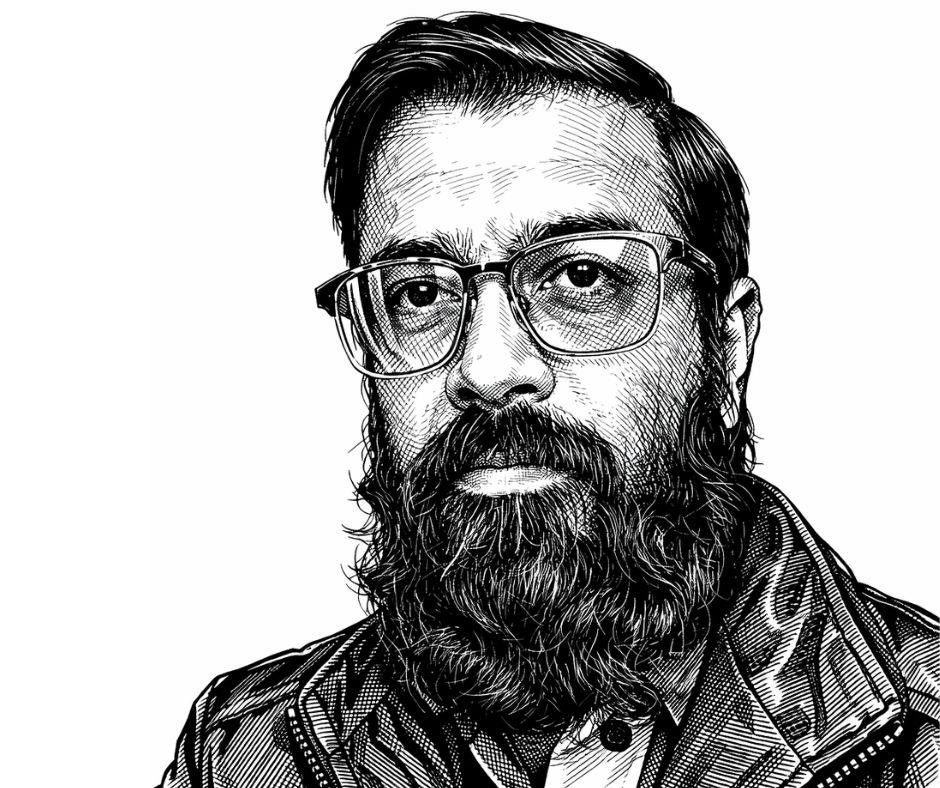
Trishikh Dasgupta
Adventurer, philosopher, writer, painter, photographer, craftsman, innovator, or just a momentary speck in the universe flickering to leave behind a footprint on the sands of time... READ MORE
This story is Free, and if you have found something here that stayed with you, some of my other books (collection of short stories, novels, and more) are available in print and digital editions. They gather many unique journeys, quieter questions, and stories that continue beyond this page.
 Weekend Stories by Trishikh