A moonless night smothered the dense forest in velvet darkness; not even a single star dared pierce the sky. Deep within this wild, an old temple – its idol of Goddess Durga made from the wood of the Lilac or Margosa Tree, commonly known as Neem, glowing in vermilion paste and smeared with blood – stood like a nocturnal sentinel. Crooked spires clawed at the clouds, swallowed by the dense canopy. The temple courtyard lay silent, eerily so. The scent of burning incense mingled with something more metallic… blood.
In the centre, lit only by flickering oil flames, a lean, ragged and resolute man prepared his dreadful rite. The victim: a greedy moneylender, terrified, gagged and bound, trembling for his life. The warrior’s blade gleamed, poised over the man’s throat. The chanting grew louder, the air colder, as if the forest itself held its breath.
But this was no ordinary sacrifice. The stone‑cold executioner whispered to the man, “Do you repent?” His voice, calm, almost fatherly. He uttered the names of oppressors – immoral zamindars, corrupt Nawabi officials, East India Company sycophants. The victim sobbed and confessed. The slayer paused. Instead of ending the trembling man’s life, he scored a warning across the moneylender’s palm – a clean slash oozing blood, a scar for life, a line not of death, but a reminder to never go back to his greedy and oppressive ways.
It was the early 1700s in the heart of Bengal, in the eastern armpit of the Indian subcontinent. Chitey Dakat was a name that surged through the lands like a reign of terror, especially in the hearts of those who oppressed the weak. Chitey, leader of the dreaded gang of dacoits, had his code: he never harmed the poor, the simple, or the innocent. His blades were for those who bled the poor and helpless dry.
Word of Chitey’s violent sermons reached the court of Nawab Alibardi Khan, who steered Bengal through Maratha incursions – those plundering horsemen who tormented the western frontiers – and internal strife, including the uprisings of Fakir-Sanyasi and discontented zamindars. Meanwhile, the East India Company extended its tentacles under the guise of trade monopolies and revenue farming. Determined to restore order along vital trade arteries – like the forest‑cut road a few kilometres from the temple – the Nawab entrusted Commander Chakrapani Dutta, a gallant Kayastha noble rooted in the region, with the mission of subduing this rogue element.
Chakrapani surveyed the temple with a heavy heart. His memories reached back to the ambushed merchant caravan, its wares plundered by Chitey’s gang. The forest people spoke in hushed tones of secret trust reserves hidden beneath banyan roots – stockpiles of grain and coin redistributed to the poor. Chitey’s renegade treasury was legend. The commander swore an oath before the Goddess: to end this defiance without sacrificing the innocent.
A fortnight later, Chakrapani marched under the glow of lanterns and polished swords. He stormed a clearing in the forest where Chitey’s gang knelt in ritual. A fierce standoff unfolded beneath flickering torches. Swords clashed, musket fire erupted. Within the melee, Chakrapani confronted Chitey: lightning‑fast sword strikes met dacoit reflexes. Chitey slipped away into narrow pathways amidst the giant salwoods; the commander’s horse hooves thudded through the leafy forest floor. Chakrapani would later recall: “He was not a demon, but a man shaped by injustice.”
Night after night, the chase ensued – Chitey sprang ambushes near what would later become the Basri Shah Mosque in Cossipore, intercepting Company officers transporting tax revenues destined for Calcutta. Chakrapani pursued on horseback: heart pounding, cloak billowing, bullets whistling overhead.
In one moonlit duel near the derelict Nabaratna dome of the temple – already half‑ruined, a mortar‑decked Company patrol pinned down Chitey’s band. Chakrapani led a flanking cavalry charge through dense undergrowth. Steel rang on steel. At dawn, Chitey vanished again, leaving behind a symbolic crimson drop on the temple steps.
Despite official decrees to rid the region of “bandit menace”, forestfolk whispered in secret gratitude. Chitey had forced rich moneylenders to redistribute grain during harvest failures exacerbated by heavy revenue demands. He had pilfered Company coffers, painting Nawabi officials red with defiance. He never harmed the poor. Tales grew of him returning lost children to their families, guiding starving peasants to wells.
Chakrapani’s own heart wavered in those days. His sworn duty to uphold Nawab Alibardi Khan’s justice trembled before the echoes of Chitey’s radical mercy. Bengal’s land revenue, based on the Diwani system established by Murshid Quli Khan, which would later transform into the zamindari system, placed unbearable strain on peasants. Chitey’s resistance was more than rebellion; it was a moral earthquake.
It was another black, starless night months later. A fresh moonless sky shivered above the temple. Chitey, cloaked in shadow, prepared another ritual. But this time, the courtyard was ringed with troops. British musketeers and Nawabi cavalry lay hidden in wait.
Chitey stepped forward, blade raised. Chakrapani emerged from gloom, pistol drawn. Their eyes locked.
“No more blood, friend,” said the commander. Chitey hesitated, blade wavering, then struck. Chakrapani sidestepped, fired. The musket shot cracked and echoed. Chitey crumpled at the blood‑splattered feet of his Lilac wood Goddess.
Dawn found villagers emerging with trembling breaths into the temple glade. Muskets still smoked. Rebels lay bound. Chitey lay silent. He was tried – not for robbery, not for vengeance, but the act of human sacrifice. Yet no innocent had ever perished by his hand. Redemption and law sat uneasily together.
He was hanged at first light. The noose snapped taut in the cool breeze. The temple courtyard – once drenched in clandestine courage – fell silent, its echoes reverberating with a sad, reverent hush.
It is believed that one Gobinda Ghosh founded the Durga temple in 1610, marking it as a regional shrine. By Chitey Dakat’s time, few dared to approach its fearful aura. Following the bandit’s death, the region returned to uneasy calm. The temple, isolated amidst stagnant bogs and wild growth, faded from human memory. In 1737, the devastating earthquake, estimated at magnitude 6.5, toppled its Nabaratna dome. The site lay abandoned and overgrown for decades.
A century later, tantric saint Nrisimha Brahmachari discovered the neem‑wood idol, buried beneath roots and debris. He reinstated tantric puja. Gradually, pilgrims trickled in. As trade resumed and roads were cleared, the temple and the road cutting through the forest grew entwined with the pulsing arteries of Chitpur, later to be known as Chitpur Road, and later still as Rabindra Sarani. European settlers – Danish, French, British – established enclaves. The Chitteswari Durga Temple, once feared, became an emblem of local heritage.
Over centuries, the temple grounds saw fewer nights of terror; instead, curious pilgrims and modern devotees pressed past, often unaware of the earlier revolutionary blood that stained those stones.
If today you walk past the Chitteswari Temple on Khagendra Chattopadhyay Road, near the Cossipore Ordnance Factory, pause. Feel the smoky fragrance of incense. Hear the soft chants of “Chandi Matar joi.” Imagine the dreadful night when Chitey Dacoit knelt before this idol, seeking vengeance for the poor, blade in hand. Imagine Commander Chakrapani Dutta arriving on horseback – heart racing, duty burning. A clash of swords, a fleeting mercy, and the birth of legend. The temple stones may be weathered, the dome long gone, but the echoes remain.
The alleyways still whisper of rebellion, sacrifice and redemption.
Copyright © 2025 TRISHIKH DASGUPTA
This work of fiction, written by Trishikh Dasgupta is the author’s sole intellectual property. Some characters, incidents, places, and facts may be real while some fictitious. All rights are reserved. No part of this story may be reproduced, distributed, or transmitted in any form or by any means, including printing, photocopying, recording, or other electronic or mechanical methods, without the prior written permission of the author, except in the case of brief quotations embodied in critical reviews and certain other noncommercial uses permitted by copyright law. For permission requests, send an email to the author at trishikh@gmail.com or get in touch with Trishikh on the CONTACT page of this website.
ABOUT THE AUTHOR

Trishikh Dasgupta
Adventurer, philosopher, writer, painter, photographer, craftsman, innovator, or just a momentary speck in the universe flickering to leave behind a footprint on the sands of time... READ MORE
These stories are Free and if you have found something here that stayed with you, some of my other books are now available in print and digital editions. They gather longer journeys, quieter questions, and stories that continue beyond this page.
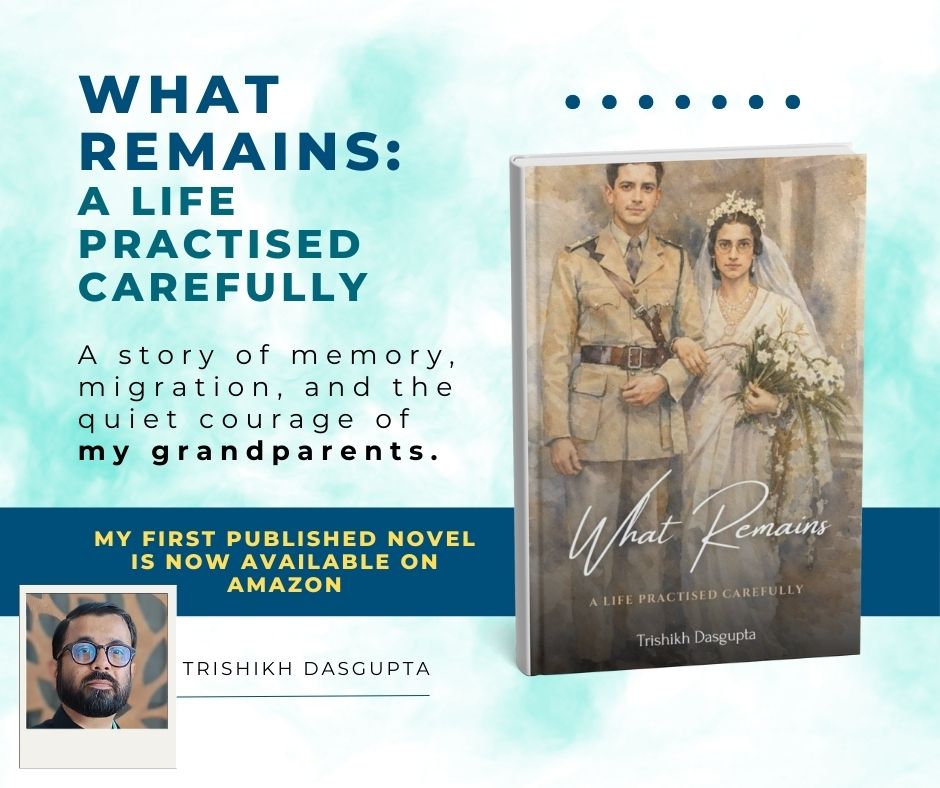
You may also like to read my1st Published novel now available on Kindle and Paperback versions.
 Weekend Stories by Trishikh
A gripping tale painted with vivid images! I found myself holding my breath…very well written.
LikeLiked by 3 people
Thank you so much for being the first to comment. Really treasure your appreciation. So glad that that you liked the story so much.
LikeLiked by 2 people
It is always a pleasure to read your stories! A1 from Day1
LikeLiked by 3 people
Thank you so much Arpita, you have always been a dedicated fan, giving me constant encouragement to keep on writing these stories.
LikeLiked by 1 person
Thank you Ned for liking and sharing my story with a larger audience. Always treasure your encouragement.
LikeLike
🙏
Aum Shanti
LikeLiked by 1 person
Thank you so much.
LikeLiked by 1 person
Thank you, Trishikh, for the fascinating new story, which is gripping and, as usual, has a moral element to inspire and educate. With your imagination to the fore, the tale is beautifully written.
Joanna
LikeLiked by 1 person
Dear Joanna, so happy that you loved my 74th short story, and found it inspirational, educative, and moral. Always treasure your appreciation.
LikeLike
nice to read you here again
LikeLiked by 1 person
Thank you so much. Nice to hear from you after a long time. Glad that you liked the story. Yes this month I was able to write 4 stories, one every weekend. Have gat back the writing spree. More to come in the coming days.
LikeLiked by 1 person
And yet another wonderful tale.. thoroughly enjoyed this.. thank you,.
Fiona ❤️
LikeLiked by 1 person
Dear Fiona, so happy that you liked my latest story. Always a pleasure to receive your appreciation.
LikeLiked by 1 person
Good engaging story.
So nice to see you back.
Thank you for sharing.
LikeLiked by 2 people
My pleasure Chitrangada. Yes this July has really been a good month for my writing. I was able to write 4 stories this month. So good to hear from you.
LikeLiked by 1 person
an engrossing tale, Trishikh …🤍🙏
LikeLiked by 1 person
Thank you so much. So glad that you liked my latest story.
LikeLiked by 1 person
my pleasure…🤍
LikeLiked by 1 person
Am glad you are back with your stories.
LikeLiked by 1 person
Thank you so much. Ya, I took a break of nearly an year. Am back now though, with 4 stories already in July 2025.
LikeLiked by 1 person
That’s great. Will read.
LikeLiked by 1 person
Sure thing, I look forward to it. Do enjoy.
LikeLiked by 1 person
Gripping tale of the legendary Chitey brought back to life.
LikeLiked by 1 person
Thank you Rosaliene. Yes Chitey Dakat, Commander Chakrapani, their clash, the temple, it’s history, many things else – all are true historically. I have only fictionalised and imagined the times to make the read more interesting.
LikeLiked by 1 person
My pleasure, Trishikh 🙂
LikeLiked by 1 person
good to see you writing again.. ❤
LikeLiked by 1 person
Thank you, yes I took a break of nearly a year.
LikeLiked by 1 person
Yes. We missed you. 🙂
LikeLiked by 1 person
Well, I am back now.
LikeLiked by 1 person
Your story reminds us that oppression is the course for vigilant reactions throughout human history and that the oppressors usually claim the moral high ground when it comes to the defence of their interests. We can find those tales of folk heroes, fighting for a passionate idea, defending the rights of man, intent to eliminate social inequalities, poverty and injustice, in all societies past and present; a common reaction when the oppressed have nothing more to loose.
LikeLiked by 1 person
Those who opress others over time come to justify their actions as just. Who is wrong and who is right becomes a fog over time. However, perhaps only when we live to uplift others, we shall evolve into ultimate humans.
LikeLiked by 1 person
History relies on facts and data from sources.
Usually we don’t have a writer who can write accounts of the rebels and other less known sections of society.
Reading history feels like one sided narrative therefore.
Trishikh did a good job by writing this story. It was needed.
Most importantly it isn’t boring (history lectures and books are accused of being boring).
LikeLiked by 1 person
Dear Lokesh, so happy to hear from you after such a long time. Hope all is well with you. I and my family are doing great by the grace of God.
Yes, the way traditional history is written, or what we read in the school textbooks can be a bit boring at times, so it is really important to read writers who write it a bit differently.
My story is inspired from history and actual characters, place, and events, however a lot of the action has been fictionalised, as there are no records of the same, which I could find.
Short stories like this one helps us develop an interest on the subject and sticks to our minds.
Thank you once again, do visit again and read more of my stories, I think you have missed quite a few of them.
LikeLiked by 1 person
I added another detailed comment.
I found this comment interesting. So I replied.
LikeLiked by 1 person
Got it Lokesh, replied too. Thank you so much.
LikeLiked by 2 people
A powerful and thrilling story. Although I was rooting for Chitey to triumph (we could use him in the US right now), I understand that history can’t be changed. I’m glad the temple has been revived though.
LikeLiked by 1 person
Very true, deep in my heart I also wanted for Chitey to leave, but as you rightly say – history cannot be changed. I think not only in the US but in many countries, India included, someone like Chitey could really make a difference. But the path of a vigilantey is perhaps the last resort.
LikeLike
Hi Trishikh!
I hope you are well. I have been reading a new story from you after some gap of months; maybe an year?
Despite the gap the story feels as much rich as the previous ones. I missed some stories. Will cover them in upcoming days.
You know I’m a History student.
I gave the UGC NET exam recently with History. I’m hoping to enroll in a PhD programme as soon as possible. Already it has been one year gap between my Master’s completion and the present.
The Unsung Heroes are common throughout India. It’s always interesting to hear/read their stories.
I don’t know what is your process of writing a story, as its final draft.
At present we are bombarded with the Age of Information. I’m already struggling with the AI Images and posts.
The manual work feels for more genuine, imperfect and relatable.
The urgency of getting a job created a hugely pressure. We certainly have scarcity of decent jobs, that too, in formal sector.
Society recognises me today by how much I earn. What I earned till today and experienced feels meaningless.
I felt anxious often. I was confused. I had serious identity crisis as the criticism was 360° (from everywhere).
Also, the restrictions, physical and mental, makes it hard to move freely.
I am guilty of not studying mindfully, organised, and strategically. The race of competition demands that.
Also, my memory is working so bad nowadays. It’s affected by unstable mind, second thoughts, and earworms (a particular song running in your mind, in loop).
Let’s focus on the post….
1. I was reading the chapter: the British expansion in India, a week ago. This post is relatable therefore.
We all know it all started with the Bengal; the Battle of Plassey (1757 CE) more specifically.
2. Peasantry suffering badly at that time. The moneylenders and the zamindars have strong control and influence on the ground level.
3. The Nawab of Bengal declared their independence from the Mughal Emperor. In a way they continued to pay the revenue and maintained their official relations healthy and balanced.
But we clearly see the regional states declaring their independence. The central power became weaker.
4. The Marathas were expanding and growing at the same time. The reached upto bengals boundary also. They were known from plundering.
3. The language of narration is simple and straightforward.
→ The minor details were described properly which helps to understand the depth of the story.
→ The position, values, and interests of the characters were clear.
→ The flow is good.
→ I didn’t observe any grammatical error so far.
The author is able to play the role of the lone guide/light of the story.
Wishing to read more from you.
Thank you for sharing! ☺️🙏🏽
LikeLiked by 2 people
Dear Lokesh,
Yes I have not been able to write for a year, due to personal reasons, changing of jobs, shifting cities etc.
Life never stays the same, it’s a constant journey of shifts, and right now you are at a stage which is perhaps not very comfortable, so am I. It will pass and eventually we would be in calmer waters. That’s the way of life.
AI is just another tool, and not the artist. Those of us who learn to use it properly will evolve.
My stories as you have always pointed out, are easier to read and understand than traditional history. They are targeted to peak an interest in the reader on the subject, so that he or she can further research, discuss, or know about it.
Glad to hear from you, wish you all the best. Don’t worry everything will eventually work out.
LikeLiked by 2 people
A blood stained part of history weaved into a fantastic story bejeweled with expressive narration.
LikeLiked by 2 people
Oh, you are so kind with your words of appreciation. I treasure them. Thank you so much for liking, and commenting on my story.
LikeLiked by 1 person
Elegant narrative
LikeLiked by 1 person
Thank you so much.
LikeLiked by 1 person
Welcome back to writing here…
LikeLiked by 3 people
Thank you so much Chen. Yes, I was really looking forward to come back. July has been a very successful month for writing – I have been able to write 4 stories this month.
LikeLiked by 2 people
This is such an amazing historical story. Got such a lot of information about the past. Will surely visit the temple. 🙏
LikeLiked by 3 people
Thank you so much. So glad that you found the story historically enriching. Yes, the next time you visit the temple do try to visualise scenes and depictions from the story, I am sure that it will be an experience of a very different kind.
LikeLiked by 2 people
It sure will. 😊
LikeLiked by 2 people
Sooper …A versecraft share
LikeLiked by 2 people
Thank you for appreciating.
LikeLiked by 1 person
Dear Trishikh
It’s a marvelous experience to read your post, each day, a new experience, a new learning!
Thanks for liking my post ‘No’ 🙏❤️👌💓💗
LikeLiked by 2 people
Thank you so much for appreciating my stories. Always a pleasure to receive a bit of appreciation.
LikeLiked by 1 person
What an incredible historical tale with so much insight into the past! I’m definitely inspired to visit the temple soon.
LikeLiked by 3 people
Dear Rabindra, so glad that you liked this story of mine, especially the historical titbits. Do visit the temple, I am sure you would be able to relate to the place so much more.
LikeLiked by 1 person
Most Respected Triahikh thanks for subscribing to my blog 🙏
LikeLiked by 1 person
You are most welcome. It’s my great pleasure.
LikeLiked by 1 person
Most Respected Trishikh (please cancel earlier reply) thanks for subscribing to my blog 🙏
LikeLiked by 1 person
You are most werlcome.
LikeLiked by 1 person
A noble legend well worth preserving. Thank you for your introduction to this important history.
LikeLiked by 1 person
Many people live around this place, visit it. Like is very usual, busy, and common here, so my intention was to make people aware, that such interesting history was associated with the place. Thank you so much for liking the story.
LikeLiked by 1 person
I am glad to hear of “Robin Hood” like defenders of the people. I’m sure the neighborhood missed him greatly.
LikeLiked by 1 person
I am sure the poor and oppressed missed him. Those who do good to others, always walk a path of hardships.
LikeLiked by 1 person
Thanks for making his name synonymous with justice again.
LikeLiked by 1 person
I hoped to the end that Chakrapani would join the rebels, but that may be a bit naive. Anyway, then they would have sent somebody else to finish the job. We can’t have the rich being punished and their money distributed to the poor, can we?
An exciting story full of suspense.
LikeLiked by 1 person
Chakrapani joining the rebels, that would have been something. Well historically Chakrapani hung Chitey, that’s what happened. And the money of the rich being distributed to the poor, that is really a rare sight and phenomenon, seldom to be seen – as you correctly say.
LikeLiked by 1 person
I hoped to the end that Chakrapani would join the rebels, but that may be a bit naive. Anyway, then they would have sent somebody else to finish the job. We can’t have the rich being punished and their money distributed to the poor, can we?
An exciting story full of suspense.
LikeLiked by 2 people
True, very true.
LikeLiked by 1 person
Dear Trishikh
It’s a spell of your words.
Thanks a lot for liking my post, ‘Proust’ 🙏 😊
LikeLiked by 2 people
Thank you from the bottom of my heart, Raj. It’s a real pleasure to like your posts too.
LikeLiked by 1 person
I appreciate your like of my post, “Isaiah Chapters 21-24;’ that means a lot to me.
LikeLiked by 1 person
It is my pleasure to do so.
LikeLiked by 1 person
Thank you
LikeLiked by 1 person
Your story doesn’t just revive forgotten history, it humanizes rebellion itself—showing how resistance often grows from injustice. Like Lokesh noted, it keeps history alive without the dullness of textbooks, and as mchapus reflected, it echoes a universal truth: oppressed voices always rise. May more of your tales continue to bridge past struggles with today’s search for justice.
LikeLiked by 3 people
Dear Livora, yes you are very right, this story does humanises rebellion. And yes, resistance nearly always grows from injustice.
Lokesh is a very old fan of mine, he was a student of history, and usually follows and comments deeply on my stories.
“Oppressed voices always rise,” this also I truly believe.
I shall continue to write these stories by the grace of God.
LikeLiked by 1 person
Dear Trishikh, your words carry such depth—may God’s grace keep guiding your pen to give voice to those unheard. ✨
LikeLiked by 1 person
Dear Livora, thank you so much.
LikeLiked by 1 person