The sun was soft gold over a teeming park in Kankurgachi, North-East Kolkata, early 1980s, but to galloping fitness freaks, vegetable‑laden housewives, wandering loafers, fish‑loving babus with bags of silver‑scaled Hilsa, and children skipping along, the heart of the day was held in a mystical man’s hypnotic melody. Baburam sat cross‑legged on a frayed grass mat under a tamarind tree. His bulbous flute, carved of dried bottle gourd and bamboo, breathed a plaintive, mesmeric tune. Dust motes danced in the slanting light as curious heads lifted from their chores or games. Children halted mid‑chase; women paused with baskets of greens and groceries; young men glowered or grinned, but all were caught by that haunting song from the trembling wind instrument better known as the Pungi or the Been.
Joggers slowed when Baburam’s Been sounded – a smoky tone rising through the instrument and calling something ancient. The ambient city – hooves of rickshaws, calls of street‑vendors, clatter of fish‑wives’ baskets, receded. The children giggled: “Baburam Shapure, kotha jash Bapure!” – Where do you go, snake charmer Baburam! They pressed close. He played. The forked tongue of a glistening Monocled Cobra flickered through the opening of a wicker basket. The man’s eyes, dark and warm, welcomed them. A few older folks – storekeepers, a retired schoolmaster, nodded and dropped a coin or two into a battered tin can, the occasional clink of metal breaking the mesmeric rhythm.
He looked every inch the last of a vanishing tribe: vibrant fluorescent turban, dhoti faded saffron, long beard streaked with grey, copper and steel bangles jangling, strings of beads and talismans clinking. His sack was slung over a bamboo staff propped at his side; music and the basket, wisdom and mystery, all together. His smell was straw‑dust, sweat, earth and herb, less fearsome than familiar.
Baburam spoke softly after his tune. “Do you know this cobra’s name? In Bengali, we call it ‘Shankhachur’. It’s a king in the world of snakes – but give it space. Cobras don’t hear the music, only see movement. They follow the swirling tip of the vibrating instrument.”
He opened the basket gently and let the cobra rise, hood flared. A hush. The children gasped. He explained that in their habitat – fields, gardens, or a stump in someone’s yard, they feed on rats. They clean pests. Yet when they wander, it can end in tragedy.
That afternoon, the snake charmer from bygone days shared knowledge. “In our Bengal, snakes are not strangers. We have the Indian Cobra (Naja naja), the Monocled Cobra (Naja kaouthia), the Common Krait (Bungarus caeruleus), the Banded Krait, and the deadly Russell’s Viper (Daboia russelii). Each has its way – cobras and kraits give neurotoxic venom, vipers use haemotoxic venom. While the former damages the nervous system, leading to paralysis and potentially respiratory failure, the latter affects blood pressure, clotting factors and platelets, directly causing haemorrhage. The Painted Keelback and wolf snake, that often slip unnoticed past homes in basements or AC units, will not kill you, but ignorance will, faster than venom. Most bites come from Chandrobora (Russell’s viper) and cobra‑range species.” Knowledge, he said, could save lives.
He described traditional remedies: snake‑stone, bitter roots, but warned: “Only hospital serum cures truly work. Still, a pinch of ginger root to make you vomit – some old folks said that pulled poison out. But the real cure: anti‑venom.”
He told how snake charmers from the Sapera or Bedia communities had once roamed fairgrounds, villages, and city lanes, respected healers and performers tracing a lineage to ancient masters like Guru Gorakhnath. In the 19th century, the British mythologised them, casting them as exotic relics, simultaneously feared and marketed abroad. The Wildlife Protection Act of 1972 banned the practice; they lost their licences, their snakes, and their livelihood. Charmers were gradually pushed off the streets, into the shadows. Baburam was one of the last to practice the vanishing trade.
But in the years since the ban, a slow, corrosive change had begun to creep through the lanes around the park and the city beyond. Among many of the newer, self‑styled educated crowd, snake charmers were no longer seen as skilled keepers of ancient knowledge, but as peddlers of cruelty or deceit. Whispers turned to open disdain, muttered comments about “begging with snakes” or “conning gullible folks” floated through tea stalls and bus stops. Some crossed the street at the sight of a wicker basket; others shooed their children away, as if centuries of tradition could be reduced to a street trick. It was a kind of modern intolerance, born not of wisdom, but of the arrogance that often comes with half‑knowledge, a blindness that would, in time, reveal its own cost.
Within the story’s years, as modernity stepped in, younger locals looked at Baburam with distrust. They murmured he was a “conman,” performing tricks, selling superstition. But among the oldest, the schoolmaster, the vegetable‑seller, and a few mothers who had known snake bites averted by his rescue, they still whispered reverence. They invited him into homes to remove snakes and to soothe scared children.
One summer morning, when Baburam had chosen again to sit at his park‑corner, coaxing music from his trusted Been. A group of jobless youth, troublemakers, jeered. Some mothers protested, but in vain. As the scuffle progressed, they gradually became more violent, started surging forward, sneering and pushing. In moments, Baburam was struck, thrown. His been broken, the mat scattered, his snakes’ basket spilled. He lay bruised. His old companion, the Monocled Cobra, beaten with sticks, crushed to death. The violent group jeered and kicked, scattering his things into the dust and paraded away, celebrating their victory over a half-clad, harmless man, who had never hurt anyone but only helped.
Baburam sat in silence as the crowd recoiled. There were mixed reactions – some condemned the violence, some said it was a good lesson – “Baburam should never sit in the park again.” A few children cried, and some mothers gasped. Old shopkeepers hurried to help him up. The dishevelled man fingered his broken flute, stared at the crushed hood of his beloved snake, his face a map of both a deep, wordless sorrow and excruciating pain.
As dusk fell, clutching his torn sack and his dead cobra, Baburam prepared to depart. The park emptied, silence heavy with regret. Even the tamarind leaves seemed to droop lower, as if the tree itself understood the snake charmer’s unseeable sorrow and invisible pain.
At that moment, a woman ran up – the warden of the nearby school’s girls’ hostel. Her voice trembled: “Baburam‑da! A girl has been bitten by a huge snake. The creature is still inside the hostel. Please help!” Despite the pain, without even a second thought, the snake charmer propped himself, nodded, and limped along the dusty lane toward the school. In spite of the mistreatment by the locals, Baburam did not hesitate.
The school hostel lay silent except for panicked cries. He found the bitten girl unconscious, surrounded by frantic staff and older girls. He applied a tourniquet, whispered calming incantations and asked for the girl to be rushed to the hospital. Then he strode through the overgrown campus toward an ancient stump of a dead tree, like a bloodhound, the old-school charmer had sniffed out the cause of the horrific incident.
He knelt before the hollow of wood and darkness. With a trembling hand, he coaxed: ten cobra siblings, coiled tight in the hole, hissed as they emerged. He handled them with calm authority, placing each into a sack. The massive snake he found lurking close to the stump bit the inside of his sandal but refused to bite his hand. Finally, he slipped it into the bag.
By then, many of the localities had gathered, shock and shame on their faces. He had saved them, but they had hurt him. The bitten girl was taken to the hospital – Baburam’s knowledge of the snake species and his early handling, first aid, stabilised her until anti‑venom was administered. She survived.
Baburam emerged, laden with a sack full of snakes, school staff and locals silent except for one elderly man who said: “Forgive us, Baburam Sapure. Too much education seems to have made our youth blind and ignorant.”
Baburam didn’t speak. He handed the sack to the forest department men summoned by the school staff. He tucked the surviving neck of his broken flute under his arm, his mat rolled, his few rupees in the tin box. He straightened slowly, patches of dusk behind him, the last glow of day framing his silhouette like an old photograph about to fade.
He stood at the gate. Looking back, he saw once‑familiar faces: children, mothers, the schoolmaster – they bowed their heads. But he turned and walked away into the night streets of Kolkata, never to return to that park again.
A week later, that same elderly schoolmaster visited the park corner, now empty. No music, no wicker basket, no bright turban under the tamarind tree. Only the hum of cicadas and the rustle of leaves overhead. He pressed a single folded one-rupee note into the cracks of the old tree stump where Baburam had sat. A silent offering – from sorrow, remembrance, and the weight of knowing they had driven away the last snake charmer of the region.
Copyright © 2025 TRISHIKH DASGUPTA
This work of fiction, written by Trishikh Dasgupta is the author’s sole intellectual property. Some characters, incidents, places, and facts may be real while some fictitious. All rights are reserved. No part of this story may be reproduced, distributed, or transmitted in any form or by any means, including printing, photocopying, recording, or other electronic or mechanical methods, without the prior written permission of the author, except in the case of brief quotations embodied in critical reviews and certain other noncommercial uses permitted by copyright law. For permission requests, send an email to the author at trishikh@gmail.com or get in touch with Trishikh on the CONTACT page of this website.
ABOUT THE AUTHOR

Trishikh Dasgupta
Adventurer, philosopher, writer, painter, photographer, craftsman, innovator, or just a momentary speck in the universe flickering to leave behind a footprint on the sands of time... READ MORE
These stories are Free and if you have found something here that stayed with you, some of my other books are now available in print and digital editions. They gather longer journeys, quieter questions, and stories that continue beyond this page.
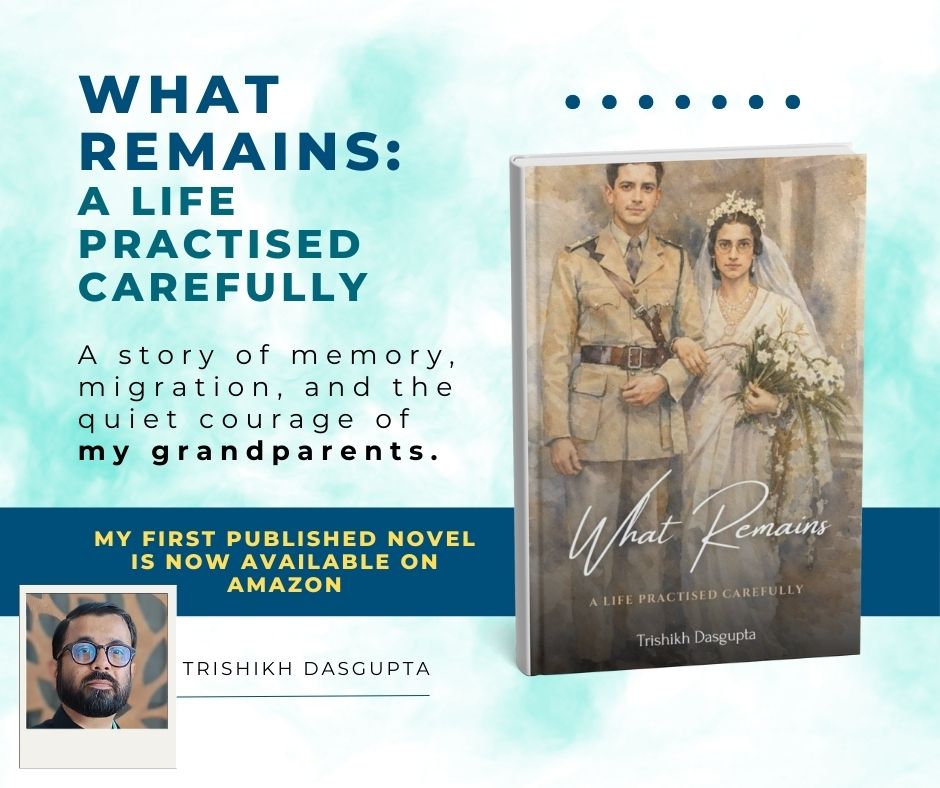
You may also like to read my1st Published novel now available on Kindle and Paperback versions.


Great post! Very well written. Thanks for sharing 🙂
LikeLiked by 3 people
My pleasure to write and share these stories. Thank you for appreciating.
LikeLiked by 1 person
Another beautiful tale.. thank you ❤️
LikeLiked by 4 people
Dear Fiona, thank you for being the first one to comment. Always treasure your appreciation.
LikeLiked by 1 person
Such a beautiful story. Your tales are so descriptive, its always like I am right there, seeing it, hearing it, smelling it all.
LikeLiked by 1 person
Thank you so much Katelon. Always appreciate your appreciation.
LikeLike
Well researched and detailed description about saap and sapera. Interesting read.
LikeLiked by 3 people
Thank you so much Verma’ji, so happy that you liked my little story.
LikeLiked by 1 person
In today’s era people miss person like Baburam. Thank you so much for the research you have done on snakes from where I personally came to know about various types of snakes exists. Another great one. Keep going!
LikeLiked by 2 people
Well said. You are very right – in today’s world we miss people like Baburam. Thanks for appreciating.
LikeLike
Thank you so much, Trishikh, for your compassionate story of Baburam, as always beautifully told. Indeed, it takes a great talent to describe the tragic events in a way that touches readers’ hearts and leaves them feeling the pain of the old man and wholly on his side.
Joanna
LikeLiked by 4 people
Yes, sadly many tradional professions such as snake charming on the streets have vanished or are vanishing. I would not comment much on the pros and cons of these, but would always say that there should be some kind of rehabilitation process when any profession is banned. Like if you want to ban hand pulled Rickshaws then give those rickshaw pullers paddle or electric Rickshaws.
LikeLiked by 1 person
Congratulations 🎊
LikeLiked by 3 people
Thank you.
LikeLike
This left me with a heavy heart. The imagery, the rhythm, the history — it’s not just a story about Baburam, but about what we lose when we let arrogance masquerade as progress. Beautifully written and deeply moving. I’ll be thinking about that tamarind tree and the broken flute for a long time
LikeLiked by 4 people
What a beautiful thing to say. Heartfelt comments such as yours makes writing these stories really worthwhile. Well said – “The Tamarind tree and the broken flute” this line will help me remember this story too.
LikeLiked by 1 person
Dear Trishikh
I feel like living more to read your posts. Today’s post is one more example.
Thanks for liking my post, ‘Man’🙏❤️
LikeLiked by 2 people
Dear friend, thank you al always. Really treasure your appreciation for my stories.
LikeLike
Very interesting story. Well narrated. Liked it 🙏💯👍
LikeLiked by 3 people
Thank you so much Ashish. It really makes writing these stories worthwhile, when someone enjoys them.
LikeLiked by 1 person
An interesting read as always. The details explained the twists effectively.
It makes me sad— the snake charmer will struggle to forget the humiliation he received.
Also his companion, the snake, is no more with him.
Understanding of animals and their behaviour can improve the human interactions with them.
I have seen school students beating and killing snakes. They enjoyed doing that.
This story was relatable in that context.
The forest guards replaces the traditional roles of people like Baburam.
I fear snakes actually due to my unwanted encounters with them. I haven’t attacked or killed them.
I’m more kind of a believer in — letting them go, and maintaining peace.
Thank you for sharing!
Your stories have improved my weekends.
LikeLiked by 3 people
Dear Lokesh, you have got the perfectly right – that is my message behind this story. The message is that we be violent towards anything and everything we fear and do not know much about. Knowledge/ awareness is the only solution to any problem. And in relation to snakes, people like Baburam used to make a difference.
LikeLiked by 1 person
This left a deep ache in me. The imagery, the cadence, the weight of history — it’s more than just Baburam’s story; it’s a haunting reminder of all that slips away when pride disguises itself as progress. Elegantly written and profoundly stirring. That tamarind tree and the broken flute will linger with me for a long time.
LikeLiked by 2 people
Dear Indrajit, I can literally see that your comment is really heartfelt. Thank you for such a deeply thoughtful reflection on my story. You are absolutely right when you say “pride disguises itself as progress” and that this story is much more than Baburam’a story – I leave it to my readers to draw various conclusions and morals from this little tale. Keep visiting and read more of my stories, I am sure that you would love many of them.
LikeLiked by 2 people
Thank you so much for your kind words. Your storytelling has depth and layers that invite introspection—looking forward to reading more and discovering the worlds you so beautifully create.
LikeLiked by 1 person
I am deeply and humbly honoured by your appreciation.
LikeLiked by 1 person
Are your images created with AI ?
LikeLiked by 2 people
I have used AI for the last 5 stories, for the older stories I used to use tradional designing softwares like Adobe Illustrator, Photoshop, CorelDraw etc. Now a days with the advent of AI it’s much more sensible to generate these images through AI. It saves a lot of time.
LikeLiked by 2 people
Looks very amazing and epic. Your prompts for these creations must be very detailed and superb
LikeLiked by 2 people
Yes, creating the prompt is the new art I guess.
LikeLiked by 1 person
Absolutely 💯
LikeLiked by 1 person
Very poignant story about the last of the creed.
LikeLiked by 3 people
Thank you so much. It gives me great joy to know that you liked it.
LikeLiked by 2 people
Beautifully written. Thank you for sharing.
LikeLiked by 2 people
Thank you for your beautiful words of appreciation. You are most welcome.
LikeLiked by 2 people
Such a good story! A good lesson, too! Thank you.
LikeLiked by 2 people
Thank you for loving this. I am so glad that you liked it.
LikeLiked by 2 people
You are welcome!
LikeLiked by 1 person
🙏
LikeLike
This story is more about the quiet extinction of traditions, the arrogance of half-knowledge, and the bittersweet beauty of those who keep giving even when the world gives them nothing back.
You’ve painted Baburam not just as a snake charmer, but as a custodian of ancient knowledge, dignity, and grace, carrying a heritage that’s slowly been silenced by misplaced modernity.
The closing image of the one-rupee note left in the tree stump is pure poetry.
Truly unforgettable.👌🏻👏🏻🙏🏻
LikeLiked by 3 people
Your comment brings tears to my eyes. I myself could not have analysed my story to this level of depth. Thank You is not a sufficient word for my appreciation. You have captured the essence so perfectly. Do visit my site and read more of my stories, I am sure you would love many of them.
LikeLiked by 3 people
For sure, Trishikh.
I have a solid secretive reason for appreciating and learning from your stories , as I was born in Calcutta but have never been back there ever since we left Calcutta when I was four years old. I’m enjoying your posts much more than I can describe.
Keep up the good work. Cheers! 🙏🏻
LikeLiked by 2 people
That is so nice to hear. That’s why you especially love my stories so much. Maybe you will get an opportunity someday to visit again. Till then enjoy my stories.
LikeLiked by 2 people
👍🙏
LikeLiked by 1 person
Thanks for another engaging and touching story.
LikeLiked by 1 person
Thank you so much. You are too kind with your appreciation.
LikeLiked by 1 person
Dear Trishikh
I feel like living more to read your posts. Today’s post is one more example.
Thanks for liking my post, ‘Man’🙏❤️
LikeLiked by 1 person
Thank you so much. What is your name friend, what should I call you?
LikeLiked by 1 person
Dear Trishikh Ji,
Your name has auspicious meaning, Lakshmi (or Laxmi)
I am Prof Dr Rajendra, or just Raj … you may call me just that, Raj 🙏
LikeLiked by 1 person
Dear Raj, so nice to no know this. Trishikh was also a great same one of Ravana’s 100 sons. Further my mother was Christian and my father Hindu, so Trishikh represents the Trishul symbolising Hinduism and the Holy Trinity symbolysing Christianity. My father believed that a child should have the religion of his/ her mother, so I grew up as a Christian in a Hindu family. Strongly influenced by both the religions, treasuring all other religions and giving a lot of importance to education and knowledge.
LikeLiked by 1 person
That’s exactly one has to be, ambient personality. Unfortunately everyone else is monosyllabic. I am much like you, with adoration for all cultures & religions. 🙏
LikeLiked by 1 person
I also believe that, the more we are open to things we are not used to or so not know about, the more will we evolve.
LikeLiked by 1 person
Thank you so much Ned. Always appreciate your support to promote my stories.
LikeLike
Splendid story!
LikeLiked by 3 people
Thank you so much.
LikeLiked by 1 person
A sad tale about the loss of tradition. Rejected, yet he saved the day.
LikeLiked by 2 people
Yes very true. Loss of tradition is something really sad. Thank you for liking the story.
LikeLiked by 2 people
Thank you for your story, once more you succeeded to impress in portraying the human condition, describing the experience of a dramatic and passionate existence.Your story is a reminder, there are values in many traditions and once they have been lost due to our ignorance, we are all the poorer for it.
LikeLiked by 4 people
I really feel sad when you say “we are all the poorer for it,” unfortunately it is so true. Thank you for your constant appreciation. I just pray to God that he keeps on blessing me with the ability to churn many more of these stories. This was my 76th. Wish I can write a thousand of them in my lifetime.
LikeLiked by 2 people
Dear Trishikh
I am lost in a different world while reading your posts. I loved this post, too.
Thanks for liking my post, ‘Writing’🙏❤️
LikeLiked by 1 person
Thank you. You are most welcome.
LikeLiked by 1 person
I hope so too
LikeLiked by 1 person
I’m very touched by your story of Baburam and his capabilities with snakes and the ignorance of the people around him! It happened to me once that I opened the door in the morning and a snake entered into the house. I was completely shocked because I do not understand anything concerning these animals! Thank you very much Trishikh 🙂
LikeLiked by 3 people
Dear Martina, I also had few encounters with snakes in my life, fortunately none of the situations were life threatening, and once we accidentally killed a snake by closing the window when it was entering the house. Fortunately my father had knowledge about snakes and showed tolerance towards them and all other animals so I could appreciate their existence, but most of my friends growing up inspite of getting great education did not know much about snakes. Snake charmers in the streets did make a difference in spreading awareness, unfortunately being banned we do not see them anymore.
LikeLiked by 2 people
We didn’t kill the snake either, Trishikh,but succeeded in putting it into a pot and brought it back to the river! If we put things (animals or problems) out of our minds, it’s clear that we won’t resolve the problem!
LikeLiked by 1 person
Very true Martina.
LikeLike
A heartbreaking tale. You are a masterful storyteller drawing me right into the scene, bringing alive the sounds, the smells apart from the visuals. Simply superb!
LikeLiked by 3 people
Thank you Dahlia, I always treasure an appreciation. So glad that you liked my little tale.
LikeLiked by 2 people
Interesting story!
LikeLiked by 2 people
Thank you Daisy, so happy that you liked my story.
LikeLiked by 1 person
It was a heartwarming read! Well portrayed character of Baburam..!!!
LikeLiked by 4 people
Thank you so much Aparna, so glad that the story touched your heart and you loved the character of Baburam.
LikeLiked by 2 people
All the stories are worth reading when my heart craves warmth of words ! glad that I found one such stop 😇
LikeLiked by 1 person
You are absolutely right, “All stories are worth reading”.
LikeLiked by 1 person
Thank you for liking my post. You believe differently than I do. How are you doing? What are you doing? What do you do on the weekdays? What do you do on the weekends? Talk to you later. Be safe.
LikeLiked by 2 people
Thank you for liking my posts as well.
LikeLike
I like your posts too.
LikeLiked by 1 person
Well researched, Trishikh! Anti-venom is stored in estate district hospitals where snake bites are common.
LikeLiked by 2 people
Yes, such information is always helpful. Thank you so much for liking the story.
LikeLiked by 2 people
Excellent story with a very important lesson to be learned.
LikeLiked by 4 people
Thank you. The underlying message in any story is very important for me. So glad that you liked this one.
LikeLiked by 2 people
Yo Trishikh, I’m low-key so grateful you’re always showing love on my posts. 🙏 Seriously, this story about Baburam hit different—the imagery was insane, and the way you wove tradition and heartbreak is next-level. That one-rupee note left in the tree… poetic af. Much respect for your writing. Can’t wait to see what worlds you’ll take us to next.
LikeLiked by 2 people
Hey low-key, so nice to hear from you. Nothing gives me greater joy than when someone enjoys one of my stories. There are many more stories in my website, do visit and read some of them whenever you like. I am sure that you would love them. I write and publish one story every weekend, nowadays on Friday’s. So watch out for my latest story this Friday. It’s my pleasure to like your posts too.
LikeLiked by 1 person
Trishikh: This is such a sad story about what rumors and ignorance can produce. The details are vivid – you draw us in and leave us remembering. Thank you❤️
LikeLiked by 3 people
Dear Carolyn, reading your comment at the start of the day gives me great joy. So happy that you liked the story, felt it’s emotions.
LikeLiked by 1 person
This is fantastic!
LikeLiked by 3 people
Thank you so much Chris. So glad that you liked my story.
LikeLiked by 1 person
Beautiful story of Baburam , sometimes we don’t value the people like some people did with Baburam but at last in pain he showed he was really a well wisher. Well shared 💐
LikeLiked by 3 people
Thank you so much Priti. It feels so good to hear from you after a long time. From July this year after a very time I have started writing my short stories again. Publishing one every Friday consistently now from July onwards.
So glad that you liked this story of mine. Very true, that we do not value simple people like Baburam.
LikeLiked by 2 people
💐
LikeLiked by 1 person
Time marches on, not always in a good way.
LikeLiked by 2 people
That is so true. We evolve but not always to a better form than the previous.
LikeLiked by 2 people
You are most welcome. So happy that my stories inspire you.
LikeLiked by 1 person
What a sad story!
LikeLiked by 2 people
Yes Dawn, it is a sad story indeed. It is true, however. Our society in India has been treating traditional professions in such a way. It is a hard reality.
LikeLiked by 1 person
ignorance breeds hate that is for sure. great story. thanks for sharing.
LikeLiked by 2 people
You rightly say “ignorance breeds hate” so happy that you liked the story.
LikeLiked by 1 person
A lovely story written with reverence. A story that resonates through each of us, do not discard without fully understanding and appreciating. Thank you for sharing.
LikeLiked by 4 people
Dear Vinod, you are most welcome. It’s my pleasure to have been able to write this story. So glad that you liked it. It really makes my day when someone smiles reading one of my stories.
LikeLiked by 1 person
This story of Baburam beautifully blends music, tradition, and sacrifice, reminding us that ancient wisdom is not mere superstition but a vital heritage. The author warns how blind modernity risks erasing such treasures. May this tale inspire us to respect traditions, protect cultural guardians, and realize that preserving wisdom is also preserving humanity and balance.
LikeLiked by 4 people
Dear Livora, I especially like it when you say, “preserving wisdom is also preserving humanity and balance.” As you have rightly identified, this story is all about that.
Thank you for this beautiful comment. I treasure every bit of your appreciation and encouragement.
LikeLiked by 1 person
Thank you so much, Trishikh. Your stories always remind me why storytelling matters – not just for entertainment, but for keeping wisdom and humanity alive. I truly treasure the worlds you create.
LikeLiked by 1 person
I also strongly believe that storytelling helps in keeping wisdom and humanity alive, and they do give us a glimpse of an era and area, which we would not have perhaps known.
LikeLiked by 1 person
Absolutely, Trishikh — stories are indeed windows to wisdom and worlds we might never touch otherwise. 📖🌟
LikeLiked by 1 person
Dear Livora, so true, so true.
LikeLiked by 1 person
This story revived my childhood memories. Then animals were in plenty and snake-charmers were as common as the monkey performers. Elephants, horses and even bears were taken around for performance. Circuses were filled with tigers and lions. Now, I think there was too much direct animal cruelty, now we have put the final nail by taking away their habitats. The story involves ancient wisdom of the snake charmers but one thought leads to the other and makes a garland of memories. Loved the wonderful story.
LikeLiked by 1 person
Dear Sumita, thank you for appreciating the story so much. I am glad that it brought childhood memories. Yes, animal cruelty was the main reason to ban most of these kinds of performers. Though perhaps people involved in these professions may have been better rehabilitated, involving them in professions that could help these animals.
LikeLiked by 1 person
I absolutely agree with you,Trishik. These unique talents could be so well utilised.
LikeLiked by 1 person