As the sounds of a moonless night descended on the nameless little village of twelve tiny huts situated amidst the dense sal-wood forest in the heart of Bengal on the 12th night in August of 1854, Pandu tossed and turned in his jute-rope bamboo charpoy. Anxiety of the journey at the crack of dawn, just a few hours from then, kept him wide awake. After all, he was going to be the first person ever to venture out of their isolated hamlet, and it was not only a matter of his life and death but the fate of the entire village.
A hundred-and-forty-seven years ago, on the 3rd of March in 1707, at the age of eighty-eight, when the last prolific Mughal Emperor Aurangzeb died, the downfall of the mighty Mughal Empire in India was finally imminent. By now, in Pandu’s time, the glorious Mughals barely held on to nominal territories in the subcontinent. Three years later, the Indian Rebellion of 1857, also known as the Sepoy Mutiny, would be the final nail in the coffin of the dying sultanate, but that would be a story for another day. Now the British were emerging as a dominant power in the Indian realm.
Coming back to the present night of 12th August in 1854, Pandu could no longer lie in his wobbly bed. The anxiousness of the journey was too much for him to keep swivelling in his rickety little cradle. Though food should have been the least of his concerns on the journey ahead, he still rolled six dried flatbreads in a banana leaf and tied them with a jute string. Along with it, he packed a few onions, half a shell of a shrivelled coconut, a lump of palm jaggery, and some flattened rice. He wrapped everything in a gamcha or a thin cotton towel and flung the bindle over his left shoulder, tied around the end of a stubby bamboo stick. The stick, perhaps, would prove more useful than the food. Offering a short prayer to the forest-gods of his ancestors, he left the hut to follow the grazed pathway out of the village through the jungle to the land of civilised men, never seen by anyone in his unknown settlement in the wilderness.
For generations, the villagers had bowed before a nameless forest deity – a god of flora and metal who, they believed, slumbered deep under the soil. This god, they said, breathed out the veins of metals, gifted the earth its bounty of trees and fruit, and nourished both man and beast alike. To him, they offered their first harvest, a lump of jaggery, or a splash of rice beer. Pandu, more devout than most, often pressed his forehead to the ground, whispering prayers that the subterranean god might shield his people from cruelty and grant him strength.
More than a century ago, over the course of ten years from 1741 to 1751, under the leadership of Maharaja Rajhoji Bhonsle of Nagpur, Maratha warriors or Bargees (as they were referred to by the Bengali people) frequently raided the Bengal Subah, regions in Bengal, Bihar, and parts of modern-day Odisha. The downfall of the Mughal empire had given the Marathas free reign to mercilessly invade the region, and the Britishers, who strongly believed in the divide-and-rule policy, saw the rise of the Marathas as an opportunity to keep indigenous conflicts kindled.
These Maratha invasions caused many deaths and widespread economic loss in the area. The hostilities finally ended in 1751 when Alivardi Khan, the Nawab of Bengal, signed a peace treaty with the Marathas, promising to pay rupees 1.2 million annually and additional arrears of 3.2 million for the preceding years as Chauth, a 25 % tax on the total revenue from the region. Pandu and his ancestors, however, remained unscathed during this era of invasion, loot, and bloodshed. The remoteness of their unknown bourg had kept them safe.
Their troubles began around fifteen years later. Gradually, as the Maratha Bargees stopped their attacks, many stayed back in Bengal to trade. The Kundans were one of these invading Bargee-turned-traders who amassed a lot of wealth and settled in the region. Around 1766, one such Kundan fell in love with this region and built his magnificent palace close to Pandu’s village.
Before building his marvellous adobe, the Kundan Lord discovered Pandu’s ancestral settlement and instantly recognised the potential of cheap and bonded labour that he would use to his benefit. After building his dream castle and settling down, the Lord and many other Kundans who had emerged from a legacy of plunder and bloodlust found this sudden peaceful life lacking excitement. So they found entertainment in torturing and troubling the peaceful and meek residents of the neighbouring forest village. Thus began generations of feudal dominance over the residents of the jungle hamlet. Though not every Kundan was violent, some were considerate, even benevolent.
Now, in Pandu’s time, the grandson of that first Kundan, a twenty-year-old arrogant and hot-headed tyrant, ruled this domain in the wilderness. His atrocities had surpassed those of his father and grandfather. The Kundans had raised a gang of vicious killers who were unlike any soldiers or mercenaries known in the region. They were bred, not hired. Taken as orphans from famine-stricken villages, bought from slavers, or kidnapped as infants, they had been raised in the dungeons of the estate. There, stripped of tenderness and affection, they were starved of love and fed only discipline, brutality, and the perverse arts of torment.
Each boy, from the age of five, was handed crude wooden clubs and made to bludgeon animals until the screams no longer stirred pity in their young hearts. At ten, they were trained to wield spiked iron rods, tridents, and hooked whips. By fifteen, their arms were tattooed with the Kundan emblem, a black sun, sealing their fate as death’s playthings. They were trained in slow torture – burning flesh with heated sickles, breaking bones with mallets, piercing skin with iron nails, even devising cruel ways to prolong suffering without ending life. They were forbidden to form bonds with one another, pitted instead in endless duels that turned them into predators of their own kin.
By Pandu’s time, these mercenaries were towering, scarred men, their eyes devoid of softness, their bodies crisscrossed with burns and cuts from training. They wore necklaces of bones, their belts lined with knives used for skinning. When they entered the village, the children hid behind their mothers, and the men bowed their heads, for these were no ordinary men; they were shadows bred for cruelty and death.
On the 12th of August, Pandu, a wiry lad of seventeen, had defied the Kundan Lord when he refused to bow and touch his forehead to the dust before the tyrant’s palanquin. “I shall only bow down to my god of flora and metal, and no one else,” the young lad had said. Anger erupted like a thunderclap, and Pandu was dragged to the centre of the village square, tied to a post, beaten, and ridiculed. But before the executioner’s club descended, Pandu, in desperation, raised his voice:
“Give me a chance to save my life. Since you are so confident in your mercenaries, let me prove to you that I am better and they are not as invincible as you claim. Let me run for my life tomorrow. Give me a head start of half a day. If your men catch me and bring me back within two days, I shall bow to death willingly. Since none of us villagers have ever left the forest, I think it will be really challenging, if not impossible, for me to escape. But if your mercenaries fail, then you must swear before god and men never again to torture my people. We will still serve you, but with honour and for a wage, not as cattle.”
The villagers gasped. To speak so to the Kundan Lord was madness. But the tyrant, flushed with arrogance, could not resist. To refuse would be cowardice. To accept, in his mind, was no risk at all. He raised his hand and declared, “So be it!”
At dawn on the 13th, Pandu fled into the forest, barefoot but fleet-footed, the gamcha bundle slung over his back. By dusk, ten merciless hunters were unleashed. They carried hooked spears, coiled chains, and whips of braided hide tipped with iron thorns. Their laughter echoed in the trees, for they relished the hunt more than the capture.
The chase was relentless. Pandu moved like a deer, skirting streams, climbing knolls, hiding in elephant grass. His half-day lead gave him hope, but by the night of the 14th, he heard their footsteps, deliberate, patient, closing in. The moonless night was alive with sounds – the howls of jackals, the wingbeats of owls, and the distant guttural shouts of the hunters. He ran till his lungs burned, till his soles bled.
Then came the dawn of 15th August in 1854. The forest thinned, and suddenly the earth beneath Pandu changed. He stumbled upon two shimmering lines parting the land, glinting in the mellow rising sun. He froze. He had never seen such a thing. It had to be divine, a path carved by the forest god who had cracked the earth and raised the lines to protect the lad. Something inside him told him to go and lie between them. He jumped and lay himself in between the divine streaks, trembling, and the ground began to shake. A deep rumble grew, a roar unlike thunder, unlike storm. Fire and smoke bellowed from beyond the horizon.
The mercenaries emerged from the forest edge just in time to see the beast, immense and glowing, snorting smoke, spewing fire, its shiny belly shrieking as it slithered on the silver lines. The earth trembled, trees quivered, and birds took flight in terror. To the mercenaries, who had never crossed the forest, it was nothing but a demon, the villagers’ subterranean god of flora and metal’s wrath made manifest. Their cruel eyes widened in terror, their iron whips fell limp from their hands. They turned and fled, tails curled between their legs, back to their master’s palace.
Pandu lay flat, heart pounding as the beast thundered over him, hissing smoke and spewing flame. For what seemed an eternity, his world was fire, smoke, and trembling ground. Then, slowly, the noise receded, and he raised his head. The beast’s tail – long, gleaming, vanished into the horizon, trailing smoke into the forest sky.
He rose, shaken but alive, and retraced his path to the village. By the time he entered the Kundan courtyard, the mercenaries were already there, curled on the ground like whipped dogs, trembling, swearing before all that a god of metal had ascended from the earth to protect Pandu. The Kundan Lord, pale and speechless, could not challenge the testimony of his own men. Bound by his word and terrified of divine punishment, he accepted defeat. From that day, the villagers laboured with dignity, no longer tortured, their honour restored.
In the generations that followed, the proud name Kundan gradually softened in the tongues of the land and passed into the annals of Bengali life as Kundu, a familiar and gentle surname carried by sons and daughters across villages and cities. And somewhere, not far from those whispering trees, still stands the old palace of the tyrant-lord, its walls thick and high, its verandahs echoing names and songs from the past. Though its grand doors now welcome travellers instead of merchants, its courtyards hold the hush of history: transformed into a heritage homestay, a silent witness to a bygone power, now offering rest to seekers of stories and royal memories.
History would remember the morning Pandu and the mercenaries encountered the beast very differently. For on the 15th of August, 1854, the first passenger train of the East Indian Railway ran from Howrah, the oldest surviving railway station in the world today, to Hooghly. But in a nameless hamlet deep in the forest, close to where the train passed between these two stations, it was remembered as the day their god had sent a fiery beast to save a fearless boy and change the fate of the entire village.
Copyright © 2025 TRISHIKH DASGUPTA
This work of fiction, written by Trishikh Dasgupta is the author’s sole intellectual property. Some characters, incidents, places, and facts may be real while some fictitious. All rights are reserved. No part of this story may be reproduced, distributed, or transmitted in any form or by any means, including printing, photocopying, recording, or other electronic or mechanical methods, without the prior written permission of the author, except in the case of brief quotations embodied in critical reviews and certain other noncommercial uses permitted by copyright law. For permission requests, send an email to the author at trishikh@gmail.com or get in touch with Trishikh on the CONTACT page of this website.
ABOUT THE AUTHOR

Trishikh Dasgupta
Adventurer, philosopher, writer, painter, photographer, craftsman, innovator, or just a momentary speck in the universe flickering to leave behind a footprint on the sands of time... READ MORE
These stories are Free and if you have found something here that stayed with you, some of my other books are now available in print and digital editions. They gather longer journeys, quieter questions, and stories that continue beyond this page.
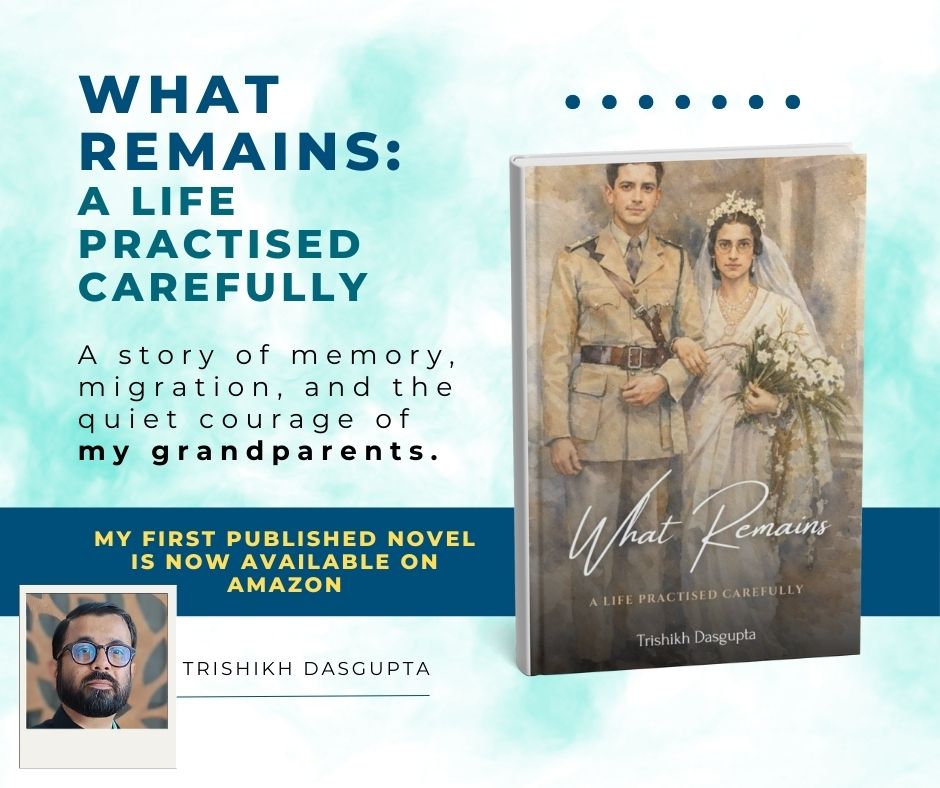
You may also like to read my1st Published novel now available on Kindle and Paperback versions.
 Weekend Stories by Trishikh
WoW, my Friend. What a powerful story. Brave Pandu, rich history, and such vivid detail. Truly inspiring. 🙏
LikeLiked by 5 people
Thank you so much Willie for the lovely comment. The first comment to any of my stories is very special to me. So glad that you liked my latest tale.
LikeLiked by 2 people
My pleasure.
LikeLiked by 1 person
Clever twist with the train, and another engaging story.
LikeLiked by 6 people
Yes, this twist was actually what had sparked the initial idea of the story. I had started writing this story nearly 2 years ago, and then had abandoned it. It was the only story that I had ever abandoned. So I was always guilty of leaving this story half way. So glad that I was finally able to find the words to complete it.
LikeLiked by 3 people
Dear Ned, thank you for always appreciating my stories so much. A special thanks for sharing it in your website. Now so many more people would be able to read it.
LikeLike
🙏
Aum Shanti
LikeLiked by 2 people
Thank you so much for liking my story. Always treasure your support.
LikeLiked by 1 person
Another wonderful tale.. thank you..,❤️
LikeLiked by 2 people
Dear Fiona, it is I who must thank you for your constant appreciation for my stories.
LikeLiked by 2 people
This is indeed a powerful story! A story of cruelty and suppression, yes, but also a story of great courage and honour.
Humans have been and still are so cruel towards each other. When will we ever learn?
As always, you weave a fabric of fascinating fiction with historical facts.
LikeLiked by 2 people
Dear Stella, this is a question which perhaps will never be answered- “when will humans stop being cruel.” I thing cruelty is engrained in our DNA, by nature we are both benevolent and cruel beings. Both the traits exist within us. It depends on person to person, which trait we want to practice more.
LikeLiked by 1 person
That is true, the decision what we want to be lies with us. That makes it somehow worse 🙂
LikeLiked by 1 person
The stories of history are very emotional. That era, simplicity and passion are not possible today. Very good! 🙏🙏
LikeLiked by 3 people
This is something very true that you have said. The simplicity of the past can seldom be found in the future. Perhaps true for every era.
LikeLiked by 2 people
Thank you, Trishikh, for the fascinating history lesson, wonderfully told. As you are a born writer, your words flow bringing to life the ancient events with all the sounds, smell and powerful visions that will stay in readers memory forever. You will never run out of tales to write as your unique and beautiful country being the oldest civilization in the world has so many untold as yet events, which are just waiting for your pen. Please, write!
Joanna
LikeLiked by 4 people
Dear Joanna, as always your comment brings tears of joy and a sense of accomplishment. Yes, I am fortunate to be writing about India, there is so much here to write about. My aim is to make these stories known to the world. I will keep on writing.
LikeLiked by 2 people
Nice story with a touch of history.. The descriptions were so real and couldn’t stop till the end.
LikeLiked by 4 people
Dear Savitha, so happy that you liked the descriptions in my story and the little bits of history in it. Thank you so much.
LikeLiked by 2 people
Thank you for sharing this wonderful story. Reminds me of the Biblical story of the young shepherd boy David and the giant warrior Goliath. David defeated him because of his faith and trust in the Almighty God to help him… a good story with a beautiful moral.
LikeLiked by 6 people
Very true Iris, the story certainly seems to have resemblance with David and Goliath’s story. Faith being the cornerstone of triumph in both the cases.
LikeLiked by 4 people
Keep writing those beautiful stories… thank you, Trishikh.
LikeLiked by 2 people
I will try my best Iris.
LikeLiked by 2 people
A great story!
LikeLiked by 4 people
Thank you Sharon. So happy that you liked it.
LikeLiked by 3 people
You are welcome, Trishikh!
LikeLiked by 2 people
i am very happy that you are again posting your wonderful stories with their satisfying endings!🙏🏼❤️🙏🏼 thank you🙏🏼❤️🙏🏼
LikeLiked by 5 people
Thank you so much. I am so happy to have been able to find back the concentration to write these stories. The end of any story is very special I believe. Am glad that you enjoy the endings that I write.
LikeLiked by 3 people
A great story!
LikeLiked by 3 people
Thank you so much Indrajit. So happy that you liked the story.
LikeLiked by 2 people
Profoundly relatable
LikeLiked by 3 people
Thank you so much. It really makes my day when one of my stories touches someone’s heart.
LikeLiked by 1 person
In a more realistic way, I was thinking the chasm in the earth meant a powerful earthquake had struck. That event would have scared the intruders much the same.
LikeLiked by 3 people
Dear Usfman that could have been a good way to end the story. But I wanted to share the historical fact that on that day the first ___ travelled through the region. Hence such an ending.
LikeLiked by 1 person
I see that conclusion on a metaphorical level.
LikeLiked by 1 person
That’s a beautiful way to see the conclusion.
LikeLiked by 1 person
Oh! The antecedents of Kundus. I did not know this. Very vividly narrated as usual. The beast turning out to be the train was a winning twist. Naturally it must have looked like a super powered alien to the henchmen.
LikeLiked by 3 people
The plot is fictional with historical facts. So glad that you liked my story.
LikeLiked by 2 people
What about the Kundus? Is that real?
LikeLiked by 1 person
Yes, historically the Kundans were part of the invading Maratha force in Bengal. Later on they became a part of the Bengali life and culture as Kundus.
Their ancestors certainly had a lot of blood on their hands, for that matter perhaps many of our ancestors also did. Those were the bloody days.
A Kundan Lord did make the said palace in the said location and his descendants are known as Kundus. Yes, the palace still exists today, though it is a very different kind of building, where you and I and anyone can go and stay.
I will not say more, because I am not a historian, and after all this is a fiction.
LikeLiked by 2 people
Thank you. That satisfies.
LikeLiked by 2 people
It is impressive how your stories meander from the mundane into the exotically dramatic. You have a talent for merging cultural backgrounds of myth making and the occurrence of true historical events.
LikeLiked by 3 people
I strive to do that, bringing forth a little bit of history through fiction. Treasure your comment. Thank you for always being so appreciative of my stories.
LikeLiked by 2 people
I really enjoy reading your stories. Not only are they interesting in content, but the sentences are beautifully crafted. And that’s not all, as I’ve written before that every detail of an event is beautifully and ornately described with a reference, foreshadowing the event. In short, every story of yours is a masterpiece! In every respect.
Best regards – Alicja
LikeLiked by 3 people
Dear Alicia, I cannot thank you enough for this beautifully thought and deeply felt comment. You have always been so appreciative of my stories and have always encouraged me greatly to keep on writing these. I am so grateful to you for your love and appreciation for my stories.
LikeLiked by 1 person
I will read more stories tonight, I’m glad I have more time again, best regards and keep it up!
LikeLiked by 2 people
Thank you so much Alicja, do enjoy my stories. I look forward to cherishing your comments.
LikeLike
Dear Trishikh
The morning tea or coffee can wait, like we wait for spouse to join, but your post can’t wait. In the sense, I can’t wait to read your post.
Thank you for liking my post,’Right’ 🙏🌺
LikeLiked by 1 person
Dear Raj, you are too kind with your appreciation. Thank you so much. I enjoy your posts too.
LikeLike
Cosmic clarity
LikeLiked by 3 people
Thank you.
LikeLiked by 1 person
Dear Trishikh
The morning tea or coffee can wait, like we wait for spouse to join, but your post can’t wait. In the sense, I can’t wait to read your post.
Thank you for liking my post,’Subscribers’ 🙏🌺
LikeLiked by 2 people
Dear Raj, so nice of you to say this. Really treasure your constant support and appreciation for my stories. It’s my pleasure to like your posts as well.
LikeLiked by 1 person
Dear Trishikh
The morning tea or coffee can wait, like we wait for spouse to join, but your post can’t wait. In the sense, I can’t wait to read your post.
Thank you for liking my post,’Renunion’ 🙏🌺
LikeLiked by 2 people
Thank you so much Raj.
LikeLiked by 1 person
I enjoyed your story!
LikeLiked by 4 people
Thank you so much Vanya. Glad that you liked my story.
LikeLiked by 2 people
Dear
The morning tea or coffee can wait, like we wait for spouse to join, but your post can’t wait. In the sense, I can’t wait to read your post.
Thank you for liking my post,’Renunion’ 🙏🌺
LikeLiked by 2 people
Thank you Raj. Much appreciate you liking my post.
LikeLike
Thank you so much Raj for promoting my story on your website. Now so many more people would be able to read my story.
LikeLike
Always an adventure! Thanks for sharing your work!
LikeLiked by 1 person
My pleasure. Always treasure your appreciation. My best wishes to you and your family. Have a great one.
LikeLike
Another amazing story 👏
LikeLiked by 3 people
Thank you so much Daisy. So happy that you liked the story.
LikeLiked by 2 people
Wonderful storytelling! Loved the captivating narration and the twist. 👌🏻🙏
LikeLiked by 3 people
Thank you so much. So glad that you liked the unexpected ending.
LikeLiked by 2 people
👍🙂🙏
LikeLiked by 1 person
Your posts are well-written and engaging, Trishikh.
LikeLiked by 3 people
Thank you so much Mary. So happy that you find my stories well-written and engaging.
LikeLiked by 2 people
This is a captivating tale. 🦋
It’s a powerful story of how Pandu’s courage, belief in his heritage, and quick thinking transformed a moment of mortal danger into a victory for his entire village. The twist had me! The clash between the local mythology and modern technology kept me hooked🫶🏻🌹
LikeLiked by 4 people
Dear Aparna, it gives me immense pleasure to read your thoughtful comment. You have really enjoyed the story, that is clearly evident. So glad you liked the way I weaved the tale. I treasure your appreciation. It certainly gives me much encouragement to keep on writing these stories.
LikeLiked by 2 people
Please keep on writing! I will always be a constant motivator ✌️ your stories are my go to when I want to unwind!!! Do get them published 🙃
LikeLiked by 1 person
Thank you so much Aparna. So happy that my stories bring you so much joy. I will try my best to keep on writing.
LikeLiked by 1 person
Please keep in writing🤞 they are my go-to when I want to unwind after a stressful day! Thanks for doing this with ease!!! Rooting form here✌️
LikeLiked by 1 person
So happy that my stories can bring you a bit of relief when you want to unwind after a hectic day. Things like this make writing these worthwhile.
LikeLiked by 1 person
Pure delight
LikeLiked by 2 people
Thank you, always a pleasure to receive your appreciation.
LikeLiked by 1 person
What an evocative and immersive narrative! 🌿✨ The way Trishikh Dasgupta blends Pandu’s personal journey with the sweeping historical backdrop of 19th-century India makes the story both intimate and epic. You can almost feel the tension, the forest around him, and the weight of history pressing on every step. 🏞️📜
LikeLiked by 1 person
Really glad that you liked the story so much.
LikeLiked by 1 person
I sincerely appreciate you taking the time to read and like my blog posts—it helps me grow. I need more of your views; that’s why I kindly request you read my entire post each time, as that will be a great help to me.
LikeLiked by 1 person
It’s my pleasure to visit your blog and read your posts.
LikeLike
Mughal Emperor Humayun, the second ruler of the Mughal dynasty, remains a significant yet often overshadowed figure in Indian history. Born on March 6, 1508, in Kabul, he was the eldest son of Babur, the founder of the Mughal Empire. Humayun’s reign was marked by both setbacks and recoveries, shaping the foundations upon which his son, Akbar the Great, would later build one of the most powerful empires in South Asia.
https://www.indianetzone.com/humayun
LikeLiked by 1 person
Thanks for sharing this rich piece of history. It adds more reading material to my story, and suffices those who are interested in Moghul history through my story.
LikeLike
Not only is the story amazing, but the graphics you use are just as powerful, great job.. and thank you for all your visits to my blog..
LikeLiked by 4 people
Dear William, thank you so much for your kind words of appreciation. I treasure them. So glad that you liked my story. It’s my pleasure to visit your blog and like your posts too.
LikeLiked by 2 people
thanks dear friend, keep up the amazing work, its invaluable.
LikeLiked by 1 person
I will keep it up.
LikeLiked by 1 person
Terrific piece of writing, Trishikh.
Superb depiction of one man’s battle against evil, set against the vast backdrop of history.
A tour de force.
LikeLiked by 2 people
Thank you so much. I treasure your words of appreciation. So happy that you liked my story.
LikeLiked by 1 person
This story beautifully blends History, Legend, and Courage into one unforgettable tapestry. The historical setting adds depth, the legendary “beast” inspires wonder, and Pandu’s courage brings hope—together making the tale timeless and powerful.
LikeLiked by 1 person
Dear Livora, I must sincerely thank you for such a thoughtful comment on this story of mine. History, legend, and courage – yes, very critical elements of the story indeed.
LikeLiked by 1 person
Powerful story 💜
Very inspiring 💯
LikeLiked by 2 people
Thank you so much. So glad that you liked it.
LikeLiked by 1 person
You’re welcome to participate in pk 🌎 / Better World. Thank you.
LikeLiked by 1 person
Certainly. I visit and like your posts.
LikeLike
I don’t mean to invite you to comment or contribute. Thank you. We all appreciate feedback. I’ll tell you, and I’m participating with two profiles.
LikeLiked by 1 person
Okay cool.
LikeLike
Great story 👏👏
LikeLiked by 1 person
Thank you so much.
LikeLike
Well ‘Bargee’ were the Marathas. Never knew that. I thought it was ‘bourgeoisie. elo deshe’ 😂 The ending was a great surprise.
LikeLiked by 2 people
Dear Sumita, if you like to know a bit more about the Marathas and their raids in Bengal, do read my story Maratha Ditch – https://storynookonline.com/2021/01/10/maratha-ditch/ you will get a better perspective, a very interesting history related to Kolkata, and a hell of a story.
LikeLiked by 1 person
Of course I will. Thanks for the link. 😊🙏
LikeLiked by 1 person
You are most welcome.
LikeLiked by 1 person
Thank you for this insightful piece. It’s given me a lot to think about.
LikeLiked by 1 person
Thank you.
LikeLike
This was incredibly helpful and easy to understand. I’ve learned a lot.
LikeLiked by 1 person
Thank you.
LikeLike
Thank you for this insightful piece. It’s given me a lot to think about.
LikeLiked by 2 people
Thank you. Glad that you liked my short story.
LikeLiked by 1 person
Haunting and powerful. This story blends myth, history, and resistance beautifully, turning the arrival of the railway into a moment of divine justice. Pandu’s courage and the forest’s memory linger long after the last line.
LikeLiked by 1 person
Thank you, Anjali. Your words feel like a quiet benediction. I’m grateful you saw the railway not merely as iron and steam, but as justice arriving disguised as myth. Pandu’s courage belongs as much to the forest as to the villagers, and knowing that its memory lingered with you makes the telling worthwhile.
LikeLiked by 1 person
I am glad to see your reply and this beautiful words and feelings, be always happy Sir.
LikeLiked by 1 person