The wok hissed like a temple gong struck in fire. Fat Mama’s large, seasoned hands dipped the last wonton into shimmering oil, its skin puffing golden almost instantly. Steam rose, twirling into the dusky air of her drawing-room-turned-eating-house. The smell of pork, garlic, ginger, and a whisper of sesame clung to the cracked lime-washed walls, the way incense clings in temples.
Her kitchen was not a restaurant kitchen – it was a small, homely shrine to food. Three foldable red Sunmica tables stood in the centre of the room, each ringed with six thin red stools whose paint had chipped at the edges from decades of scraping against the mosaic floor. A wooden sideboard with broken drawers held stacks of chipped melamine plates, their floral patterns faded with time. Above the sideboard, calendars from Chinese herbal shops in Singapore and Hong Kong hung side by side – red-gold dragons, phoenixes, and zodiac animals, some dated years back but still kept for luck.
A bare yellow tungsten bulb swung overhead, its light making shadows dance across the peeling ceiling, where water stains spread like faded clouds. An old radio sat on a shelf, silent now, but once it filled the air with crackling Rabindra Sangeet and Hakka folk songs. The walls smelt of soy sauce that had seeped in through decades of frying, and the wooden window panes bore fingerprints of customers who had leaned in to place orders long before plastic menus became the norm.
This was no fancy restaurant, but it was home. It was Fat Mama’s heart. And on this night of the year 2000, she was serving her last plate.
Abhishek Halder, a man in his late twenties, sat on one of those stools. He had been a boy once, in white trousers and shirt, wearing the green and gold tie and belt – his uniform, sneaking into this lane after school to eat her pork wontons with friends. Now, living in the UK, he had returned for the Durga Puja and sought her out. He never thought he would find her closing shop forever.
She placed the wontons before him with a tired but kind smile. “Eat, Abhishek. Eat slowly. This one is my last prayer to this house.”
As the wontons cooled on the plate, the room filled with stories. “Do you know, Abhishek,” Fat Mama began, “we Chinese have been here for centuries. Long before me. Long before my husband.” Her voice sank into history, pulling the walls closer, as though they too were listening.
“In the 5th century, a monk named Faxian came to Tamralipta, which you call the city of Tamluk in East Medinipur district of West Bengal today. He was on his way to gather Buddhist scriptures. He wrote of Bengal’s monasteries, of the warm welcome he received here. That was the first recorded footstep of my people in this land.” She stirred the wonton soup gently, her eyes far away.
“Then, much later, a man named Tong Achew came. Around 1780, they say. He was a trader, and the Nawab gave him land by the Hooghly River near Budge Budge. He built a sugar mill there. People called the place Achipur, after him. He died there, too. Even today, every New Year, our community goes to his grave and temple with roasted pigs, incense, and firecrackers.” Abhishek listened, spellbound, as she traced the line from that sugarcane field to this dimly lit eating house.
“After Achew, more came – shoemakers, carpenters, tanners. They settled in Bowbazar, Tiretta Bazaar, and Poddar Court. My ancestors were among them. They built temples to our gods, but also prayed at Kalighat, for here we learnt to live as one with Bengalis.”
The wontons were crisp against Abhishek’s teeth, melting inside with warmth. Each bite carried the memory of an era. Fat Mama’s eyes twinkled with nostalgia.
“In the 1980s, Abhishek, you would not have found a corner of Tiretta Bazaar without our sound. Mahjong tiles clacking in parlours, shoemakers hammering leather, dentists with Chinese medicine curing toothaches, beauty parlours run by our women, and the smell of Chinese breakfast at the morning markets – steaming bao, momos, sticky rice dumplings. Sundays were festivals of their own.”
Her hands described invisible parades in the air. “During Chinese New Year, the lion dances filled Bentinck Street. Children ran with firecrackers, drums rolled like thunder, and dragons on bamboo poles swirled in colours. Even Durga Puja pandals looked small compared to the joy we made those nights.”
She smiled, but it faded quickly. “Then came the 90s. Families began to leave. Canada, Australia, Hong Kong. The shoe shops and factories closed. The tanneries moved out. My own children studied at Elias Meyer and Loreto Bowbazar, but they too said – Ma, there is no future here. They flew away. One by one.”
Abhishek asked gently, “But how do you make your wontons so… different?” Her laugh was like a cough wrapped in music. “Ah, that is no secret written down. It is in the hands, in the ears, in the nose. You listen to the oil. If it hisses too sharp, you lower the flame. If the dough does not bubble, you fold thinner. The pork must be marinated overnight with ginger, garlic, scallions, and a spoon of dark soy. And always, always a pinch of star anise and five-spice – but not too much, or it will smell like medicine.”
She pulled out a glass jar with a faded “Horlicks” label. Inside was a dark paste. “This is my treasure – my mother’s sauce. Made with fermented beans, soy, and dried shrimp. I keep it alive, like feeding a sourdough starter. Fifty years, Abhishek. Fifty years this sauce has lived in my kitchen.” Abhishek’s eyes moistened. The jar was more than food. It was a lineage.
The wok was washed, tables folded, stools stacked. The silence of the room was heavier than any noise. “From tomorrow,” she whispered, “this house will be quiet. My children call every day. They want me to join them in Canada. Lily left last year. I am alone now. They say, Ma, come and live where we can take care of you. But who will take care of this?”
Her hands brushed the peeling paint of the wall, as though stroking an old friend’s cheek. Abhishek swallowed hard. “And what do you want, Fat Mama?”
“I want to breathe my last here – in this City of Joy. Where I was born, where I cooked, where my husband lies. But mothers do not belong to themselves. Mothers belong to their children. So I will go.” Tears fell into her lap like fallen petals.
If you walk today through Poddar Court, Bentinck Street, Bowbazar, and ask for authentic Chinese food, people will direct you to restaurants, some new, some old, some even very close to authentic. You may find great chilli chicken and hakka chow on replica Chinese crockery at a restaurant, and even momos on paper plates at roadside stalls. A few may hold echoes of tradition too.
But very few remember the small, nameless houses where women like Fat Mama cooked without signboards or menus. Where the packed food was wrapped in Banana leaves tied with strings. Very few can tell you of pork wontons that tasted like memory itself, folded with secrets of another continent, fried with love in the lanes of Kolkata.
The city is still famous for Chinese food. But the flavours up to the 80s and 90s are gone, lost with the exodus of the Chinese community, lost with the last wok of women like Fat Mama. And no search engine, no map, no guidebook will lead you to that taste again. Only memory can.
Copyright © 2025 TRISHIKH DASGUPTA
This work of fiction, written by Trishikh Dasgupta is the author’s sole intellectual property. Some characters, incidents, places, and facts may be real while some fictitious. All rights are reserved. No part of this story may be reproduced, distributed, or transmitted in any form or by any means, including printing, photocopying, recording, or other electronic or mechanical methods, without the prior written permission of the author, except in the case of brief quotations embodied in critical reviews and certain other noncommercial uses permitted by copyright law. For permission requests, send an email to the author at trishikh@gmail.com or get in touch with Trishikh on the CONTACT page of this website.
ABOUT THE AUTHOR
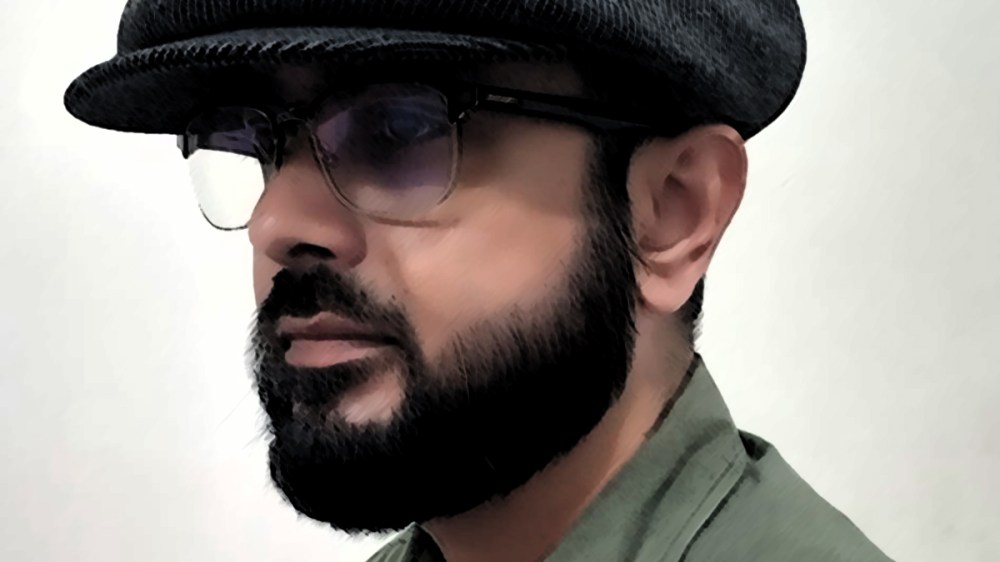
Trishikh Dasgupta
Adventurer, philosopher, writer, painter, photographer, craftsman, innovator, or just a momentary speck in the universe flickering to leave behind a footprint on the sands of time... READ MORE
These stories are Free and if you have found something here that stayed with you, some of my other books are now available in print and digital editions. They gather longer journeys, quieter questions, and stories that continue beyond this page.
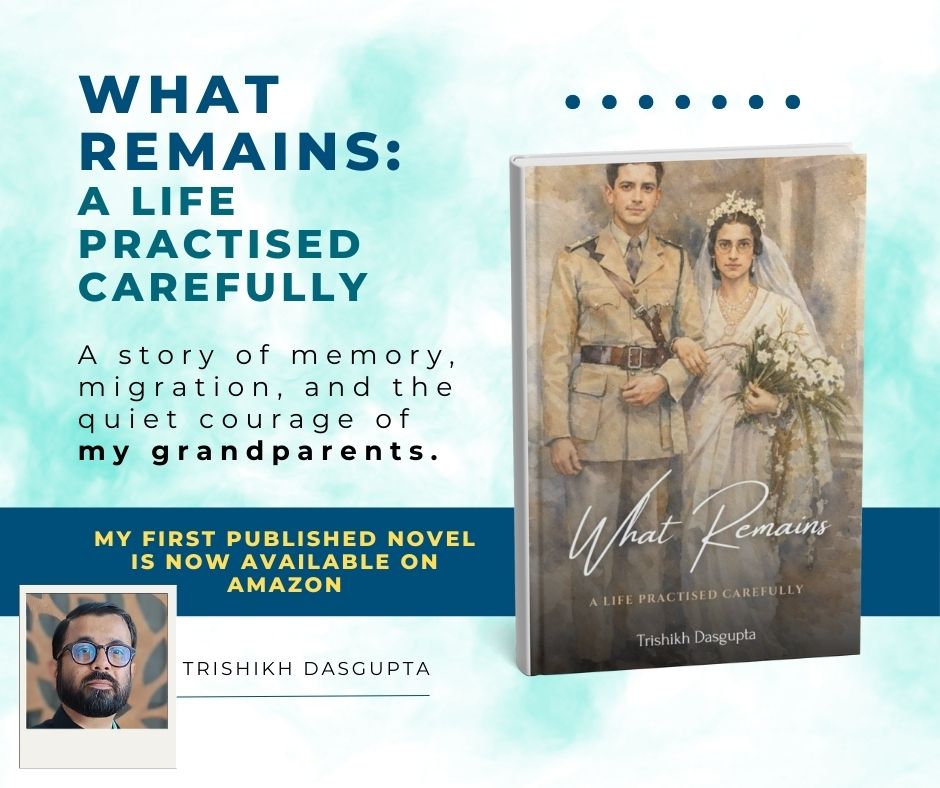
You may also like to read my1st Published novel now available on Kindle and Paperback versions.
 Weekend Stories by Trishikh
Yet another fabulous tale.. you make your stories come alive.. much love to you, Fiona ❤️
LikeLiked by 3 people
Dear Fiona. I always treasure the first comment to my story, and I must thank you for doing so for this story. So happy that you liked this tale of mine too.
LikeLiked by 2 people
You always point out that your stories are fiction, but on the other hand they are so true with a lot of history embedded in the stories. I mean things like that definitely happened, not only in Kolkata. Small cosy places like Fat Mama’s are quickly disappearing everywhere, it is so sad. But they are alive in your story and in our memory. The way you are describing Fat Mama, I would have liked to meet her.
LikeLiked by 2 people
Well Stella, much of most of my stories have a lot of truth in it, but I cannot claim the same, as these are written from my personal experiences and research, with a bit of fiction to make it more interesting. The history of the Chinese community in Kolkata, their profession, ultimate exodus, the eating houses, all are true facts. I grew up seeing these. There was also a great eating house run by a lady lovingly referred to as ‘Fat Mama’. But the character portrayed in my story her family is fictional. I strongly believe that most of the great fictions are based on reality.
Thank you so much for always liking, commenting, and appreciating my stories. I am so happy that they appeal to you.
LikeLiked by 3 people
I think that basing your stories on personal experience makes them so alive and relatable. And the historical facts are always interesting, an opportunity to learn.
LikeLiked by 2 people
You are right – personal experiences always help to tell a story much better. And a little bit of History is always interesting.
LikeLiked by 2 people
This story is such a beautifully layered and poignant piece. 🌟
You have painted Fat Mama’s little eating house with words so vivid that it feels as though we can smell the sesame oil, hear the hiss of the wok, and see the soft glow of the yellow bulb. The details — from the chipped red stools to the faded calendars and the “Horlicks” jar of secret sauce — create a setting that is alive, textured, and full of memory.
The way history is woven in, from Faxian and Tong Achew to the vibrant lanes of Tiretta Bazaar and Bowbazar, gives the story depth beyond a simple farewell. It becomes a tapestry of migration, tradition, and resilience, wrapped around the warmth of food and community.
LikeLiked by 4 people
Dear Verma’ji, yet again your comment on my story leaves me speechless and brings tears of joy to my eyes. Your analysis and insight is so perfect that it really gives meaning to writing this story.
So happy that you liked the tale, the tapestry of things and the emotions. Always such a treat to share a story with you.
LikeLiked by 2 people
Thank you, Trishikh, for your beautifully written history of Chinese population living in peaceful harmony in India. It is a nostalgic tale as time doesn’t stay the same, but moves on taking people with it. Your tale of Fat Mama, a cook of excellent wontons, and her last night in the city she loved, before leaving for Canada to join her children is moving and remarkable, as all your stories are.
Joanna
LikeLiked by 3 people
Dear Joanna, as always your comment brings me extreme joy. So happy that you liked this tale of mine. It is indeed sad to see communities who have stayed in a certain place for centuries move away. But you rightly say that time moves on taking people with it.
LikeLiked by 2 people
🙏🍜
Aum Shanti
LikeLiked by 2 people
Thank you so much.
LikeLiked by 1 person
This is almost sad, too much so not to be real.
LikeLiked by 3 people
That is so true. I have seen the Chinese community dwindle in Kolkata in front of my eyes.
LikeLiked by 2 people
Nicely portray about the Chinese community in Kolkata, that nowadays does not exist much. Good story about Chinese authentic food and its aroma which attracted me even more.
LikeLiked by 4 people
Thank for appreciating Anamika. Yes, sadly not only the Chinese, but many resourceful communities have migrated from the city. For that matter there has been a steady brain drain from Bengal for many years now. Even a lot of Bengalis are settled elsewhere. Perhaps primarily due to the lack of job opportunities.
LikeLiked by 1 person
Dear Trishikh
I was quite impressed by your post. It has given a new point of view.
Thanks for liking my post, ‘Writer’ 🙏
LikeLiked by 1 person
Dear Raj, you are most welcome. So glad that you liked my latest story. I enjoyed your post too.
LikeLiked by 1 person
Wonderfully scripted history. No taste in the world can compare with that of old Chinatown, Kolkata. Touching story.
LikeLiked by 3 people
Dear Sumita, thank you so much for liking this story of mine. You are very right, nothing can compete with the authentic and lost taste of old Chinatown, Kolkata.
LikeLiked by 2 people
This passage is beautifully atmospheric! 🌸 It paints a vivid picture, almost like stepping into Fat Mama’s kitchen, where every detail tells a story. The imagery—the wok hissing like a temple gong, the chipped melamine plates, and the smell of sesame clinging to the walls—creates a rich sensory experience.
It feels nostalgic yet alive, blending culture, memory, and food into a warm narrative. The closing details, like the silent old radio and calendars kept for luck, subtly hint at the passage of time and tradition.
LikeLiked by 3 people
Thank you so much for this deeply thought and heartfelt comment. It seems that you really enjoyed the story. So glad that the sights, sounds, and smell in the story felt so real to you. Nothing makes my day better than this kind of appreciation.
LikeLiked by 1 person
Lovely, evocative piece. I never would have guessed that Kolkata was particularly known for Chinese food.
LikeLiked by 3 people
Thank you so much. Kolkata, is famous for many different kinds of foods, there are many communities living here for generations, that’s why you get such a mixed and varied cuisine experience here. Though you need to know the authentic joints to get the authentic food, as there are many new generation shops, whose food, I am sad to say is not that good.
LikeLiked by 1 person
What a wonderful story. This is exactly what food is about. The history and the tradition of the dish, the families who share it and pass it on. The awakening of memories and the creation of new. You don’t get that in a fancy commercialized restaurant with no soul.
LikeLiked by 3 people
So true, and this has happened at a large scale in Kolkata. Once upon a time the city used to be a food lovers paradise. Today there are a million more food stalls and restaurants, but the love the olden days cooks had for what they prepared, is very rare to come by.
LikeLiked by 2 people
Beautiful comment, and great site name!
LikeLiked by 2 people
Thank you so much.
LikeLiked by 2 people
You have poignantly marked out an phenomena occurring throughout the world, the disappearance of humanities specific cultural intricacies, may it be languages or local customs that had developed over centuries and once gone will be lost forever. As we separate ourselves increasingly from that what used to define our unique human attributes, we facing a future of technological sameness, but do those who follow us care?
LikeLiked by 3 people
That is exactly what I wanted to say. Change is always considered good but at what cost, the price we are paying for these changes – isn’t it priceless. To build new fortunes we are losing the treasures our father’s had gathered for us.
LikeLiked by 2 people
It’s sad that time is over. May new traditions take the place of the old and be every bit as good🙂
LikeLiked by 3 people
Yes, that is my prayer too. May the young bloods find the old passions and rekindle the ancient fires.
LikeLiked by 2 people
I love this story. Thank you. I can see Fat Mama, taste her food and feel her sadness.
LikeLiked by 3 people
I am so glad that my story could move you so deeply. Always a treat to receive your comment. I treasure your appreciation.
LikeLiked by 1 person
Already I am sad for missing Fat Mama’s wontons. I can taste the garlic and ginger, the hidden mysteries of a lineage of spices. The perfectly encasing dough translucent in its perfection. See what you’ve done? Now I’m longing for your exquisitely described taste sensation. Thank you, anyway.
LikeLiked by 2 people
That is so kind of you to say. If my description makes you yearn for the food, then I have succeeded to a great extent in writing this short story. I treasure your appreciation for my story. So glad to have been able to write it for the world to enjoy.
LikeLiked by 2 people
Another sweet story Trishikh! I could smell and see it all. Did you go to places like this years ago? I never knew Chinese had moved to India. It is sad when the old places die and people move away.I grew up in a small town south of Phoenix, AZ. Places we frequented in town are all gone. I travel through there occasionally and the town just feels fake to me now. The mountains I grew up climbing are still there so that’s about all I return to. My family is all gone.Thanks for sharing your deeply layerd and sentimental stories.
LikeLiked by 2 people
Dear Katelon, yes I used to eat in similar chinese eating houses in the same area. My school was just in the locality. I grew up with a lot of Chinese friends, most have migrated. The story is heavily drawn from my childhood experiences. I understand your feelings about your town in Arizona. Yes the feeling is very similar to my story.
Thank you for liking the story and giving me a lot of encouragement to continue writing such similar tales from India.
LikeLiked by 1 person
I don’t often read short stories, but I read every word of this one, and enjoyed it so much. This is excellent writing 👌
LikeLiked by 2 people
That is so nice of you. I am so glad that though you do not read short stories, you read this one of mine. I am so happy that the story appealed to you and you liked it so much.
LikeLiked by 2 people
This story hit me right in the heart. It makes me think about all the small, family-run places I’ve known and loved that are now gone, and how a place can hold so much more than just a meal. It’s a reminder that true flavour isn’t just about ingredients; it’s about the hands that prepare the food, the stories shared over the table, and the love poured into every dish. Fat Mama’s story is a beautiful, sad, and deeply human reflection on change and memory. Wow !!! Your pen and heart are synced
LikeLiked by 2 people
Dear Aparna, you are so right. Cooking is so much more than what it seems, even so much more than the art and the science, it has so much to do with the heart and soul. I really feel sad to see many such eating places slowly fade away. Though many names have been revived, some rebranded, and some even serving the authentic dishes they were originally famous for, but in general I have observed that the heart and soul is missing.
I must thank you for your beautiful comment. It gives me great encouragement to continue writing these stories.
LikeLiked by 2 people
I think ur inbox got spammed 😂 I posted for the first time and then saw the comment had not been uploaded😖 I repeated this cycle… I think twice/ thrice 🫣😵💫 apologies
LikeLiked by 2 people
Yes, Aparna, I got all the messages. They don’t get posted until I approve. So if I am busy with something else, driving, etc. It usually takes a while for me to approve the comment. Usually I do it within a day. Sorry for this delay at times.
LikeLiked by 1 person
Roger that! I will keep that in mind!!! Have a great day! 😄
LikeLiked by 2 people
Cool, a great day to you too.
LikeLiked by 2 people
One of the reasons I love this story so much is that it very much reminded me of my grandma, who also cooked for her people with great love and despite the fact that her options were simple but delicious! (Dear Trishikh, it took me quite a while to find out how to give you an answer Martina)
LikeLiked by 2 people
Dear Martina, no story is as powerful as the ones which stir up a deep memory and remind us something once special and close to us. I am so glad that my story took you down the memory lane of your grandma’s cooking. That is something so special.
LikeLiked by 2 people
👏🌺
LikeLiked by 2 people
What a fantastic story, have you published these? regards.
LikeLiked by 2 people
No William, I have not, hopefully someday. Thank you so much for appreciating.
LikeLiked by 1 person
Engaging
LikeLiked by 2 people
Thank you… 🙏
LikeLiked by 1 person
Intoxicating imagery…. Poetic…♥️
Sorry I’ve been away from your blog for so long……. 🙏
LikeLiked by 2 people
I am so glad to welcome you back to my world of short stories. So glad that you liked my latest, especially the imagery painted through words.
LikeLiked by 2 people
Yes…. thank you …I’ve been in another world the past few years….thank you for visiting my blog too … I’ll have to catch up on your short stories ! 🙏
LikeLiked by 2 people
Great to have you back. In between I also took a break for more than a year. From July this year, I have been writing and blogging again. Do visit again and read the stories whenever you feel like.
LikeLiked by 1 person
A wonderful, heartfelt story! It reminded me of my grandmother who enjoyed cooking for the family.
LikeLiked by 2 people
Very true, this story has made many ofy readers remember of their grandmother’s cooking. I am so glad that it could bring back such memories.
LikeLiked by 2 people
Captivating story, I felt like the memory was my own. 👏🏾
LikeLiked by 3 people
Dear Kamina, so glad that you feel this way. So glad that my story could create such deep emotional connect with you. Thank you for the lovely comment. Do visit again and read more of my short stories whenever you feel like.
LikeLiked by 2 people
Dear Trishikh, you are most welcome. I definitely plan on returning to read more of your short stories. Have a Beautiful Tuesday.
LikeLiked by 2 people
Dear Kamina, I look forward to it. A great day to you too.
LikeLiked by 2 people
Dear Trishikh, thank you.
LikeLiked by 2 people
Dear Kamina, you are most welcome.
LikeLiked by 2 people
This is such an amazing read! ✨
LikeLiked by 3 people
Thank you so much, so glad that you think that way.
LikeLiked by 2 people
AMAZINGLY good!!!!
LikeLiked by 1 person
Thank you Sharon, so glad that you liked the story.
LikeLiked by 2 people
You are most welcome, Trishikh!
LikeLiked by 2 people
Sadly, I never had Chinese when I was in Kolkata.
LikeLiked by 2 people
You never know, maybe you will get the chance again someday, to eat authentic Chinese food in Kolkata.
LikeLiked by 2 people
God willing 🙏
LikeLiked by 1 person
This piece is tender, atmospheric, and deeply nostalgic. Dasgupta weaves food, history, and memory into a layered narrative that feels both intimate and elegiac. The sensory detail—the hiss of the wok, the smell of soy-soaked walls, the swing of the tungsten bulb—anchors the reader in Fat Mama’s world, while the historical anecdotes ground the story in real cultural transitions.
Thank you
LikeLiked by 2 people
Dear Armann and Kaymann, your thoughtful retrospection of my story gives me great joy. Appreciation such as this works as wonder fuel for my writing engine. Am am really glad to have been able to churn out this story.
LikeLiked by 1 person
💜
LikeLiked by 2 people
Thank you Carol for loving the story.
LikeLiked by 2 people
Amazing read 👏
LikeLiked by 1 person
Thank you Samiran.
LikeLike
Maybe this blog with Fat Mama’s unique cooking will help me slow down and just enjoy the taste of my food more when eating out in travel.
LikeLiked by 3 people
Very true, when we are travelling we many times forget this. Me included.
LikeLiked by 1 person
Have you ever tried Mate from Argentina? I found its a good taste test for appreciating the slow eating and drinking ritual?
LikeLiked by 1 person
No I have never tasted it. Just researched about it. Sounds very interesting. It’s now something on my to do list.
LikeLike
Fabulous storytelling, Trishikh! 👌🏻👏🏻
LikeLiked by 4 people
Thank you so much. So happy that you liked this story of mine.
LikeLiked by 2 people
👍🏻🙂🙏🏻
LikeLiked by 1 person
Lovely story!
LikeLiked by 3 people
Thank you Dawn, so happy that you liked the story. I have always treasured your appreciation.
LikeLiked by 1 person
Your story beautifully preserves both memory and history. Through Fat Mama’s wontons, you let us taste not only food but also the untold stories of a community. It feels like a bridge between what was once alive and what still lives on in remembrance. Truly moving.
LikeLiked by 1 person
Dear Livora, once again I must thank you from the bottom of my heart for this beautiful and heartfelt comment. I see that you have really enjoyed the story. And. Nothing can make me happier.
Memory, history, community, and food – rightly identified by you as the key elements in this short story.
LikeLiked by 1 person
Dear Trishikh, I’m deeply glad that my reflections resonated with the heart of your story. The way you wove memory, history, community, and food together made it both intimate and universal—thank you for such a meaningful piece.
LikeLiked by 1 person
It is a blessing from God to be able to share such a story.
LikeLiked by 1 person
A poignant story and I would so love to eat there. You really captured the taste and the scents and the atmosphere.
LikeLiked by 2 people
So glad that you liked the story so much, and especially the way I captured the taste, scents, and atmosphere of the time, place, and culture.
LikeLike
A wonderful story, but also a poignant reminder, Trishikh, thank you.
LikeLiked by 1 person
Sorry for the late reply, somehow your comment landed in my spam box. Thank you so much. So glad that you liked my short story. Always a pleasure to share a good story.
LikeLiked by 1 person
No problem. I think that when someone new comments, WordPress automatically sends it to the spam folder.
LikeLiked by 1 person
No issues, now it’s sorted.
LikeLiked by 1 person
Preraṇā Satyaṁ Saundaryam 🙏
LikeLiked by 1 person
Thank you so much.
LikeLike
Touching story. Rings true. The exodus of the enterprising community is a loss to the city and its richness and diversity.
LikeLiked by 1 person
Dear Ankur, you are absolutely right. I could not have said it better – “The exodus of the enterprising community is a loss to the city and its richness and diversity.”
Thank you for liking this story so much. Appreciation such as yours works wonders for my writing engine.
LikeLike
I really liked this story and enjoyed reading it.
LikeLiked by 3 people
Thank you so much for liking my story so much and commenting on it. It really gives me great joy when someone appreciates one of my stories.
LikeLiked by 1 person
So true and lovely
LikeLiked by 1 person
Thank you so much. So glad that the story appealed to you.
LikeLiked by 1 person
Thank you for sharing my story on your website, now a lot more people would be able to read it.
LikeLike
Excellent article! Your points are well-articulated and persuasive.
LikeLiked by 1 person
Thank you.
LikeLike
A truly fantastic read. Your writing style is both engaging and informative.
LikeLiked by 2 people
Thank you.
LikeLike