As the metal claw of the tungsten carbide-tipped drill inched forward deep below the bowels of the bustling city above, Tunnel Manager, Arya Agrawal, suddenly felt a strong hunch to proceed no further. “Stop the drilling. There is something wrong,” she shouted. The sound of the metal claw of the drill screeched to a reluctant halt, piercing through wet gravel and mud, stopping to knock on something that sounded more like wood than earth, sending a shiver down her spine. The tremor felt more like the awakening of a long-buried past.
That morning in the mid-1970s, as the workers cleared rubble at the underground Metro Railway tunnel under construction at Esplanade in the heart of Kolkata, a wooden object surfaced from the past, as though gently nudged by secret fingers. It had lain there, buried under the ages, under concrete, under tarmac, under the constant hum of an ever-growing metropolis above.
After hours of delicate digging with small tools and by hand, a hull finally emerged from its forgotten grave beneath the earth, and Tunnel Manager Aarya knelt beside it, anxious to unravel its message from the past. The boat was narrow, built of dark planks that had held water once. The smell was rich, of damp moss, old sap, and wood that had breathed once. Bits of mud clung to its joints. In its belly, sealed with clay, she saw a humble pot, which cracked open on its own, perhaps for being suddenly exposed to the atmosphere, and the air around seemed to momentarily sigh before a hush. Inside was a scroll, fragile as moth wings, its ink faded but legible. She cradled it carefully, tilting it towards the steam of the pedestal flood lights, and read the first line of the Sanskrit message: “For the future, know that here once flowed Dharma Sagar.”
Long before buses groaned their diesel hymns, before the tram tracks hummed beneath red glowing wheels, Dharmotola, later Dharmatala, was not a crowded square in the heart of the vibrant city of Kolkata, but a vast, shimmering lake called Dharma Sagar. Stories whispered among old boatmen on the Hooghly, claiming the waters stretched beyond what is now Esplanade, curling around low hills and marshes, fed by monsoon tides. The name struck her like an echo from a place her ancestors might have swam, rowed, and prayed. Dharma Sagar, a lake buried under the madness of Esplanade, under the vehicular chaos, the neon signs, and the footfall of thousands.
In the mornings, pale mists would float on the glassy surface, curling upward like smoke from incense. Fishermen in small boats would cast their nets, dipping oars into the silvery lake as Brahmin priests chanted softly on the banks. The air smelled of wet lotus blossoms and the sweet, brackish tang of water mingled with the smoky scent of burning reeds. Birds nested in the wetland vegetation, and dragonflies darted along the banks, their wings catching the rays of the sun.
Legends say that the name “Dharma Sagar” came from spiritual roots. On the banks once stood a rough black stone, venerated long before British traders landed on its shore. No one knew when it was first placed there, or by whom, the sacred aniconic form of Dharma Thakur, a God worshipped by the Bauri, Bagdi, Dom, and Hari communities. Here they sang their paeans, offered flowers and rice, and believed the lake itself carried the deity’s reflection. It was said that the name Dharmotola came from this shrine, from those worshippers, from those dawn songs drifting across a lake that once ruled the centre of this city.
Others believed the name came from an old mosque, long gone, or even from a Buddhist presence, dharma being the very heart of the Buddhist trinity. Like so much of Kolkata, the truth was a tapestry woven from many threads, each stubbornly refusing to die. This was a place where faith and water met, where boats carried merchants, pilgrims, and common folk across the expanse of a city that had not yet been born.
Aarya imagined the stone deity darkened by time, the priest whispering mantras, the echo of conch shells, the sound of oars slicing through morning light. Her beloved ‘City of Joy’, the place she thought she knew, shimmered with an older one beneath it.
Ages passed, and the eighteenth century arrived with British boots and ledgers, with the hunger for land and order. As the East India Company expanded, Dharma Sagar began to shrink. Landfills crept in like a slow tide in reverse. Earth found its way into the lake, swallowing it inch by inch. The waters receded reluctantly, and the slender boats that had once danced upon them vanished, sold, burned, or abandoned.
By the nineteenth century, the lake had all but disappeared. The water gave way to streets: dusty, busy, and hopeful. Chowringhee Road gradually grew into a grand avenue, lined with stately colonial edifices, shops, and bazaars. The skeleton of a city forming over the buried bones of the lake. Dharmatala transformed from a lakeside hamlet into a commercial heartbeat.
The soundscape gradually changed. Instead of the hush of water, there were horse-drawn carriages clattering over cobble. Later came tram bells, soft and melodic, and then the urgent squeals of buses, the horns of taxis, and the babble of millions. The smell shifted from lotus and reed smoke to roasted peanuts, frying fritters locally known as telebhaja, leather polish, tobacco, and damp cotton from street shops.
In 1842, beside the former lake bed rose the Tipu Sultan Mosque, built by Prince Ghulam Mohammad, its domes shimmering like green jewels in the sun. Across the road stood the Sacred Heart Church, humming gently with hymns. The Metropolitan Building, with its neo-Baroque creamy domes, clock tower, and old-world charm, arose as one of the grandest department stores in the colonial era, perched like a queen presiding over the crossroads. Commerce too grew, shops, bazaars, camera merchants – the small alley later called “Metro Gali” became known for bargain finds; behind one narrow lane, legend says, was Shaw’s Bar, affectionately called “Chhota Bristol” in homage to the old Bristol Hotel in Belgrade.
In shadowy corners, smaller theatres and halls came and went. At 5 Chowringhee, stood what was once J. F. Madan’s theatre office, where cinematic dreams were born. Nearby, the legendary Metro Cinema, an Art Deco masterpiece from 1935, lit up like a star every evening when the latest movies flickered on its silver screen. The Elite Cinema on S. N. Banerjee Road opened in 1940, hosted generations of film-goers, before finally closing in recent years. Statesman House, home to ‘The Statesman’ newspaper, its facade still dignified among the bustle. Esplanade Mansion, built in art nouveau style by the Ezra family in 1910, still stands today gracefully opposite Raj Bhavan. A dozen heritage gems formed a necklace along the roads, unaware that beneath their foundations slumbered a long-forgotten lake.
Coming back to the mid-1970s, Aarya felt the weight of time in her palms as she held the fragile scroll from the broken clay pot. The Metro dig had uncovered not just a relic, but a memory. She wondered who had placed the message there, and why, centuries ago, when the lake still breathed. At the construction site, the din around her was unrelenting – deafening jackhammers, rattling wheelbarrows, and men shouting. Yet she felt a kind of hush, as though the past itself leaned in to watch.
She took the scroll to the city’s heritage office. Historians and archaeologists gathered, their lenses and gloves and notebooks ready. As they studied the brittle parchment, Aarya closed her eyes and imagined a fisherman in a wooden boat at dawn, rowing across still water while chanting softly; Dom and Hari worshippers gathered on the bank, singing paeans to Dharma Thakur before a rough black stone in a hidden shrine; lotus petals drifting gently on the surface as bees hummed above them and dragonflies flickered like living sparks; the first traders arriving by boat, their voices echoing across the lake as they called out for trade; and a priest offering puja, the scent of incense merging with the cool morning air.
One scholar whispered that the scroll might date from before British rule, perhaps from a time when the lake was still sacred, before the city had swallowed it whole. Another silver-haired said, “My grandmother used to tell me stories of this place. She said she saw boats when she was young – small wooden boats, just like the one you found.” He paused, glancing at the pot. “I never believed her.”
When they translated the message, Aarya’s breath caught. The writer, unknown, long dead, had written not merely for their own time, but for the distant future, a detailed description of the lake and the life around it, and finally the words – “Let those who come after know: this is not merely ground, but water disguised. Tread gently, carry memory. For where there was water, you may still hear the song of oars.” The words trembled with longing, and in that moment, Dharmatala was no longer just a busy street. In her mind, Aarya saw the hidden lake again – a vast sheet of water reflecting early morning light, fishermen murmuring, devout voices rising in prayer, a shrine on the edge. The buried boat was not just a find; it was a bridge.
Weeks later, as the Metro construction continued, the heritage office decided to preserve the boat, the fragments of the broken pot, and its fragile scroll. It was shifted to the nearby Indian Museum. Though initially a small exhibit was conceived, titled “Dharma Sagar: Unearthed”, where it was planned that the public could come, see the real relic, touch replicas, smell lotus incense, and hear recorded chants, but for some reason it never happened. The years passed, and the memory of the unearthed boat, the fragments of the broken jar, the fragile parchment, and its message only remained alive in the hearts and minds of Arya, some of the workers present on the dig that day, and a few scholars who had initially shown great interest. Sadly, the boat and its contents surfaced after so many years, only to find a second grave in a crate hidden and forgotten somewhere in one of the many dark and stacked rooms inside the Indian Museum. Who knows, one day perhaps it will be resurrected again.
Many years later, Arya happened to be in the city again. Crossing Dharmotola in a yellow taxi in the evening, she saw the lights of the Metropolitan Building glowing. The Tipu Sultan Mosque, its domes dark against the sky, standing like a silent sentinel. The Metro Cinema sign blinking softly, a beacon of art deco in the night. In that moment, Aarya realised that the lake was never truly gone. It was just sleeping beneath the city’s pulse, waiting for someone to remember. She closed her eyes and whispered a prayer – “May the waters never be forgotten.” “Stop stop stop…” she blurted to the taxi driver. The vehicle slowly changed lanes and came to a halt along the footpath. Arya paid fifty rupees above what the meter showed. Dismounting the vehicle, she started walking along the road. She looked up at a street sign and read – Lenin Sarani, Dharmatala Street’s new name. She passed the tram lines, the roadside vendors, the rush of traffic. But in her mind, she heard something else – the soft dip of oars, the hush of water, a distant chant carried across centuries. And she smiled, because she understood: the city’s heart still pulsated with the rhythm of its ancient lake and its bustling shore.
Copyright © 2025 TRISHIKH DASGUPTA
This work of fiction, written by Trishikh Dasgupta is the author’s sole intellectual property. Some characters, incidents, places, and facts may be real while some fictitious. All rights are reserved. No part of this story may be reproduced, distributed, or transmitted in any form or by any means, including printing, photocopying, recording, or other electronic or mechanical methods, without the prior written permission of the author, except in the case of brief quotations embodied in critical reviews and certain other noncommercial uses permitted by copyright law. For permission requests, send an email to the author at trishikh@gmail.com or get in touch with Trishikh on the CONTACT page of this website.
ABOUT THE AUTHOR

Trishikh Dasgupta
Adventurer, philosopher, writer, painter, photographer, craftsman, innovator, or just a momentary speck in the universe flickering to leave behind a footprint on the sands of time... READ MORE
These stories are Free and if you have found something here that stayed with you, some of my other books are now available in print and digital editions. They gather longer journeys, quieter questions, and stories that continue beyond this page.
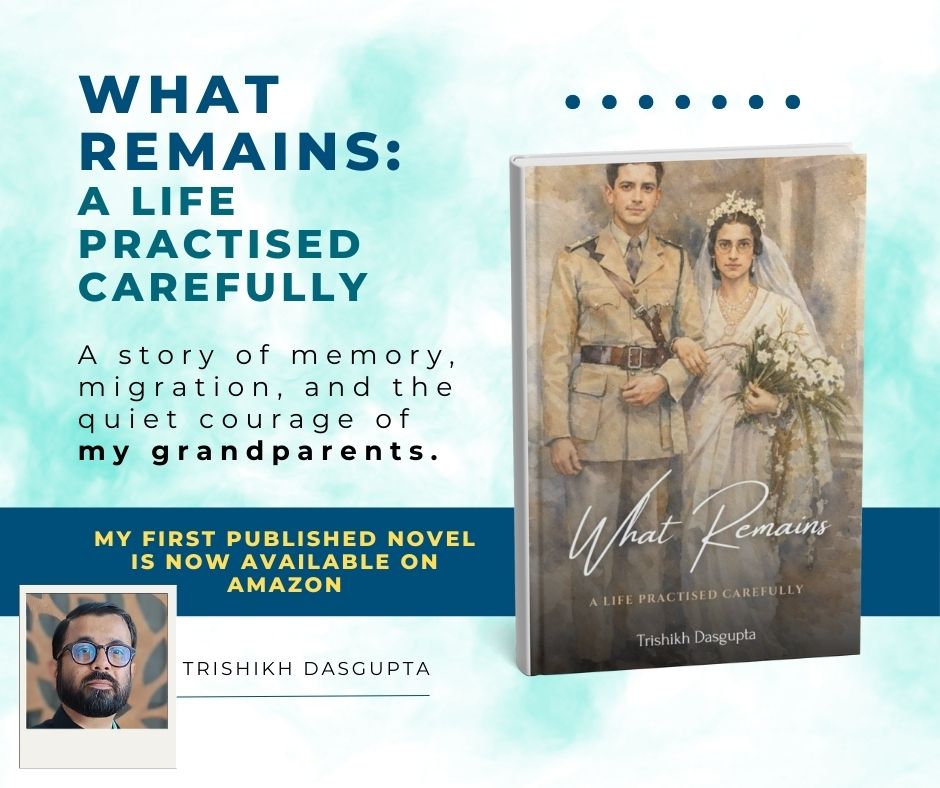
You may also like to read my1st Published novel now available on Kindle and Paperback versions.
 Weekend Stories by Trishikh
Sagar, like King Sagara whose sixty thousand suns were killed by a mighty Sage with one glance. And whose grandson Anshuman had to pray until his future great grandson Bhagiratha finally spoke with Brahma. And later had to pray to Lord Shiva to bring down Ganga Devi herself. For only Ganga who became the river Ganges, would be able to save his ancestors.
LikeLiked by 2 people
Yes, I have heard about this legend. Such stories have always fascinated me so much. So glad that you liked this short story of mine.
LikeLiked by 1 person
As always, your stories are amazing. I’m glad to meet you on this website. You have fed my need for wonderful stories.
LikeLiked by 1 person
That is so nice of you to say. It is such a reward for me, when someone enjoys my stories and comes back over and over again to read them.
LikeLiked by 2 people
Always, that’s why I subbed you the first time. I could tell your site was special indeed.
LikeLiked by 2 people
I am so happy for our friendship urged by literary sparks.
LikeLiked by 1 person
🙏 Me too my brother. Me too
LikeLiked by 1 person
Thanks for the poetic history lesson. Lost and buried water is becoming an unfortunate trend in the world. We can’t drink money. War and violence are not diving into a lake. I fear for the future of people depending upon the Himalayas … water … water everywhere, but not a drop to drink. Thanks. Duke
LikeLiked by 1 person
Dear Duke, we humans are unfortunately driven by destruction. A trait, which initially helped us to evolve, but unfortunately if not checked will be the cause for our demise.
Water, forest, air, land, animals, birds, insects, fishes, and every other thing is in the path of the human wave of destruction.
However, though being destructive, fortunately we humans also have the seed of preservation within ourselves. There are many amongst us who are working relentlessly to mend the world. I only pray that more of such people and frame of mind increase in number, enabling the humans to evolve as the ultimate beings, worthy of the way we have been made.
LikeLiked by 2 people
Beautiful. When we were there in 2023, we too felt the special atmosphere of Kolkata. Actually my father was posted there in the early 60s. He was working in the Indian Railways. I was born in 1962 and lived my first years there. My mother used to remember the Railway quarters in Garden Reach. She loved gazing at the ships passing by.
LikeLiked by 3 people
Dear Lakshmi, yes indeed, Kolkata is a very nostalgic city. People who have connections with the city always year to come for a visit. There is much rich history and sheritage connected with the city, that its really hard to not think about these things. Glad that my story stirred some memories and your personal history and connection with the city.
LikeLiked by 1 person
This story is very interesting to me. I had no idea such a Lake existed.
It reminds me of the origins of Mexico City, built upon the ancient Aztec Lake Texcoco.
Nowadays little remains besides a few canals.
LikeLiked by 2 people
Wow, really, Mexico City was built upon an ancient Aztec Lake, Texcoco. Did not know this.
This makes me wonder how many such cities would be there in the world, which have been built in similar ways.
Also the present city of Mumbai (previously known as Bombay), the business capital of India, was a set of islands on the Arabian Sea coast to begin with. Gradually more land was reclaimed and the present city came to be.
LikeLiked by 1 person
Mumbai. That’s where Iba lives. I subscribe to her posts too. She is originally from Shillong in the Meghalaya.
I would very much like to see this part of North Eastern India.
LikeLiked by 1 person
The North East Part of India is something like a fairy tale. It’s an out of the world experience altogether. I have written few stories, based on the North East over the years – the following is based on Meghalaya, I am suure that you would like it: https://storynookonline.com/2020/11/14/across-the-valley-through-the-air/
LikeLiked by 1 person
Well, I just read the story of your autobiography of a car. I found it very touching as I have always found autobiographies of inanimate objects. I believe they have life and in a certain they do according to string theory and other phenomena of physics I know nothing about. But I always felt objects had feelings and your story plays on the emotions with that idea. Sorry I could not find the proper post to put this comment in but I loved it so much. Dare I say, even found it moving… a leftover feeling from childhood. Thanks so much, Ellen 🙏🏽
LikeLiked by 2 people
Well ‘Whispers of the Unholy Trinity’ was my first Autobiography Short Story, and I am really happy with the way it came out, with all the appreciation that I received for it. So glad that you liked the tale too. I strongly feel that inanimate objects can have life force in them. The objects passage through time gives it life, we just have to have a keen sence of sight and understanding to dig out their stories.
LikeLiked by 1 person
Yes, very profoundly stated!!
LikeLiked by 1 person
Nice story and as always, history woven beautifully.. Took me to Kolkata instantly and I too became a part of the story. Great job.
LikeLiked by 1 person
Dear Savitha, thank you so much. So happy that you liked my latest story, and that it teleported you to Kolkata.
LikeLike
Dear Ned, as always, thank you so much for your support in sharing my story with a larger audience. Its always such a pleasure to receive such relentless appreciation and encouragement you.
LikeLike
So interesting to see the tale of colonialism told through the marshlands and lakes that are gone in its wake. Thank you for this window on history.
LikeLiked by 1 person
Dear Rebecca, thank you profoundly for your deautiful comment. Kolkata’s landscape holds so many quiet stories of what was altered, erased, or reshaped through time, and I’m glad this perspective resonated with you. The vanished lakes and marshes are powerful windows into that history, whispering truths long after the city moved on. Grateful that you paused to look through that window with me.
LikeLiked by 1 person
What a breathtaking and beautifully woven narrative! This is more than just a story; it’s a profound meditation on memory, time, and the hidden soul of a city. You have masterfully blended historical fact with poetic imagination, creating a rich tapestry that makes the past feel immediate and alive.
The way you unearth the layers of Kolkata—from the modern metro tunnel down to the forgotten Dharma Sagar—is a powerful metaphor for how our present is always built upon the whispers of the past. The character of Arya Agrawal is the perfect conduit for this discovery—her intuition, reverence, and emotional connection to the city make her journey our journey.
Your writing is wonderfully evocative. The sensory details are particularly stunning—the “smell of damp moss, old sap, and wood that had breathed once,” the sound of the drill screeching to a halt on wood, the shift in soundscape from chanting priests to tram bells. These details don’t just describe a setting; they transport the reader.
The closing scene, where Arya gets out of the taxi to walk and listen for the ancient rhythms beneath the modern chaos, is a perfect, poignant ending. It leaves us with a sense of hope and continuity—that while cities transform, their essence, their “heart,” remains, waiting for those who are willing to listen.
This is a truly magnificent piece of writing. Thank you for sharing this gem.🤝
LikeLiked by 4 people
Dear Srikanth, your words feel like a soft lantern held up to my story, illuminating corners even I hadn’t noticed while writing it. I’m truly touched by how deeply you engaged with the layers of the tale, and how beautifully you articulated its spirit.
Dharma Sagar, Arya, and the many buried whispers of Kolkata came alive again through your reflection. If the story managed to stir memory and imagination together, it’s only because readers like you are willing to listen for those faint rhythms beneath the city’s roar.
Thank you for taking the journey with me, and for responding with such generosity of thought and heart. Your comment means more than you know.
LikeLiked by 1 person
Your tales are always so rewarding and enriching. Many thanks.
LikeLiked by 1 person
It is I who must thank you for always appreciating. Thank you from the bottom of my heart.
LikeLike
🧡💛💜
LikeLiked by 1 person
Thank you so much.
LikeLike
“A beautifully crafted and profoundly immersive story. The way the past and present intertwine is truly mesmerizing. Your vivid imagery, historical depth, and emotional resonance make this piece unforgettable. A remarkable work of storytelling.”
LikeLiked by 3 people
Dear Verma’ji, as always your appreciation gives me so much joy. Your words encourage me to keep on writing these stories for as long as I can. This was my 91st story, hopefully by the grace of God, very soon I will reach a hundred stories. And believe me, your encouragement is playing a solid role in helping me write these tales for us and for our future generations to cherish.
LikeLiked by 3 people
🙏
Aum Shanti
LikeLiked by 2 people
Thank you so much.
LikeLiked by 2 people
Thank you so much, Trishikh, for the wonderfully written nostalgic tale of the long time gone lake, which reads like a unforgettable story with all the sounds, scents that you brought to life with your talent of the superior storyteller.
Joanna
LikeLiked by 4 people
Dear Joanna, thank you so much. Your words feel like a gentle breeze drifting over that long-lost lake. I’m truly delighted that the story’s sounds and scents reached you, that its forgotten waters stirred something familiar in your heart. It means a great deal to know the nostalgia I tried to evoke resonated with you. Grateful for your kindness and for always reading with such sensitivity.
LikeLiked by 1 person
Thank you, Trishikh, for the beautiful reply! As always, you are more than welcome!
Joanna
LikeLiked by 2 people
Thanks for another engaging story that pulls us in with heartfelt details and vibrant history.
LikeLiked by 2 people
You are most welcome. It has been a pleasure to write this story. So happy that you enjoyed it so much.
LikeLiked by 1 person
Yes, you build a whole scene… the sights, the sounds, the smells, the whole atmosphere is recreated for the reader and puts them there in your story. You are a master story-teller. I am so glad to have found your blog. I do hope that you get published and wish you every success. It is clear that you love what you do… create a while world for the reader to step into. 🙏🏽
LikeLiked by 1 person
I treasure your appreciation and best wishes. Thank you so much.
LikeLike
Another story full of great imaginations which captures the reader and takes them on a journey, well done..
LikeLiked by 1 person
Thank you so much William, glad that the story came out so satisfying in its visual description. As you already know that the sights, sounds, and smell of the time and place is very important for me in any of my stories.
LikeLiked by 1 person
yes indeed and they do come through.
LikeLiked by 1 person
Once again you present us readers with a well-crafted and beautifully composed story. The images you paint are so vividly described, inspiring my imagination, the place takes form in my mind; even so I have never been to Calcutta. It appears you are becoming an historical researcher on your hometown.
LikeLiked by 1 person
I strongly believe that short stories are a very easy, yet literary rich educational way to share information, knowledge, and wisdom. In my case about a place (India),life, and people. Yes, West Bengal and the city of Kolkata being my birthplace where I grew holds a strong influence in my writing. I really wish to chronicle it’s stories. Thank you so much for your constant encouragement and appreciation.
LikeLiked by 2 people
“What a beautifully written piece! Dharma Sagar ke purane itihaas ko itni khoobsurti se jod kar aapne Kolkata ka ek bilkul naya roop dikha diya. Arya ki kahani aur pura narrative bohot hi engrossing hai. Wonderful storytelling!”
LikeLiked by 2 people
Thank you so much. It is my pleasure to be able to share this story of the Dharma Sagar. People who live in Kolkata visit Dharmatala all the time, but we never realise that it was a lake. So I thought that this is a true history that all of us should know.
Arya and the boat is fiction though, which helped present this history in an interesting way.
LikeLike
I love the syncretic Kolkata that underlies each of your stories.
LikeLiked by 1 person
Dear Kajoli, thank you so much. I am so happy that you really enjoy my style of writing.
LikeLike
Beautiful. It happens the other way around, too. I met a wonderful Egyptian Sufi musician and composer, Hamza al din, and his entire birth village was flooded and turned into a lake. There is much buried history.
LikeLiked by 1 person
Dear Katelon, what you just said is so interesting. Yes there are so many places in history and also in the modern world, where water has engulfed human habitation.
Your experience with the Sufi musician must be so enriching, I can perhaps slightly visualise it. Maybe the meeting could be a short story.
LikeLiked by 1 person
I met him at a week long Sufi retreat outside of Mendicino, CA. The teachers were students of Sufi Sam, a rabbi who had studied with Hazrat Inayat Khan and Ruth St. Denis, the mother of modern dance. Sam created the wonderful Dances of Universal Peace. Hamza was one of the presenters. I loved his warmth and sparkle. I have a CD of his. He plays the Oud and other instruments.
LikeLiked by 1 person
Dear Katelon, that is so wonderful, to be able to experience such spiritually enriching events.
LikeLiked by 1 person
I was part of the Dances of Universal peace for decades and led some dances myself. I taught children some of the dances, too. I lived at Lama foundation, on a mountain north of Taos, NM for 4 months. It celebrates all religions. Sufi Sam is buried there. I woke up to the Islamic call to prayer every morning, people meditated in a Native Kiva, Christian services were on Sunday, and we had Shabbas every Friday night. Spiritual teachers from all religions taught workshops there. I’ve been going to classes and retreats with various spiritual and psychic teachers since the late 70s. They informed my decades long healing career.
LikeLiked by 1 person
Dear Katelon, it is so inspiring and interesting to hear about your experience. I feel everyone should have some level to exposure to religious harmony and spiritual upliftment beyond petty human differences in beliefs. Once we learn to cherish and enjoy each others beliefs, no matter how different they are from ours, can we truly call ourselves humans.
LikeLiked by 1 person
I’ve been a spiritual seeker since age 8 when I told my parents their church wasn’t it for me. I’d remembered past lives and my purpose and work since age 3 and had many metaphysical experiences. So I was looking for answers to explain it. I’ve been in and out of most of the world religions and followed many spiritual paths, learning my direct connection to the creator is within me. My several near death experiences have confirmed that there is so much more to creation beyond this dimension. And, it is true, we are all One.
LikeLiked by 1 person
You are so blessed. “We are all One” is also something that I deeply reflect upon. I am so fortunate to have been able to meet you through our literary endeavours. The world needs more people like you, who can see beyond religions and beliefs, and are willing to pass on this wisdom to others.
LikeLiked by 1 person
Thank you Trishikh. I feel the same about you. I’m so glad to have met you and I’m glad WP has finally been sending me your stories regularly again.
LikeLiked by 1 person
Oh, that is such a relief that you are getting my stories again.
LikeLike
⭐⭐⭐⭐⭐ OK
LikeLiked by 1 person
Thank you.
LikeLike
This narrative presents a remarkable fusion of historical inquiry, cultural memory, and literary imagination. The author skilfully transports the reader from the present-day bustle of Kolkata to an era long buried beneath layers of urban expansion. The discovery of the wooden boat and the fragile scroll serves not merely as an archaeological event, but as a symbolic unearthing of a forgotten landscape and its associated traditions. The detailed evocation of Dharma Sagar—its serene waters, its worshippers, and its lost ecosystems—invites the reader to reflect on the complex interplay between geography, belief, and the passage of time.
What distinguishes this story is its ability to connect the modern city with its ancestral past in a manner that feels both credible and deeply evocative. The descriptions of Dharmotola’s transformation, from a sacred lakeside enclave to a colonial and then post-colonial urban centre, are rendered with clarity and respect for historical nuance. The protagonist’s emotional response reinforces the central theme: that heritage is not merely what is preserved in museums, but what continues to live quietly beneath the surface of contemporary life.
Overall, this is a thoughtful and elegantly crafted piece that honours Kolkata’s layered history while reminding readers of the delicate persistence of memory.
LikeLiked by 2 people
Dear friend, your thoughtful and deep comment brings tears of joy to my eyes. It gives me a great sense of accomplishment in writing this story. I always try to bridge the gaps of the past and the present through my stories – bringing forward, facts, history, geography, culture, religion and various other things – you could say the sights, sounds, and smell of various times and places.
Thank you for your deeply felt words, which shall remain with this story forever, giving the story more meaning. Do visit again, there are many more stories here that you would love to read. I publish a story every Friday.
LikeLike
Wow! Did not know this piece of history. As I was reading your post the dharmotola of my memory came alive. The human and vehicular traffic. Who knew beneath countless footfalls serenely floated the lake Dharma Sagar it’s gentle waves caressing oars, carrying silent prayers, letting lotus petals bathe in its calm waters. How civilizations sleep in the layers of Earth’s crust waiting to be excavated, examined, chronicled and remembered.
LikeLiked by 3 people
Thank you so much for this beautiful reflection. It means a great deal that the Dharmotola of your own memory stirred awake as you read. That crossing of past and present, the roar of today’s crowds layered over the hush of Dharma Sagar’s forgotten waters, is exactly the wonder I hoped to evoke. Cities carry their yesterdays quietly, waiting for someone to pause and listen. I’m grateful you felt those gentle waves, those prayers, those petals beneath the pavement.
LikeLiked by 1 person
Another splendid historical story! So many areas of the natural world have succumbed to “progress”.
LikeLiked by 1 person
That is so true, no other species have scarred the earth as much as we humans have done.
LikeLiked by 1 person
Your description of things is amazing, we love it always. Your work always has us Googling and learning. Thank you so much. Sorry we are a bit behind in reading, busy weekm
LikeLiked by 1 person
I am blessed to have dedicated readers as you and your beautiful daughters. My stories are always going to be here, do read them whenever you like.
LikeLiked by 1 person
This story touched my heart deeply. I could feel the quiet flow of the past you revived — as if the waters and prayers that once filled Dharma Sagar are still echoing amid the city’s roar. The imagery and atmosphere you weave bring peace and a longing for things simple yet sacred.
Remarkably, this tale opens the door to the possibility that many large cities around the world are built upon forgotten lakes, swamps, or wetlands — places that once supported life, spirituality, and community. Perhaps by exploring old maps, artifacts, and local lore, we can uncover more “songs beneath the ground” like this — and learn to honor collective memory.
I feel the connection between humans, memory, and nature you portray is like a quiet prayer — a gentle call to never forget our roots. Thank you for writing this with such feeling and depth. May stories like this open the eyes of many, and foster deep respect for places and the past.
LikeLiked by 1 person
Such a beautiful story about the history of a great city. Luckily there are always people like Aarya who care. On the other hand it is sad that so many cities all over the world have banished bodies of water from their city centre to make space for roads and traffic. But your story recalled a precious moment from the past in an enchanting way!
By the way, I have just read that a lake has actually been created in the south of Kolkata, interesting …
LikeLiked by 4 people
Yes, it is the sad reality of human evolution. It seems the more we evolve and develop, the more we take from nature. We have both the seed of destruction and conservation within us.
Yes, there are beautiful lakes in the southern part of Kolkata and many other regions in Kolkata.
LikeLiked by 1 person
what’s beneath the city square that’s making Arya stop the drill? 🤔
LikeLiked by 1 person
Ah, sometimes it isn’t what lies beneath, it’s what remembers beneath. Let’s just say Arya didn’t stop the drill because of metal or stone. She stopped because the earth answered back. And when the past knocks, even steel must pause to listen.
LikeLike