They carried a carton wrapped in old newspaper, the dull thud of shoes on stone echoed in the narrow lane as the young couple and their teenage daughter climbed the stairs of their small rented room in the Bhowanipore area of Kolkata in 1990. Outside, the morning brooded with humidity, and the smell of damp walls and rain-washed earth drifted in from the lane. The single room mostly stood empty. Its bare wooden floorboards mottled with damp patches, and walls streaked in soot-grey. A single, tattered mattress lay sullen against one corner, its coir stuffing bulging through old tears.
The daughter, Shreya, pushed open a rickety wooden pane of an old window, which creaked to let in beams of sunlight through the vertical iron bars tethered to the shutter with sticky meshes of cobwebs. The yellow rays revealed dust motes dancing like ghosts. She knelt beside the mattress, brushed aside brittle cloth, and let out a soft gasp, finding what looked like a thin, cloth-bound diary tucked inside the mattress. The frail and porous fabric bag that housed the journal had faded, the book’s edges frayed, and pages curled and yellowed with age. On the cover, a name ‘Lali’ handwritten in a gentle and uneven English script peeped through dust accumulated over the decades.
That night, as the city’s chatter and tram bells lulled them to sleep, after the family had spent hours settling into and refurbishing their new home, Shreya pulled out the diary from under her pillow. The voracious reader had tucked it away for a bedtime read. She turned its pages by the faint lamplight, and found herself drawn, as if by a thread, deep into another place and time. The first line read – “We left Rangoon in the hushed dark of April’s last moon. Mother said the air smelled of smoke, jasmine, and fear.”
The initial pages spoke of city life, markets fragrant with cardamom and jasmine, teak-wood shutters thrown open to the night breeze, her father’s laughter as he walked past the docks, tailing a thin scarf of docksmoke and salt. But soon came the flutter of fear. Japanese planes over Rangoon, the distant boom of bombs, and whispers of violence against Indians, Anglo-Burmans, and Eurasians. Friends and neighbours pressed hurriedly into their homes, faces pale as newly washed linen. By early 1942, on the backdrop of WWII, the lines were drawn – stay and risk the horrors of a holocaust, or escape into the unknown.
The father, Michael, born in the teak-timber quarters of the city, Anglo-Burmese, his skin bronze under the hot sun. The mother, Anuradha, still had a soft-spoken Bengali lilt. However, she had never seen the land of her ancestors in India. And Lali, the fifteen-year-old daughter, slender, dark-haired, with burning, curious eyes that held a thousand unasked questions, sparked by her missionary schooling. They took nothing but what could be carried: a chipped tin pot, a piece of blanket, a handful of rice wrapped in cloth, and a small photograph of Lali smiling in her school uniform. Along with hundreds, then thousands, of others fleeing northwards.
Her ink scratched on the page as though with effort, as though the hand, too, was weary, but still alive. “On the first night, under leaves and stars, I heard the forest breathe for the first time. The scent of damp earth rises from underneath my feet. Cicadas droning and dry twigs crackling. My mother hummed a song in Bengali, a soft tremble against the dark. I closed my eyes and tried to imagine Rangoon, but all I saw was ghostly green, high trees, bamboo leaning, and teal shadows flickering.” Shreya felt the humid weight of those words. The air of the tiny room in Bhowanipore seemed to pulse, as if the walls exhaled the ghosts of a damp forest from the past.
The trail widened and then narrowed. A fearful mule-track. Their ankles ached. Lali’s shoes threatened to split. Hunger gripped them in waves. On one hot afternoon, they came across a culvert beside a muddy ditch. Her father parted thick leaf-growth, dipped a tin cup, and let Lali drink. The water was warm, flat, and difficult, but she drank. A mix of thirst and despair. She wrote later that she tasted hope, but the next night brought fever in her bones.
Other families, their laughter gradually replaced by coughs. A mother sobbing softly beside her child. At dusk, the forest seemed to close in; shadows lengthened and merged. Night brought strange calls, monkeys, insects, and unknown beasts. Their makeshift tents, when they managed to pitch any, strained under the humidity, with the weight of the jungle, and the ever-present fear.
As days turned into weeks, sickness swept like a ghost through the line of refugees. Malaria, dysentery, typhus. Lali told of children with sunken cheeks, mothers too weak to lift them. Of men who stumbled, collapsed, and never rose. Whole families left behind. “I watched a boy of five dragged by a woman, his little feet bare, wet, bleeding. At night, his cries stopped. In the morning, just a bundle wrapped in cloth lay beside a tree. No name, no prayer, only the forest to remember.”
The route was known among locals as the ‘black route’, treacherous, unmapped, and merciless. Thousands walked it because the ‘white route’ and sea-passage had been closed to most. Per colonial policy, most ships and convoys prioritised Europeans and Eurasians. Indians, Anglo-Burmese, and mixed families were left to escape on foot. The result was a long and merciless march across jungles, rivers, and mountains where endurance determined survival.
In her cramped diary lines, Lali sometimes spoke of the smell, of rotting flesh, decaying bodies left unburied, rising odour after rains. She wrote of despair, loss, and the deep, hollow ache of hunger. At one camp, a volunteer offered a small cup of tea and plain biscuits. Lali called it magic; for ten minutes, she believed in sweetness again. Many dropped out along the way. “We could not bury them,” she wrote. “There was no place to pause. We tied their scarves, left their names on a scrap of cloth, when we knew it, and walked on.”
Eventually, the trek led them to the border, to the frontier town of Tamu. The mention of the name made Shreya shiver as she read, though she did not know why. It was like an unknown demonic word which automatically induced fear. The phone-cord hum of Calcutta in the background seemed distant and foreign. Tamu was dust and heat, the air thick with choking grit as supply trucks thundered by, raising clouds of dust that scraped at lungs, scratched throats, and parched nostrils. Lali coughed, quietly, but terribly. They waited for passes, for stamps, for something official that might mean safety, but there was nothing.
Beyond lay the hills. They heard of the Pangsau Pass, a slope on the Patkai range named in hushed, terrified tones among refugees as ‘Above the clouds, beyond hope.” 3,700 feet of death in the wilderness. They had no choice. Along with others, they began climbing, slopes slick with persistent rain, ancient stones hidden by leaf-mould, bamboo groves arching overhead so thick that daylight filtered through in green slashes. The path was narrow, often no wider than a single man. Monsoon rain turned the earth to mud, rivers swelled without warning, and paths disappeared, swallowed in the dark folds of the jungle.
At night, the forest roared: thunder, wind, creaking wood, and unknown animals calling in the deep. They huddled beneath flimsy tarps or big leaves pressed over bamboo poles. Lali’s mother held her tight; her father watched the darkness, silent. The smell around them was soaked earth, wet wood, rot, and decay – alive and deadly. In her diary, Lali paused mid-sentence, “I do not know if I can walk another mile.” That page was smudged, the ink blurred by rain, or tears, or both.
When the jungle finally relinquished them, they staggered into the plains of Assam in India, broken, ragged, but still alive. According to survivors, by the time even the last groups arrived, tens of thousands had died along the way. At the occasional camps, they found wooden huts, rickety bunks, and military-style disinterest. Relief came in the form of thin rice porridge, watery soup, and blankets, too few, too late. Volunteers from tea plantations or Christian missions offered tea-time biscuits, donated medicine, but supplies were overwhelmed by the sheer tide of humanity.
In the diary, Lali described one such night: “We shared a thin bowl of rice and lentils under a high banyan. Mother’s hand trembled as she passed me the bowl. I tasted food, warm, safe, and real. But the sky was a strange blue; above, dark clouds gathered. I heard coughing. Children crying. Old men moaning. I thought, this must be heaven, in some strange, half-forgotten way.”
Her father, Michael, she wrote, sometimes wept quietly in the dark, far from the hurried prayers of others. Her mother stood watch, sleepless, listening for footsteps, for whispers, for the return of the forest. After weeks, they moved again, eastward toward Bengal, Calcutta. They tried trains when they could, but most were reserved for troops, officers, and military supplies. Refugees walked. Their final stretch was dust roads, dry heat, long fields of rice stubble, faintly scented with straw and scorched sun. Villages treated them with suspicion; some offered hospitality: a plate of rice and lentils on banana leaves, a thin mango-chilli chutney. One such night, Lali tasted generosity again. She scribbled, “Mother said we must accept it. I did. I felt guilty, but alive and grateful. I held the last drop of chutney on my tongue and thought, maybe we will live. Maybe Calcutta is not just a name.”
Night after night under the stars, the three walked together: Michael’s steps steady, Anu’s voice low but strong, Lali between them, limping, all of them still breathing. When they reached Calcutta in late 1942, they stepped into a different world. The city smelled of salt and soot, coal smoke from factories mixed with river water from the swollen Hooghly. After months of struggle, they finally found a small rented room in a narrow lane in Bhowanipore. The same quarter, in which the daughter of another struggling young couple would decades later discover this diary. The walls were damp, the wooden floor warped, and that one mattress, donated by someone, fairly new then, would one day hold more than coir, cloth, and dust but memories of the cruel and treacherous exodus of a people through unforgiving wilderness to an unknown city a thousand kilometres away from their homes.
Shreya read the final entries, “We arrived. The city is strange. The river smells of salt and despair. The air hums with noise, carts, voices, and unknown tongues. Mother cooks rice and lentils. Father found a small job, translation, typing odd papers. My clothes are faded; my feet swollen; my heart hollow. But I am alive. We are lucky to have found a home. I, sleep under a roof with a thin blanket tonight. I think I might learn to live again.” Then, the last lines. Fading. Blurred. “I hear voices in the crowd. In every tram I see faces, some pale, some dark, and behind them, ghost-eyes. I smell damp wood, river water, … I remember the jungle… Will I ever be the same? Will I ever…” She never finished. The end was missing.
Reading those lines, Shreya closed the diary and looked around the room. It looked quite good after the day’s hard work of arranging and decorating. It looked so modern, so clean, but also so indifferent. The walls no longer smelled of damp, but of fresh paint. Outside came the low rumble of a minding car. A television blinked with a late-late-night show in the opposite house. The night hum of the city was very different from the jungle of the diary, lighter, but the silence that followed her reading felt heavy on her soul.
That diary, nearly half a century old, was more than a collection of memories. It was a voice for the thousands who walked from Burma to India, from home to exile, from certainty to fear, from identity to survival. Historians call that escape by foot and boat the ‘Indian exodus from Burma,’ a mass movement of human souls in 1941-42, when half a million Indians, mixed-race Anglo-Burmese, Eurasians, and Bengalis in Burma, fled the Japanese advance of WWII. Tens of thousands perished in the jungles, in the rivers, from disease, starvation, and sheer despair. Despite that, the refugees kept walking. As one historian poignantly noted, the exodus was ‘a story of survival.’
Many who came to Calcutta merged into anonymity. Their accents changed. Their faces adjusted. Their stories faded. The city moved on. But memory, even when buried under time, sometimes wakes up.
Shreya closed the diary and placed it gently back inside its cloth cover. She glanced at her parents, sleeping on a grass mat. She thought of them: their struggles, their life, their laughter, and their comfort. And she thought of Lali, a teenage girl perhaps not very different from her, frightened, hopeful, desperate, and alive.
Outside, the Bhowanipore lane settled into silence. A cat meowed. The hum of distant traffic drifted like a tired lullaby. Her mother’s bangles clinked softly as she shifted in sleep, her hand resting over her husband’s chest in an unconscious gesture of trust. The city breathed on, unaware of the story that had risen from dust and darkness into the trembling light of Shreya’s heart. She opened the diary once more, tracing the fragile ink with reverence, the way one touches a wound that has become a memory. “I will remember you, Lali,” she whispered. “I will carry your footsteps, your tears, your hope. I will tell your story, so you will not be lost again, your Invisible Footprints.”
Copyright © 2025 TRISHIKH DASGUPTA
This work of fiction, written by Trishikh Dasgupta is the author’s sole intellectual property. Some characters, incidents, places, and facts may be real while some fictitious. All rights are reserved. No part of this story may be reproduced, distributed, or transmitted in any form or by any means, including printing, photocopying, recording, or other electronic or mechanical methods, without the prior written permission of the author, except in the case of brief quotations embodied in critical reviews and certain other noncommercial uses permitted by copyright law. For permission requests, send an email to the author at trishikh@gmail.com or get in touch with Trishikh on the CONTACT page of this website.
ABOUT THE AUTHOR

Trishikh Dasgupta
Adventurer, philosopher, writer, painter, photographer, craftsman, innovator, or just a momentary speck in the universe flickering to leave behind a footprint on the sands of time... READ MORE
These stories are Free and if you have found something here that stayed with you, some of my other books are now available in print and digital editions. They gather longer journeys, quieter questions, and stories that continue beyond this page.
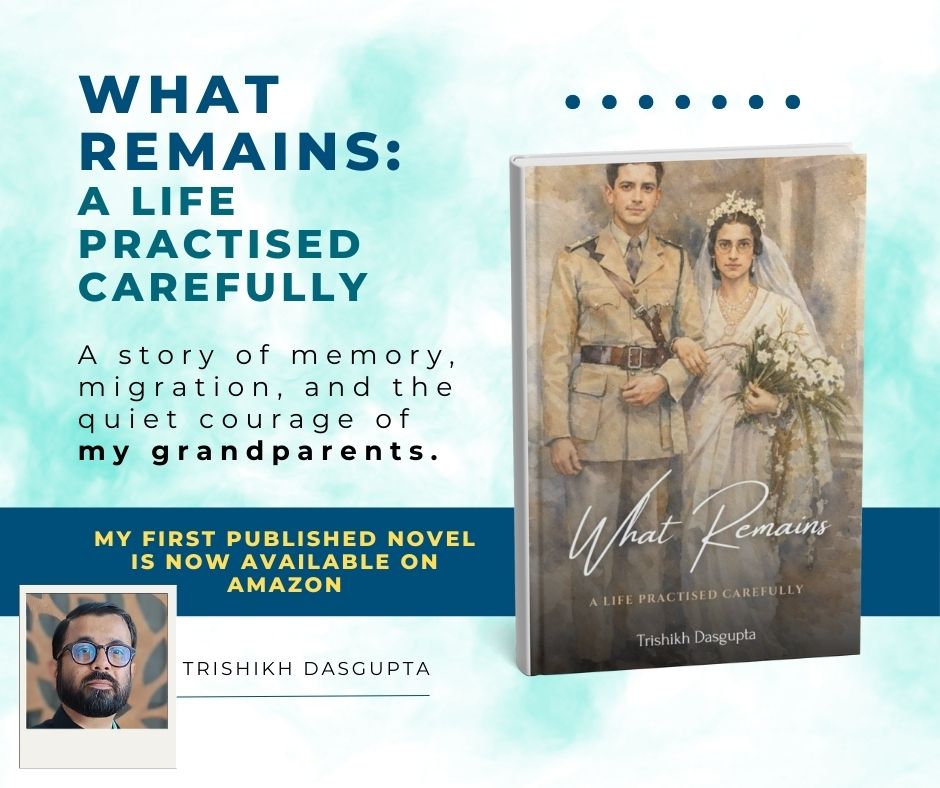
You may also like to read my1st Published novel now available on Kindle and Paperback versions.


Engaging yet sad and hard to read.
LikeLiked by 3 people
Yes, it is sad indeed. My effort is for the future generations to remember these stories of hardships, death, and survival.
LikeLiked by 5 people
🙏
Aum Shanti
LikeLiked by 2 people
Thank you. Always a pleasure to share a story with you.
LikeLiked by 2 people
Thank you 🙏
Aum Shanti
LikeLiked by 2 people
Thank you Ned for sharing my story in your blog. I know that the subject of this story is close to your heart.
LikeLiked by 1 person
Very good story, thanks. My wife’s father, an American, fought in Burma during the second world war. He worked on building the “Burma Road” to China. I had a friend during college who is a Shan from Burma. He was exiled from Burma by his uncle Gen. Ne Win in early 1960s, for his participation in an uprising against military rule in Burma. He had many tales of jungle fighting before he left.
LikeLiked by 5 people
Dear Ned, always a pleasure to share a story with you. So happy that you liked this one so much. Especially with your personal connections to the war in Burma. No war has ever brought more joy and prosperity than sorrow and destruction.
LikeLiked by 4 people
Beautifully said — raw, honest, and full of strength. Your words turn forgiveness into power, and that clarity is truly striking.
LikeLiked by 4 people
Dear Verma’ji, thank you so much for liking this story. It’s always a pleasure to share these lost stories/ memories for the future generations to remember and learn from the mistakes of the past. A world without war would be the ultimate step in human evolution.
LikeLiked by 3 people
WoW… what a powerful and heartbreaking story. The way you brought Lali’s journey to life hits deep.
LikeLiked by 2 people
Thank you so much. Glad that you liked the story. Though the characters are fictitious, but this really happened to thousands of families, who migrated from Burma to Kolkata in India during WWII. This story is dedicated to all of them – those who survived and those who perished.
LikeLiked by 2 people
An admiral story of an unfortunate part of history… well told, with reverence for the suffering that occurred. Very well drawn slice of history, Trishikh!
LikeLiked by 2 people
Thank you so much. So happy that you liked the story. It is sad indeed. War always equals to sorrow.
LikeLiked by 2 people
Knowing the real history behind the story makes it even more moving. It’s a beautiful and meaningful tribute to those families who suffered, survived, and were lost.
LikeLiked by 1 person
There are stories that do more than simply sit on a page—they breathe, they linger, they travel with us long after the reading stops. And as I stepped into the world you’ve woven, I felt that familiar stir, the quiet pull of a narrative that carries both heart and history. With each unfolding moment, it becomes clear that the soul of this story still whispers, guiding us toward a deeper remembrance of India’s exodus from Burma and the countless lives that walked from certainty into fear.
Though the journey you recount is heavy with sorrow—reflecting the innumerable souls lost to illness and despair—it shines with a fierce, unwavering strength born from the will to survive. Lali’s moment of hearing the forest breathe for the first time stands with chilling clarity, capturing the raw and punishing reality of those who braved the infamous black route.
Through your work, these fragmented, nearly forgotten memories are gathered back into the light, offered to future generations as a truth worth holding and contemplating. It is a necessary, tender, and deeply moving read.
LikeLiked by 4 people
Thank you, Trishikh, for another wonderful story that was written with your talented hand to move the reader to tears while reading about the suffering of innocent people during the horrors of the WWII. It is commendable that you illuminated lesser-known events, as they should be remembered forever.
Joanna
LikeLiked by 2 people
Dear Joanna, that is my grave intent to highlight such stories, for more people to come to know about it.
Thank you so much for liking this tale. It’s such a delight to always receive your appreciation.
LikeLiked by 1 person
Thank you, Trishikh, for the beautiful reply! As always, you are more than welcome!
Joanna
LikeLiked by 2 people
Such a beautifully written piece. I felt every moment as if I was walking with Lali and her family. The emotions, the fear, the hope — everything touched my heart. Thank you for telling this story with so much sensitivity. It will stay with me for a long time.
LikeLiked by 3 people
It gives me great joy to know that this story will linger in your heart and mind for long. There can be no greater success for a story than leaving a mark on someone. Thank you so much for sharing your feelings on the story.
LikeLiked by 3 people
I see another beautiful and interesting story, I will delve into reading it in the evening to experience this story with the characters, best regards- Alicja
LikeLiked by 2 people
Dear Alicia, it’s always such a delight to hear from you. Do read my story in the evening and I am sure that you would really enjoy it.
LikeLiked by 1 person
Such a moving story Trishikh, … Lali’s diary brought back vivid personal memories of a visit to Chiang Rai, relics of the railway track that the British POW’s built across the treacherous forests through Burma, river Kwai, a museum that archived the Japanese atrocities during WW2 and sufferings of those who had to escape.
LikeLiked by 1 person
Yes Kajoli, I am so happy that you could relate to my story with the memories of your personal visits. To have seen remnants of the atrocities in Burma during WWII must have been such a surreal experience.
“The Bridge on the River Kwai” has always been a very favourite childhood movie of mine.
On a totally different note, I once wrote a story – “Bridge on the River Kopai” (a very different story) you can read it at: https://storynookonline.com/2020/12/05/bridge-on-the-river-kopai/
And on the Japanese advancement, nearly to India during WWII, I have also written a story – “Bat Brigade” you can read it at: https://storynookonline.com/2021/10/09/bat-brigade/
LikeLiked by 2 people
Thank you so much! I will read both those stories.
LikeLiked by 1 person
You are most welcome Kajoli. Do read them at your leisure.
LikeLike
Wonderful story. You write beautifully.
Neil S.
LikeLiked by 1 person
Thank you so much. So happy that you liked the story so much.
LikeLiked by 1 person
i always learn so much from your sharing! you write about unknown-to-me history, which i much appreciate the opportunity to learn of🙏🏼 thank you for this!❤️🙏🏼
LikeLiked by 1 person
That is so kind of you to say. I am really happy to be able to share these little pieces of human memories, so that they may live on in the minds of others and future generations.
LikeLiked by 1 person
Excellent and engaging story, which includes so many different emotions.
As always, you have outdone yourself.
Thank you for sharing.
LikeLiked by 2 people
Dear Chitrangada, thank you for liking the story so much. Always a pleasure to receive your appreciation. I am really happy that the different emotions appealed to you so much.
LikeLiked by 1 person
Beautiful story, congratulations. However, I have an observation that raises the question: what did India have to do with the Holocaust? India was a target of Nazi ideology (the Aryan race theory), but it did not experience the Holocaust itself as a place of genocide.LG.Alicja
LikeLiked by 1 person
Dear Alicia, India was under British Colonial rule at the time of WWII, few years away from gaining complete independence from the British, who has already inflicted generations of suffering on Indians. Indian soldiers in the British army fought in WWII as part of the allied forces.
There were people who supported the Germans and Japanese as simply they were against the British (who has been ruling India).
This is a vast topic, and can be discussed endlessly.
LikeLike
very good idea to tell a story through someones diary, brilliantly written and an enjoyable read.
LikeLiked by 2 people
Thank you so much William. Always such a pleasure to share a story with you and receive your appreciation.
LikeLiked by 1 person
Wow, Trishikh, this haunting tale of discovery and survival weaves history’s shadows into a vivid, pulse-pounding narrative—the diary’s raw voice pulls you through jungles of despair straight to Shreya’s trembling hands. The sensory details, from damp earth to blurred ink, linger like ghosts, honoring forgotten footsteps with such poetic reverence. Absolutely masterful!
LikeLiked by 3 people
Dear Dinesh, your appreciation for this story brings great joy to me. So happy that you liked the way the story progresses, the sensory details, and the style of narration.
LikeLiked by 1 person
Merhaba Trishikh,
Hikaye içinde hikaye: Lai’nin günlüğünde yazdıklarını tüm kalbiyle hisseden Shreya ‘nın savaşın acımasızlığını, masum insanlara yaşattığı cehennemi bu kez kendi kaleminden bize ulaştırmanız gerçekten çok etkileyici.
Ben de yaşananların sonsuza dek hatırlanması gerektiğine yürekten katılıyorum. Saygılarımla…
LikeLiked by 1 person
Dear Alev, thank you so much for appreciating the underlying message in this story – in every war it is sorrow that triumphs over happiness.
I am thankful to you for not only liking the story so much but also for sharing such a beautiful comment.
You are right, such occurrences should be remembered forever.
LikeLiked by 1 person
What a beautiful story Trishikh. Another piece of history unknown to me revealed. The plight of refugees throughout history and now worldwide is so tragic. In the US it has become criminal with Trump’s gestapo. I long for a world without war, without division but Oneness in all ways.
LikeLiked by 1 person
Thank you so much Katelon for liking this story. I know, that with the level of spirituality, love, and concern, that exists inside you – people like you and me could never see any good in any war. And would always long for a world without the violence.
LikeLike
We listen to our storytellers so we may leave our daily affairs behind. The heroes and heroines remind us about what is worth in life and our humanity, may it be the belief in magic or the possibility inherently in the transformational power of the human will, despite the recurring human savagery.
LikeLiked by 4 people
That is such a beautiful thought and a powerful saying. Yes, stories indeed have the power to help us transform.
LikeLiked by 1 person
Wonderful post
LikeLiked by 1 person
Thank you, so glad that you liked my short story.
LikeLike
Nice! I like it! Thanks for posting!
LikeLiked by 1 person
You are most welcome. Thank you so much.
LikeLike
Beautifully atmospheric and evocative opening.
LikeLiked by 1 person
Thank you, glad that you liked the way the story opened.
LikeLike
Happy New Year & Merry Christmas!
https://www.canva.com/design/DAGaw0A3jLk/BW0PGlM5apQmrvj927fxwQ/edit?utm_content=DAGaw0A3jLk&utm_campaign=designshare&utm_medium=link2&utm_source=sharebutton
LikeLiked by 1 person
Thank you for your wonderful wishes. A very happy new year and merry christmas to you in advance.
LikeLike
Well written and engaging. A pleasure to read from start to finish.
LikeLiked by 1 person
Thank you.
LikeLike
Sanki rüzgârla savrulan bir rüyanın içindeydim… Kelimeler uçuşuyor, anlamlar göğe yükseliyor. Çok etkileyici.
Yazılarımı artık yeni evimde paylaşıyorum: https://mesimeunalmis.com 💛
LikeLiked by 1 person
Thank you so much for liking my story so intensely. I am glad that the story felt like being carried away inside a dream.
LikeLiked by 1 person
Beautiful. And despite the heartbreaking journeys shared or hinted in at in the telling, it seems to really be a story about endurance against all odds and hope that the suffering, determination, and courage of the travelers involved will be remembered by generations yet to come. 💜
LikeLiked by 1 person
That is so true, despite all the odds, all the suffering and hardship, such stories never die. They find ways of coming to the light.
Thank you for liking the story so much and sharing such a beautiful comment. I treasure every bit of it.
LikeLiked by 1 person
💜
LikeLiked by 1 person
A dot in history but a nightmare to the millions of people displaced from their homes. Very well told.
LikeLiked by 1 person
Yes, it was a nightmare to the millions who suffered the ordeal.
Thank you for appreciating the story so much and commenting on it.
LikeLike
Diaries are so important. I am trying to make sure my girls keep diaries, you never know the impact they could have on someone decides from now.
LikeLiked by 1 person
That is so true. I personally used to write diaries (the memoir kind) for a long time. I still write diaries every year, but they are more work related.
With the advent of computers and blogs, I think a lot of diary writing is done digitally these days.
LikeLiked by 1 person
Each life has a story to tell. The details made the story seem like a movie.
LikeLiked by 1 person
Thank you Sumita. So happy that you felt like the story was a movie.
LikeLiked by 1 person
The abundant kinesthetic imagery made it feel so real.
LikeLiked by 1 person
What a poignant story. I think the exodus from Burma to Bengal is the most underrated saga of human survival in world history which speaks of the mass uprooting of humanity and futility of war. The Bollywood actress, Helen, is one such survivor. I once had an Indo-Burmese colleague in the then Calcutta, a picture of obese mediocrity belying unusual strength and courage.
LikeLiked by 1 person
You are very right, the exodus of Burmese refugees to India during. WWII is really an underrated and lesser known story of survival.
Oh, I did not know about Helen. Hats off to courageous souls like her, your colleague, and so many others, who survived and made a mark for themselves.
LikeLiked by 1 person
I love how for all that activity (good and bad) the city breathed on, a constant hum of a backdrop to human lives. So good.
best wishes for 2026
❤️💚
LikeLiked by 2 people
Thank you so much. It really makes my day when someone enjoys one of my stories.
Best wishes for 2026 to you and your family too.
LikeLiked by 1 person
⭐
LikeLiked by 1 person
🙏
LikeLiked by 1 person
Reading this again, what stayed with me was how quietly the story allows memory to surface — not as explanation, but as presence. The restraint in that choice deepens the weight of what is left unsaid. Thank you for a piece that continues to unfold with time.
LikeLiked by 1 person
Dear Livora, thank you, that means a great deal to me. I wanted memory to arrive the way it often does in life, unannounced, unlabelled, lingering more in what it withholds than what it reveals. If the silences stayed with you, then the story found its breath. I’m grateful you walked with it, and with me.
LikeLiked by 1 person
Very good, story.
LikeLiked by 1 person
Thak you so much. Nothing gives me greater joy, than when someone appreciates one of my stories.
LikeLike
Love the vivid description of Kolkata in 1990 – what inspired you to set the story in that time and place? 🌟
LikeLiked by 1 person
Thank you, Marcus. I chose Kolkata in 1990 because it sits at a quiet threshold. Old enough for memory to still breathe through walls and objects, yet recent enough for those echoes to feel close. It felt like a time when a forgotten life could still resurface through something as ordinary as a rented room and a torn mattress. That in between moment allowed the past to arrive gently, without announcement.
LikeLike
BUON WEEK-END
LikeLiked by 2 people
Thank you, a good week ahead to you.
LikeLiked by 1 person
🙋♀️👏😀👍
LikeLiked by 1 person