In the year 1902, when the Hooghly carried more silt than sorrow, and Calcutta still smelled of ink, indigo, horse sweat and empire, Lieutenant Barry Banks stepped onto Indian soil with a spine straightened by duty and a heart not yet bruised by history. He was twenty-seven, pale as unslept paper, his boots polished with the seriousness of a man who believed the world could be ordered by drills, maps and morning whistles. India, however, had other plans.
The sun greeted him first, not gently, but like a question asked too loudly. The air clung to his uniform, thick with coal smoke, spices, rotting jute and river algae. From the docks rose a choir of languages, Bengali, Urdu, Hindustani, English spoken with bent vowels, laughter erupting without permission. Rickshaw bells chimed like restless insects. Somewhere, a conch was blown, long and aching, announcing a prayer Barry did not yet understand but would never forget.
He had been posted under Herbert Kitchener, the iron architect of the British Indian Army, a man whose moustache seemed to command as much obedience as his voice. Kitchener believed in order, in discipline, in the geometry of war. Barry learned quickly, how regiments were rearranged like chess pieces, how Indian soldiers were trained to march in European rhythms while their hearts beat to monsoon drums. But Barry also learned other things, unrecorded in manuals.
He learned that the sepoy polishing his boots had left behind a pregnant wife in Burdwan. That the havildar who stood ramrod straight during inspections sang lullabies at night to a brass deity of the Hindu God Krishna in infant form in a crawling stance. That Bengal did not submit easily, not even in silence.
During evenings off duty, Barry wandered. He walked past College Street, where books leaned against books like drunk philosophers. He crossed north Calcutta lanes where houses breathed, cracked walls whispering stories of zamindars and famines. He stood at the ghats watching widows fold themselves into white cloth and river light. India seeped into him slowly, not as conquest but as infiltration.
It was in Birbhum, during a brief assignment away from the city, that Barry first heard the Baul. The song came to him barefoot. It floated over fields of red soil and sal trees, carried by a voice that sounded both broken and whole. The singer wore saffron rags, a single-string-plucked instrument called ektara slung across his shoulder. His hair was wild, his eyes aflame with a softness that frightened Barry more than any weapon.
“Manush bujhley shonar manush hobi,” the Baul sang, when we feel for fellow humans we become the best of humans. Barry did not understand the words then, but he felt the truth of them land somewhere between his ribs. The rhythm was simple, almost childlike, yet it carried centuries. The Baul spoke of the body as a temple, of love without borders, of a god who lived not in stone but in breath. The villagers listened with closed eyes. Some smiled. Some wept. No one saluted.
That night, Barry could not sleep. The Baul’s song followed him into dreams, threading itself through the memory of gun drills and parade grounds. He began to ask questions. Who were these singers who rejected caste and scripture, who walked with nothing but a song and a begging bowl? He learned that Bauls were mystics, wanderers of Bengal, shaped by Sufi devotion and Vaishnava love, seekers of the divine within the human body. They sang against ritual, against walls, against violence. Something in Barry shifted, quietly, like a fault line waking.
Years passed. The Empire tightened its grip. Taxes rose. Indigo farmers were beaten. Whips cracked. Jails filled. Barry saw things he was not trained to see. A boy flogged for not saluting. A village fined into hunger. A protest dispersed with lathis and bullets. Orders were orders, Kitchener reminded them, and Barry obeyed. But obedience began to taste like rust.
In 1914, Europe caught fire. The Great War arrived not as a distant rumour but as a summons. India was called upon to serve its king. Over one million Indian soldiers would be recruited, men from Punjab, Bengal, the North West Frontier, Madras, men who had never seen snow or trench mud or gas masks. They were shipped across seas to fight battles that were not theirs, promised honour, paid in blood.
Barry Banks was given command of a mixed unit of Indian troops and sent to the Western Front. France was cold in a way India never was. The cold crept into bones and stayed. Trenches were graves that forgot to close. Mud swallowed men whole. Rats grew fat on human leftovers. Artillery roared like an unending apocalypse.
Barry watched Indian soldiers shiver in unfamiliar winters, turbans stiff with frost, fingers numb on rifles. He watched them charge across no man’s land, crying out to gods that spoke different languages but bled the same. He wrote letters home for those who could not write, letters that spoke of honour and hid the truth.
At Neuve Chapelle, at Ypres, at Loos, he saw bravery that history would later footnote. Indian soldiers held lines under gas attacks, fought with bayonets in darkness, and died calling out their mothers. Over seventy thousand would not return. Barry stopped counting days. He counted bodies.
One night, after a battle that left the earth steaming, Barry sat in a dugout beside a dying sepoy from Bengal. The man’s breath rattled. Blood bubbled at his lips. He gripped Barry’s sleeve and whispered something in Bengali. Barry leaned closer. “Gaanta mone rekho saheb,” remember the song, Englishman, uttered the soldier as his eyes stilled and life’s last breath curled into a fading cloud escaping his gaping mouth.
When the war ended, the world celebrated victory. Medals were distributed. Promises were forgotten. Indian soldiers returned home to poverty, to colonial contempt, to bullets at Jallianwala Bagh. Barry returned to Calcutta carrying ghosts heavier than luggage.
England wrote to him. A promotion awaited. A quiet life. Tea and lawns and forgetfulness. Barry did not reply. He walked instead to Birbhum. He sought the Bauls again, now with hollow eyes and trembling hands. He listened. He sat on the ground. He let go. He shaved his head. He shed his uniform, each button falling like a confession. He learned to play the ektara, his fingers clumsy at first, then sure. He learned Bengali slowly, lovingly, his British accent refusing to leave, like a stubborn scar.
He sang of the body as a battlefield and love as surrender. He sang of trenches and rivers, of mothers and rifles, of gods who wept. He sang of British cruelty, of whips and prisons, naming the violence he once enforced. He sang of Indian soldiers buried in foreign soil, their names misspelt, their stories untold. People began to call him Barry Baul.
He wandered. From Shantiniketan’s red earth to Nadia’s fields, from Jharkhand’s forests to Odisha’s roads. He begged not for money but for listening. Children laughed at his accent. Old men nodded. Some spat. Some cried.
The British authorities watched uneasily. A white man turned mystic was an inconvenience. A white man singing of imperial sins was dangerous. But Barry moved like smoke, leaving only echoes. Years passed again. Barry aged into his beard. His skin darkened. His eyes softened. He belonged nowhere and everywhere.
One winter evening, he was last seen walking toward the sal forests near Shantiniketan, his ektara humming against his ribs. He did not return. Some say he died there, body folded into leaf and root. Some say he crossed into another life. But even now, when the forest breathes, and the moon listens, villagers swear they hear a song. A Baul song in Bengali, sung with a British accent. Soft. Broken. Golden. And the forest listens to the melody of Barry Baul.
Copyright © 2026 TRISHIKH DASGUPTA
This work of fiction, written by Trishikh Dasgupta is the author’s sole intellectual property. Some characters, incidents, places, and facts may be real while some fictitious. All rights are reserved. No part of this story may be reproduced, distributed, or transmitted in any form or by any means, including printing, photocopying, recording, or other electronic or mechanical methods, without the prior written permission of the author, except in the case of brief quotations embodied in critical reviews and certain other noncommercial uses permitted by copyright law. For permission requests, send an email to the author at trishikh@gmail.com or get in touch with Trishikh on the CONTACT page of this website.
ABOUT THE AUTHOR

Trishikh Dasgupta
Adventurer, philosopher, writer, painter, photographer, craftsman, innovator, or just a momentary speck in the universe flickering to leave behind a footprint on the sands of time... READ MORE
This story is Free, and if you have found something here that stayed with you, some of my other books (collection of short stories, novels, and more) are available in print and digital editions. They gather many unique journeys, quieter questions, and stories that continue beyond this page.
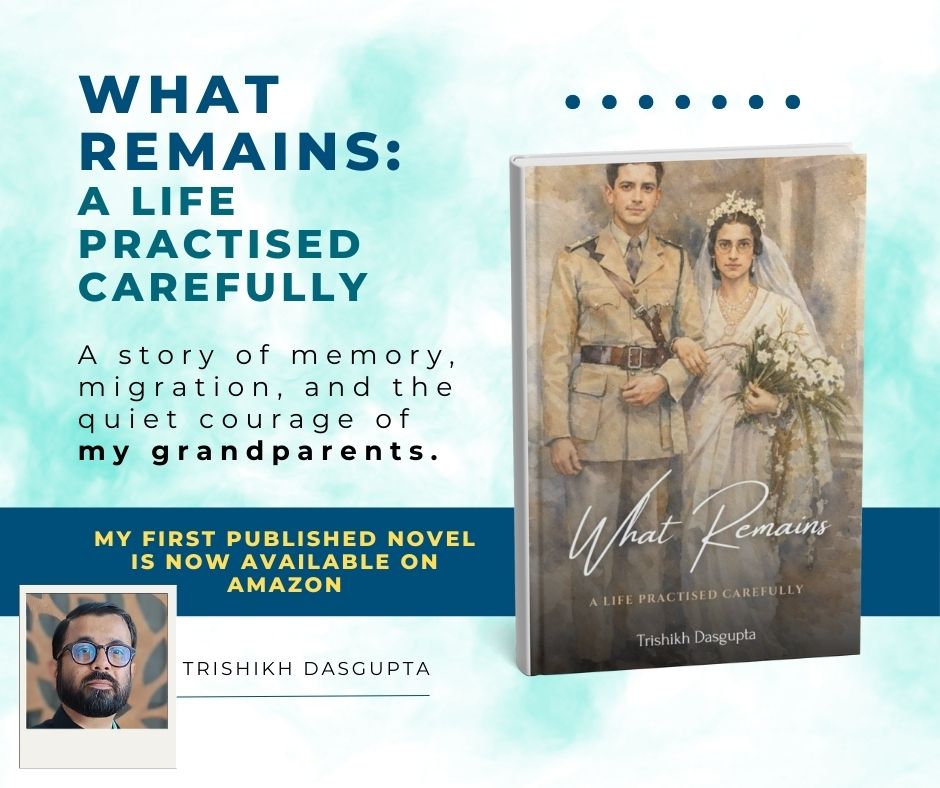
You may also like to read my1st Published novel now available on Kindle and Paperback versions.
 Weekend Stories by Trishikh
Will read this one soon I promise. I am in the middle of my new years report. Happy new year friend.
LikeLiked by 1 person
I look forward to you reading it, when you find the time. Wishing you and your loved ones a impactful 2026.
LikeLiked by 1 person
Thanks friend 🙏
LikeLiked by 1 person
👏👏👏👏
LikeLiked by 1 person
Thank you so much.
LikeLike
This is a hauntingly beautiful and deeply humane piece of historical fiction. The prose carries weight, texture, and music—moving seamlessly from imperial rigidity to spiritual surrender. Barry’s transformation is rendered with compassion and moral clarity, while the Baul philosophy becomes a quiet yet powerful counterpoint to war, empire, and obedience. Lyrical, unsettling, and tender, the story lingers long after the final note, reminding us that redemption often arrives not through victory, but through listening.
LikeLiked by 2 people
Thank you so much, Verma’ji. Your words feel like a reader listening with folded hands. I am deeply grateful that Barry’s journey, from command to surrender, from noise to listening, spoke to you. If the Baul philosophy could quietly stand its ground against war, empire, and obedience in your reading, then the song reached where it was meant to. I will carry this response like a benediction.
LikeLiked by 3 people
What a beautiful story! Oh! The futility of man made ravage!!!
I had heard of Antony Firingee but not Barry Baul.
I guess one day you will write about Antony as well..Kobir lorai…Firingee kali…and his all encompassing spiritual quest…
Wish you a very happy new year full of heartwarming stories.
LikeLiked by 1 person
The character of Barry is not real, he is a figment of my imagination. I am really gld that you liked the storys so much. Yes, it would be indeed very nice to write about Antony Firingee, especially perhaps parts of his life unknown.
Wishikh you and your family a very warm and peaceful 2026.
LikeLiked by 1 person
Happy New year 🙏
Aum Shanti
LikeLiked by 1 person
A very peaceful and fruitful new year to you and your loved ones.
LikeLiked by 1 person
Thank you, Trishikh, for the beautifully written story of the spiritual awakening of the man of war. Even if Barry is your imaginary creation, the history of India is real and breathing with every word. As always, I learned something new about India, a complex and mysterious faraway land that beckons the reader to understand more about it.
Joanna
LikeLiked by 1 person
Dear Joanna, Thank you for always reading with such openness and generosity. Your words never failed to give me much joy. As you have correctly said, yes, though Barry may be imagined, but he carries many real silences, regrets, and awakenings that history rarely names. I am so glad that my stories allow India to breathe for you, in all its complexity, pain, and quiet mysticism. And this story, if it has left you curious, unsettled, and wanting to know more, then the journey was worth taking together.
Trishikh
LikeLike
Thank you, dear Trishikh, for the beautiful reply! As always you are more than welcome!
Joanna
LikeLiked by 1 person
Thank you, Trishikh, for this deeply evocative journey through Barry’s transformation — from a rigid soldier shaped by empire to a listener shaped by song and surrender. The prose carries both the weight of history and the lightness of spiritual awakening, making the narrative feel lived rather than described. What stayed with me most was how sound — the song of the Baul — becomes both a metaphor and a means of humanizing a world fractured by obedience and violence. Grateful to read this and to sit with the echo of that song long after the last line.
LikeLiked by 1 person
Dear Livora, thank you for listening so closely, and for naming the echo. You caught the heart of the story exactly where it beats, in sound, in surrender, in that fragile moment where obedience loosens and humanity enters. If Barry’s song stayed with you beyond the page, then the Baul did what he has always done, he refused to end when the words stopped. I am grateful you sat with it.
LikeLiked by 1 person
What a lovely story.. thank you ❤️
LikeLiked by 2 people
Thank you so much Fiona. I always treasure your appreciation.
LikeLiked by 1 person
Thank you Ned for once again showcasing my story on your website.
LikeLike
this one resonates with me very strongly! it showcases genuine transformation, one more powerful than destruction & entropy. music has that much power! 🎼🎶🙏🏼
LikeLiked by 1 person
Thank you for feeling it so deeply. Transformation that creates, rather than destroys, is always the quiet miracle we underestimate. Music does not conquer, it dissolves, and in that dissolving something truer survives. I am grateful the story resonated with you, it means the song found a listening heart.
LikeLike
Thank you for yet another touching and beautifully conceived and written story, Trishikh!! You started the new year off right for all of us. Hope it is a happy and healthy year for you and your loved ones!
LikeLiked by 1 person
Thank you so much. I am so glad that this story resonated with the light of the new year with you.
Wishing you and your family all the best too.
LikeLike
Best wishes, my friend.
LikeLiked by 1 person
Thank you Michael. Many best wishes to you too.
LikeLike
This is a very moving story.
LikeLiked by 1 person
Thank you for feeling this story to a depth which moved you with emotions. I am really glad that the story resonated with you so well. Thank you for always appreciating.
LikeLiked by 1 person
Barry’s evolution from a hollowed-out soldier of Empire to a vessel for song is rendered with breathtaking grace. The prose doesn’t just tell a story; it breathes with the weight of old ghosts and the lightness of new faith. What haunts me is the sound—the way the Baul’s melody acts as a solvent, dissolving the jagged edges of a life built on command and bloodshed. I finished the piece feeling as though I, too, had been unlearned by that music, left with a resonant silence that feels like peace.
LikeLiked by 1 person
Thank you, Indrajit. Your reading feels like a mirror held up to the story’s quietest intention, to be unlearned, to let music soften what command and certainty harden. That resonant silence you speak of is where Barry finally rests, and perhaps where we all arrive when the noise recedes. I am deeply grateful you listened so attentively, and let the song work on you.
LikeLiked by 1 person
Lovely story!
LikeLiked by 1 person
Thank you so much. Nothing like when someone enjoys one of my stories.
LikeLiked by 1 person
You have bought a journey to life – the journey of a soul. Thank you.
LikeLiked by 1 person
Thank you for joining in this journey. I am so glad that you liked the story so much.
LikeLike
Beautiful story, Trishik. Thank you very much for sharing.
Health. Hope. Happiness, always. 🌄
LikeLiked by 1 person
Thank you so much, so happy that you liked my latest story. When someone appreciates my stories, it gives me great encouragement to keep on writing.
Blessings to you and your family too.
LikeLike
Many thanks, Trishik. Yes, you are absolutely right. Creative writing where we share our views with great joy when we get genuine feedback and kind words of motivation we are motivated to continue writing.
Just like you, it is my very humble endeavour to link with everyone on the golden threads of compassion, gentleness, empathy, and kindness.
Please stay blessed. We keep cheering you.
Kind regards,
LikeLiked by 1 person
Can’t thank you enough for your kind words. I treasure every bit of it.
LikeLiked by 1 person
A magical day overflowing with infinite beautiful possibilities, Trishik.
Thank you very much. Please stay blessed always.
Kind regards, 🏞 🌄 🌌
LikeLiked by 1 person
Lots of prayers and blessings to you as well.
LikeLiked by 1 person
Greetings of a serene Sunday, Trishik
Thank you very much. Please stay blessed.
Kind regards, 🌄
LikeLiked by 1 person
Greetings of the day you and your family too. Have a great Sunday.
LikeLiked by 1 person
A serene and joyful, Sunday, Trishik. Peace always. 🕊 🦚 🦚 🕊
LikeLiked by 1 person
This is such a beautiful story Trishikh, I felt like Barry Baul had really lived. I can not imagine what it is like to be part of a war, the killing, all the death around, the horrific conditions all around. I can not imagine having to then reconcile that with a spiritual life and knowing. Your sentences are each so powerful. Thank you!
LikeLiked by 1 person
Dear Katelon, I am so happy that you felt the words and emotions of this story. I knew it was a subject that would touch your heart.
War and reconciliation, can really be so challenging.
LikeLiked by 1 person
Evocative and very well written, Trishikh. May there be a Barry Baul in each of us …
LikeLiked by 3 people
Dear Kajoli, thank you for liking the story so much. Only if all of us had a little “Barry Baul” in us, the world would certainly be a very different place.
LikeLiked by 1 person
A beautifully evocative opening—rich in history, atmosphere, and promise. It instantly transports the reader to colonial Calcutta and sets a powerful narrative tone.
LikeLiked by 1 person
Thank you so much for liking the story so much. Glad that you liked the aura of the story, and find the narrative powerful.
LikeLiked by 1 person
Thank you for liking my post! 🌟 I’d be thrilled if you subscribed to my new channel—your support and feedback would mean the world! 🙏
LikeLiked by 1 person
You are most welcome. I think I am already subscribed to you channel. If you are talking about another new channel, then I will subscribe to it also. Take care.
LikeLike
I have been thinking about your your term “momentary speck” in the Universe. I am willing to accept the term “speck” but “momentary” is giving me trouble!😎
LikeLiked by 2 people
Dear Geoff, I feel that our earthly existence in the flesh is momentary. Very less in compared to the vastness of time. So I feel that I am momentary, and all of us have a very short human time on Earth to do whatever we can, till we transcend into something else.
LikeLiked by 1 person