The monsoon had not yet slipped fully into the memory of summer; still, the scent of wet soil clung to every dusty lane, every narrow row of bricks, everywhere the city breathed in and out the musk of rain yet to come. Calcutta in 1939 was a city straining against itself, like an unfinished poem that kept searching for its final line, and everywhere you turned there was sound, so much sound; the shouts of vegetable sellers on Burrabazar Street, the rhythm of bicycle bells on grey tar, the whisper of shirts flicking against drying washlines, like wings gently beaten against the wind.
Somewhere in a ramshackle haveli near College Square, the Unseen Witness waited. He was small in stature, but carried in his pockets the weight of a thousand unspoken prayers. He smelled of stale tobacco and boiled rice, and for a moment, in the cool, pre-dawn hush, the city seemed to hold its breath along with him. Before him lay a piece of paper as pale as a moonless night; it bore the elegant, deliberate strokes of a mind burdened with longing, a letter written by Subhas Chandra Bose himself.
Bose’s handwriting was deliberate and lyrical, as if each word sang like a dim, distant bird, caught between dawn and dusk. The room was stifling, even at the early hour, yet the air hung with a curious blend of sandalwood and sweat, as though every wall had been soaked in the anxieties and hopes of suffragettes, scholars, and young men who dreamed of freedom with the ache of hunger in their bones.
The letter read like a hymn to unity, a plea for bridge-building between people whose visions of India were different but whose hearts throbbed with the same drumbeat of liberty. Bose’s vowels and consonants pulsed with his restlessness, as though each sentence might leap off the page and run into the streets, calling out to anyone who knew what it meant to be shackled, yet hopeful.
And yet the letter had not been sent. It lay folded, like a reluctant secret, in the hands of the Unseen Witness who had been entrusted to carry it that morning through the maze of grey brick and rattling black trams, to a courtyard where iron gates stood between hope and history. He was told that the world would change if only this letter reached its intended ears; that voices once divided might find a shared rhythm and march together toward an impossible sunrise.
He watched dawn seep into the night; he watched the city yawn open its eyes; he watched the sky turn from bruise-colour to a hard, brilliant blue. He walked through narrow lanes, past women who carried water pots on their hips and men who sat on unused kerbs staring at the horizon with hollow eyes. The sound of life was immense; the cadence of footsteps on broken tar, the distant toll of temple bells, and everywhere the undercurrent of an unsteady wind rustling newsprint flapping in open windows.
But by the time he reached the dusty avenue that led toward the RSS courtyard, the letter was cold in his pocket, like a dormant ember that had forgotten how to glow. Here, there was a different rhythm to life; boots on footpaths, shouted instructions, the metallic creak of gates swung open and shut by young men shaped by drill and discipline. Their faces were resolute, their eyes gleaming with a strange fire; they spoke of service, of brotherhood, of protecting the soul of a country that didn’t yet know how to free itself. Their words had cadence, their tongues moved swiftly, and everywhere he could hear the secondary whisper, the sound of chants repeatedly rising and falling, like waves urging a ship unseen toward an eternal shore. But no one came to take the letter.
He waited, heart thudding like a tabla in the still air. He watched polished boots scuff the ground with purposeful steps; he heard the echo of orders given and carried through corridors that seemed to converge toward an invisible centre. The sky was streaked pink and gold, as if the dawn itself were watching this exchange of will and fate. But no one asked him who he was, nor what he carried. No one inquired about the letter burning a small, invisible hole in his coat pocket, where the ink had begun to smudge with the anxiety of being unread, unheard, unseen.
Hours collapsed into an uneasy afternoon. City noise marched on outside, the clipped accents of rickshaw pullers, the clatter of wooden carts carrying firewood, the shrill calls of vendors hawking jasmine garlands. Somewhere, a gramophone played a slow, scratchy tune, notes colliding with time like ships seeking harbour in a sea of static. The man felt every sound with unbearable intensity, as though each one was a tether to some distant promise that refused to be hushed.
In that moment, he thought he understood what it meant to carry history in silence. He lingered until shadows began their slow crawl back across the ground. The courtyard emptied with the final clang of the temple bell, and at last he slipped away unnoticed, as though he were a shade dissolving at twilight. The letter remained with him, folded and rising and falling with the breath of his own regret.
On the walk home, he passed a blind man sitting under a banyan tree, fingers grazing the weary braille of an old harmonium. The man struck a chord so thin and fragile that it seemed too slight to be heard; yet birds lifted from the branches, startled into flight, as though the sound had summoned them from some deep sleep. The Unseen Witness paused, closing his eyes, letting that fragile chord resonate through his body, through the memory of the unposted letter in his pocket.
The city pulsed around him, breath and clang and soft lament all tangled together; a child cried in the distance, a dog barked at nothing, the wind shifted and whispered secrets through the eaves of shuttered windows. Somewhere beyond, in the heart of a city that would soon be caught in the ferocity of a war not yet fully named, people lived fragments of stories, unaware of the shape they were making together.
At his lodgings that evening, he reached for the letter and smoothed its creases with the tenderness of someone brushing an eyelash from a beloved face. Words and sentences, once effulgent with promise, now seemed mournful with absence; they spoke of unity, of understanding between souls separated by ideology, by fear, by walls both spoken and silent.
He tried to fold the letter gently, but his fingers trembled, and the paper cracked at the crease. For a moment, it seemed that the letter itself sighed, as though it knew it would never find its home.
And yet, before sleep claimed him, he wrote in his own hand a few lines at the bottom of Bose’s letter, not meant for any eyes but his own: If a dream loses its messenger, may it find another heart to carry it onward.
He folded the letter one final time, placed it inside his coat, and closed his eyes to the sound of night settling over a city that was still learning the full weight of its own longing.
Other stories in this series of six stories sorrounding the life and time of Netaji Subhash Changda Bose:
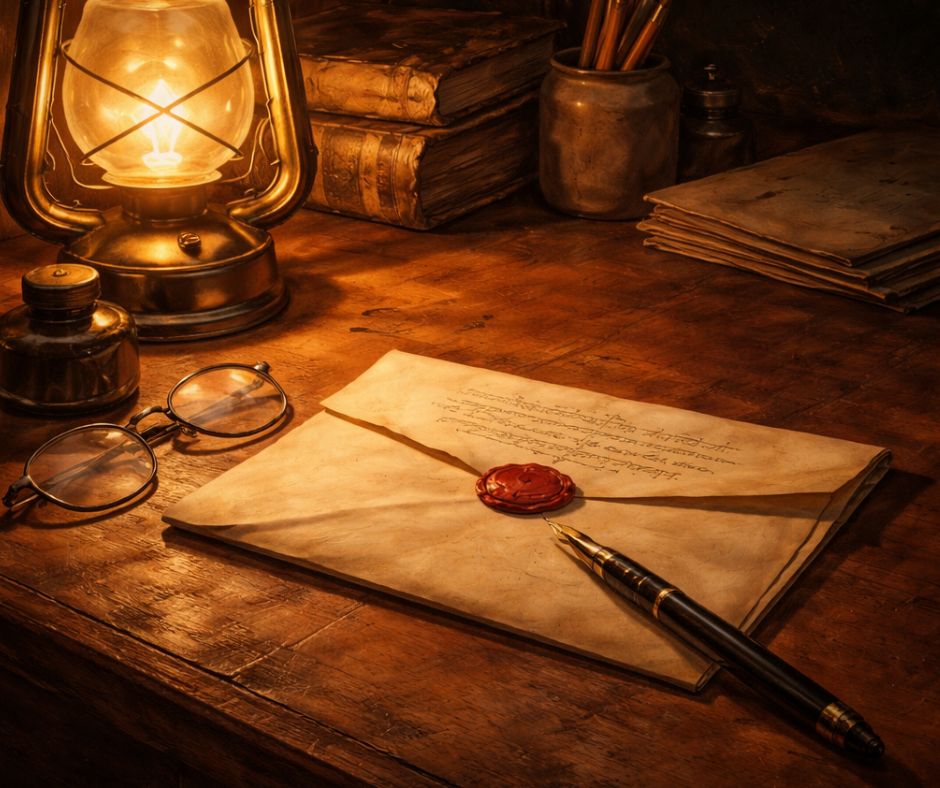
1st Story: The Lost Letter To RSS: The monsoon had not yet slipped fully into the memory of summer…
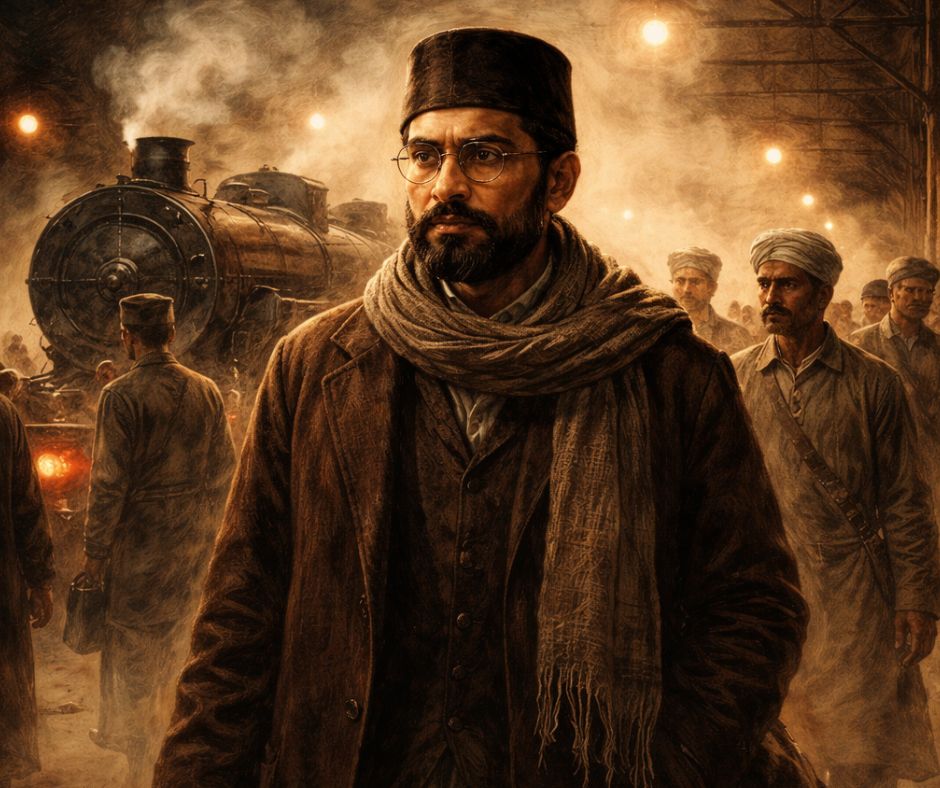
2nd Story: Three Disguises To Berlin: The night Calcutta learned how to hold its breath was not…
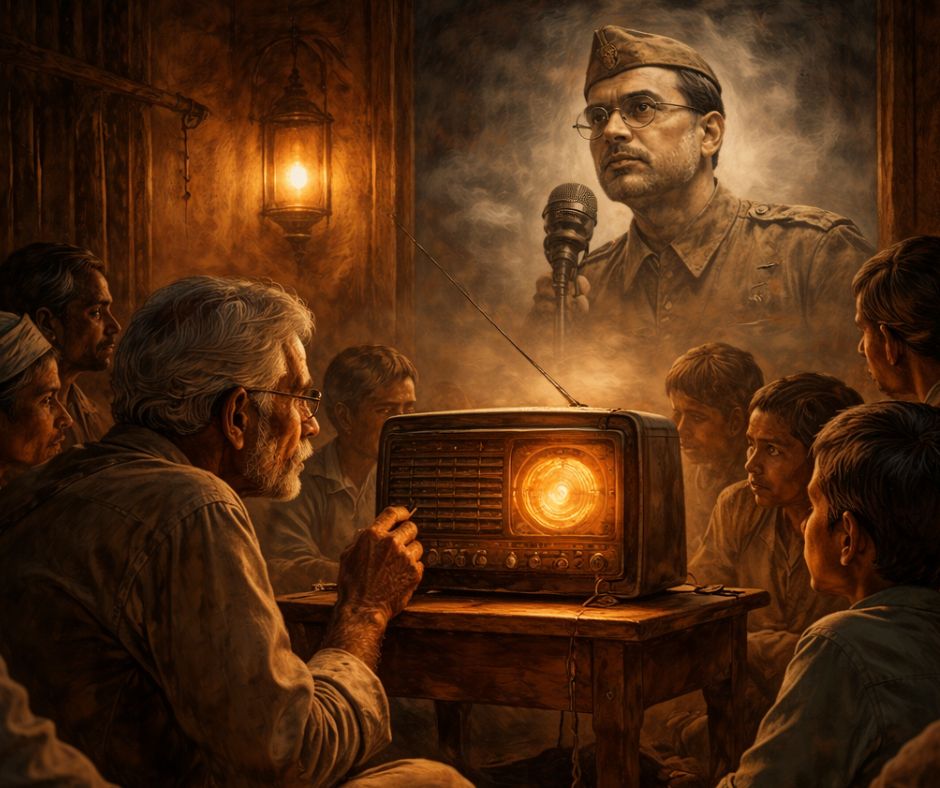
3rd Story: The Radio That Roared: The radio arrived in the village like a rumour. No one could …
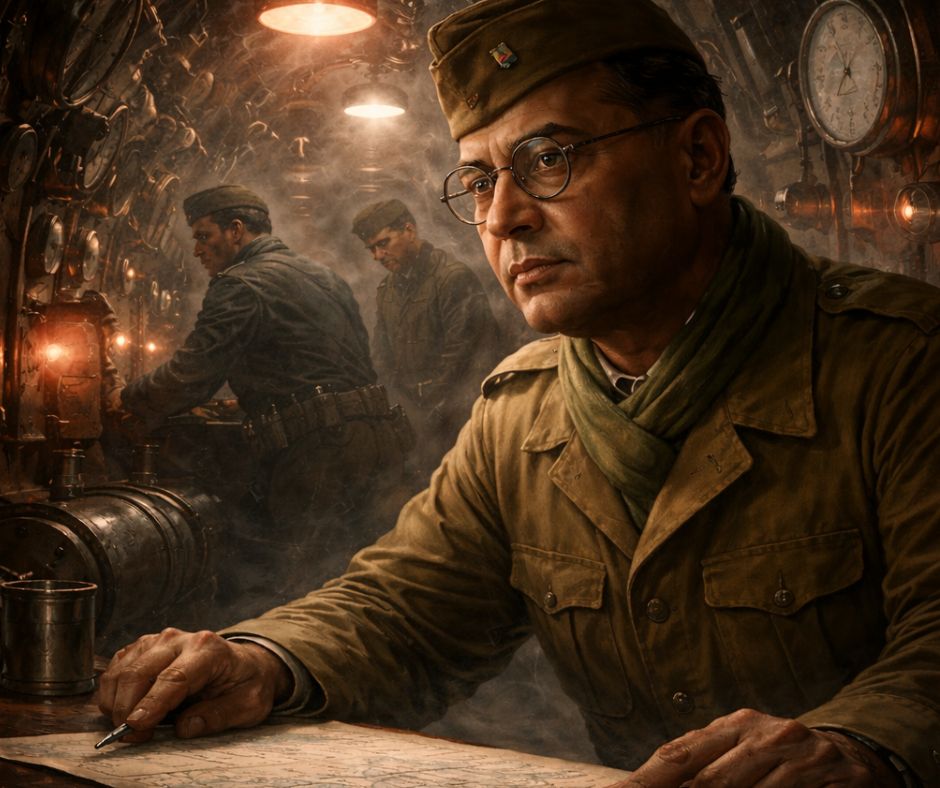
4th Story: The Secret Voyage Aboard U-180: The sea does not announce itself when it decides to…
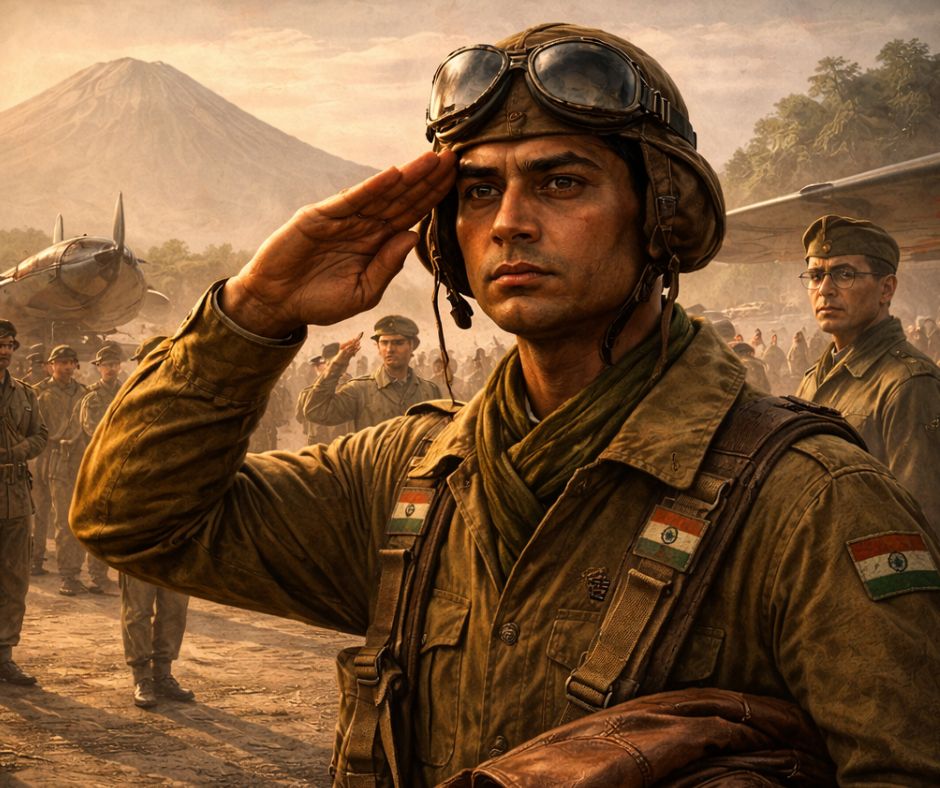
5th Story: The Tokyo Cadets: They arrived in Tokyo carrying the smell of salt, sweat, and old paper…

6th Story: The Shadow of Renko-ji: The temple does not face the street. It turns inward, as though…
Copyright © 2026 TRISHIKH DASGUPTA
This work of fictionised history, written by Trishikh Dasgupta, is the author’s sole intellectual property. It draws inspiration from lesser known moments, silences, and contested intersections in the life and times of Netaji Subhas Chandra Bose and the Indian freedom movement. While this story can be read and experienced independently, it also forms the first part of a six story narrative arc, where each piece stands alone yet together offers a deeper, layered understanding of Netaji’s journey, convictions, and enduring mysteries. Some characters, incidents, places, and facts may be real, while others are imaginatively reinterpreted.
All rights are reserved. No part of this story may be reproduced, distributed, or transmitted in any form or by any means, including printing, photocopying, recording, or other electronic or mechanical methods, without the prior written permission of the author, except in the case of brief quotations embodied in critical reviews and certain other noncommercial uses permitted by copyright law. For permission requests, send an email to the author at trishikh@gmail.com or get in touch with Trishikh on the CONTACT page of this website.
ABOUT THE AUTHOR
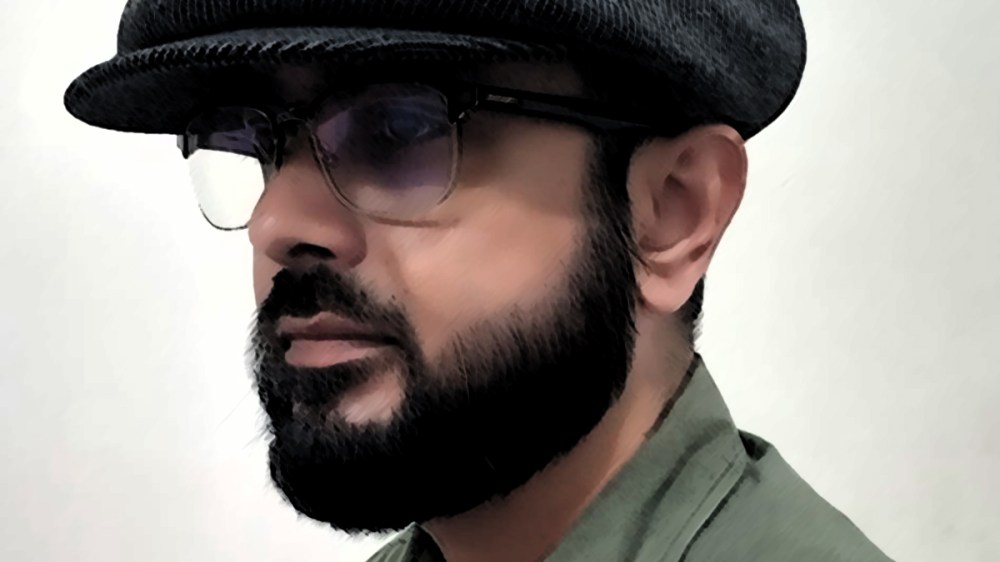
Trishikh Dasgupta
Adventurer, philosopher, writer, painter, photographer, craftsman, innovator, or just a momentary speck in the universe flickering to leave behind a footprint on the sands of time... READ MORE
These stories are Free and if you have found something here that stayed with you, some of my other books (collection of short stories, novels, and more) are now available in print and digital editions. They gather many unique journeys, quieter questions, and stories that continue beyond this page.
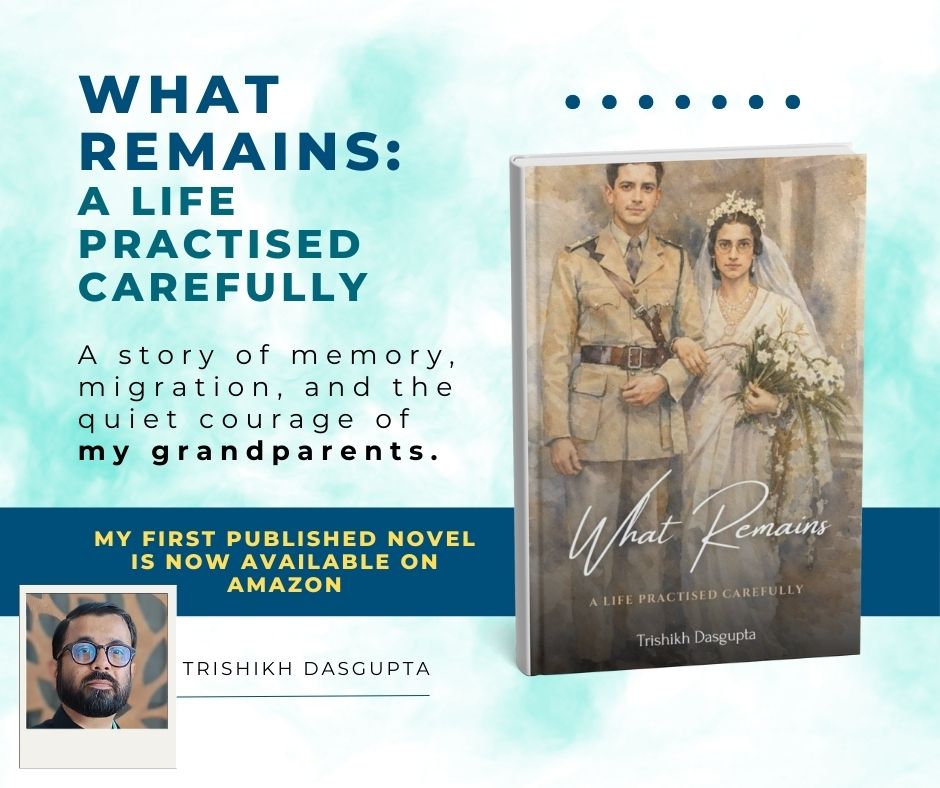
You may also like to read my1st Published novel now available on Kindle and Paperback versions.


This is a richly textured and deeply evocative piece that brings history to life through atmosphere, silence, and restraint. Your Calcutta breathes—through sound, scent, and movement—and the figure of the Unseen Witness becomes a powerful vessel for the weight of unrealised possibility. The unsent letter is a haunting symbol, carrying not just words, but the ache of missed convergence and fragile hope. In its quiet moments and lyrical detail, the story honours history without simplifying it, leaving the reader with a lingering sense of what might have been—and how dreams, even when delayed, continue to seek new hearts to carry them forward.
LikeLiked by 6 people
Dear Verma’ji, thank you, as always for such a generous and attentive reading. I am deeply moved by how you engaged with the silences as much as the words, and by your reading of the Unseen Witness as a bearer of unrealised possibility. That ache of missed convergence you speak of was at the heart of this piece, the sense that history often turns not only on what happens, but on what almost does. I am grateful that the story could leave you with that lingering resonance, because perhaps that is where its truest life continues.
LikeLiked by 3 people
I was struck by how you named the ache of “missed convergence.” That phrase alone feels like a key to the entire piece.
Your reading honours the story’s restraint — especially the way hope is carried quietly, without spectacle, yet refuses to disappear. It’s a reminder that unrealised possibilities still leave ethical traces.
LikeLiked by 3 people
Thank you for such a thoughtful and generous response. I’m especially moved that the phrase “missed convergence” resonated with you in that way—it was meant to hold that quiet tension between what almost was and what still matters. I’m glad the restraint and the understated hope came through for you; I believe some of the most enduring meanings live precisely there, without spectacle. Your reflection on unrealised possibilities leaving ethical traces is beautifully put, and it deepens the conversation in a way I truly appreciate.
LikeLiked by 2 people
Thank you both, Livora and Verma’ji, for carrying this conversation with such care. What moves me most is how the idea of “missed convergence” has unfolded here, not as loss alone, but as a living tension that continues to ask something of us. When restraint, quiet hope, and ethical trace are held together like this, the story no longer belongs to the page or the author, it becomes a shared listening. I am grateful for the way you have allowed the silences to speak forward, and in doing so, extended the life of the story beyond itself.
LikeLiked by 3 people
I appreciate how you framed this exchange as shared listening rather than agreement or closure. Seeing “missed convergence” not as loss alone, but as a living tension, gives the conversation a responsibility rather than a conclusion.
It feels right that the story no longer belongs to any one voice at that point, but to the care with which it is held.
LikeLiked by 2 people
Thank you for naming that so beautifully. What you call “missed convergence” feels less like an absence and more like a resonance that continues to hum beneath the surface—unfinished, but alive. I’m especially moved by your sense that when restraint, quiet hope, and ethical trace are held together, the work slips free of ownership and becomes something shared, something listened with rather than read at.
LikeLiked by 1 person
🙏
Aum Shanti
LikeLiked by 2 people
Thank you.
LikeLiked by 2 people
You interweave words as though they are playthings in your hands. The city wakes up in all its splendor. The Unseen Witness becomes an unforgettable character. The unposted letter a witness to and of history which will speak to the successors of humankind of a carnage in bloodied tongue.
Netaji’s birthday is around the bend and your story just a precursor to it.
LikeLiked by 3 people
Thank you for reading so closely and for feeling the city and its silences with such care. I am glad the Unseen Witness stayed with you, and that the unposted letter spoke as both presence and absence, bearing history in a voice quieter than blood yet no less enduring. This story is the first in a series of six drawn from lesser known moments, silences, and contested intersections in the life and times of Netaji, and if it can serve as a small precursor to remembering him beyond dates and slogans, then it has found its purpose.
Keep an eye out for the next story in the series, scheduled to be released on next Friday, 16th January 2026.
LikeLiked by 3 people
I appreciated how you placed the unsent letter within a longer human memory — as something that speaks forward, not only backward.
Seeing it as a witness rather than a relic gives the story a quiet continuity across generations. That perspective adds a depth which history alone often misses.
LikeLiked by 3 people
Thank you for articulating that so beautifully, Livora. I am especially drawn to your idea of the letter speaking forward rather than backward, as if memory itself carries responsibility across time. Seeing it as a witness, not a relic, allows the story to remain unfinished in the best sense, open to new readers, new contexts, and new ethical reckonings. That quiet continuity you point to is perhaps where history and humanity most honestly meet.
LikeLiked by 2 people
Thank you for including me in that wider listening. I appreciate how you allow these reflections to meet one another without being resolved, letting the ethical tension remain alive rather than concluded.
When history is held this way — through shared attention rather than singular voice — it feels less like interpretation and more like responsibility.
LikeLiked by 2 people
That was lovely.. thank you.. ❤️
LikeLiked by 2 people
Thank you Fiona, so glad that you liked it.
LikeLiked by 2 people
Beautifully written. The city breathes, the silence speaks, and the unseen messenger lingers long after the last line. Haunting and deeply moving.
LikeLiked by 3 people
Thank you so glad that you liked it, and felt the story so deeply.
This is the first of six stories in a series. So keep an eye out for the next story scheduled to be released next Friday.
LikeLiked by 4 people
Your beautifully poetic imagery tells of a quiet tragedy. A letter never delivered. A letter of importance that never got sent. The reader is privy to a secret that touches the heart.
LikeLiked by 3 people
Thank you, so happy that you liked the story.
LikeLiked by 2 people
Thank you so much, Trishikh, for the wonderfully fascinating history of the unsent letter, and the moving story of the messenger who couldn’t find anyone to give it to. I loved the poignant words added to the letter!
Joanna
LikeLiked by 2 people
Dear Joanna, thank you so much for always reading with such sensitivity. I am glad the quiet journey of the messenger spoke to you, and that the final words added to the letter stayed with you. That moment was my way of letting the story breathe beyond history, into the hands and hearts of those who continue to listen.
LikeLiked by 1 person
Thank you, Trishikh, for the beautiful reply! As always, you are more than welcome!
Joanna
LikeLiked by 2 people
Very well written, Trishikh! I love it!
“Calcutta in 1939 was a city straining against itself, like an unfinished poem that kept searching for its final line…”
I appreciate how this line guided me through to the very end of this poignant story. I believe life is much like that city in so many ways. Pearls get lost in the chaos of life, and dashed hopes leave the heart fractured. That final line is crucial, yet it is the hardest one to complete. ~ Dave
LikeLiked by 3 people
Thank you, Dave, for reading so attentively and for carrying that line with you through the story. I am deeply moved by how you connected the city’s unfinished search to life itself, to those lost pearls and fractured hopes we all recognise. Perhaps the final line is not always meant to be written by one hand alone, but discovered, slowly, through the living of it.
LikeLiked by 3 people
Your reflection on the “unfinished poem” lingered with me. The way you connected the city’s searching to life itself felt deeply honest.
Perhaps, as you suggest, the final line isn’t something we write once — but something we keep discovering, imperfectly, as we go.
LikeLiked by 3 people
Thank you both, Dave and Livora, for extending that image so thoughtfully. The idea of the unfinished poem feels truest to me when it is allowed to remain open, discovered and rediscovered through living rather than resolved in language. When readers carry it forward in their own ways, as you both have here, the line stops belonging to the story and begins to belong to life itself.
LikeLiked by 2 people
The way you describe the unfinished poem moving from language into lived experience resonates deeply. When meaning is carried forward like that, it no longer asks to be resolved — only lived with attentiveness.
Thank you for allowing the image to remain open enough to travel beyond the page.
LikeLiked by 2 people
This is poetry in prose. So lucid and sublime. Each story is an improvement on the other. Loved every bit of it.
LikeLiked by 3 people
Dear Sumita, thank you so much for your generous words. To hear the story described as poetry in prose means a great deal to me, and I am grateful that you felt the flow and the quiet evolution across my short stories over time. Your encouragement makes the long hours of listening to history and language feel deeply worthwhile.
LikeLiked by 2 people
Awaiting for the next one.😊
LikeLiked by 2 people
Yes, it’s going to be released tomorrow morning.
LikeLiked by 2 people
And yet another great story, when i close my eyes I can almost imagine being in this well thought out piece of work..
LikeLiked by 2 people
Dear William, thank you for such a generous response. Knowing that the story could carry you into its world, to the point where you could almost see and feel it, is the finest reward a writer can hope for. I am truly grateful that you travelled through the tale with me.
LikeLiked by 2 people
Someone must pause to ‘listen’ to the message for dialogues to happen for the sake of peace. Your story, Trishikh, plays out each day over and over again. It’s a parable!
LikeLiked by 2 people
Dear Kajoli, that is such a beautiful thing to say. I treasure your appreciation for my story.
This is the first in a series of 6 stories around Netaji. So keep an eye out for the 2nd story on coming Friday.
LikeLiked by 2 people
Beautifully evocative—Calcutta truly comes alive in your words!
LikeLiked by 2 people
Thank you so much. I am so happy that I can paint a picture of Calcutta through my words.
LikeLiked by 1 person
This is a fine poetic composition, giving superb expression to feelings and attitudes; you have a formidable imagination, the ability to create of characters and environments, enabling the reader to gain insights to otherwise unknown historical events and places. I had to look up the personality of Subhas Chandra Bose, without doubt a controversial figure; but do individual flaws distinguish not all those who try to influence the events of history?
LikeLiked by 2 people
Thank you so much for such a generous and considered reading. I have always treasured your deeply felt retrospection of my stories. I am deeply grateful that the world of this particullat story could lead you into the textures of a time and a figure that are often approached only through conclusions, not contradictions. You are right, those who attempt to influence history rarely arrive without flaws, and it is often within those very tensions that their humanity and complexity reveal themselves.
This story is the first of a series of six exploring lesser known moments and silences around Netaji, and I hope you will keep an eye out for the others as they unfold, one every coming Friday.
LikeLiked by 2 people
Your story stays with me not because of what happens, but because of what waits and never quite arrives.
The Unseen Witness feels less like a character and more like a moral stance — to carry meaning without certainty, and to leave without being seen.
That final gesture, allowing the dream to seek another heart, gently releases the story from history and places it in the present. Thank you for trusting silence to do such careful work.
LikeLiked by 2 people
Thank you, Livora, for reading the silences so generously. What you say about the Unseen Witness as a moral stance moves me deeply, because that was where the story finally chose to rest, not in action, but in restraint. If the ending could loosen itself from history and find a place in the present, it is because readers like you are willing to hold meaning without insisting on arrival. I am grateful for that kind of listening.
This piece is the first in a series of six stories that explore lesser known moments, silences, and contested intersections around Netaji and the freedom movement. They will unfold one by one in the coming Fridays, each standing on its own, yet speaking quietly to the others. I know that you will walk with them as they arrive.
LikeLiked by 2 people
Thank you for this generous response. The way you speak of memory as something that carries responsibility forward — not backward — feels very true to the spirit of this piece.
Knowing this is the opening of a six-part arc adds a quiet depth to what already lingers. I’ll be following the next chapters with interest, letting the story continue to unfold in its own measured way.
LikeLiked by 1 person
Dear Livora, I am sure that you would enjoy all the six stories in this series. Further each of these stories can be enjoyed individually also. Always treasure your care and affection for my stories.
LikeLiked by 2 people
Your writing is always very lyrical, rich in description. We lived a whole day in the busy city, wondering what was written in the letter – will we ever know?
LikeLiked by 3 people
Thank you for reading so closely and for walking through the city with the story. I am glad the letter stayed just out of reach, because perhaps its power lies not in what it contained, but in the space it leaves us to wonder. That wondering, I feel, is where the city and the reader continue to breathe together.
LikeLiked by 1 person
It’s sad that the letter didn’t get delivered. I relate to this man who is ready to change the course of this country and yet his words, his passion, aren’t ready to be heard, the space isn’t there yet for his energy and life force to transform the trajectory of the country.
I wonder how many missed opportunities like this have happened throughout history?
Thank you for another beautifully written story.
LikeLiked by 2 people
Dear Katelon, thank you for staying with the story and for feeling its sadness so honestly. What you say about the space not being ready for that energy and life force feels especially true to me, history so often moves not only by intention, but by timing, by whether a moment can receive what is offered. I wonder too how many such missed convergences lie beneath the surface of what we now call inevitability. I am deeply grateful that you continue to return to these stories and hold them with such care.
LikeLiked by 1 person
Beautifully written , as if the letter was written by Subhash Chandra Bose but I know it’s imaginary story . Good one 👌
LikeLiked by 2 people
Thank you so much, Priti. You are perhaps right, who knows maybe the such a letter was written or perhaps not, but the story is written in the shadow of something very real. The story is as much about the thousands of unseen witnesses who were inspired by Netaji, people who carried his ideas quietly, acted without recognition, and allowed history to move forward without ever stepping into its spotlight. I wanted the letter to feel believable because, for many, it was his conviction and voice, rather than any single document, that travelled from heart to heart and continued to shape lives long after the words themselves were gone.
LikeLiked by 2 people
absolutely 💯 you are right 👍🏼 you made the letter believable actually. Thank you so much 🙏🏼
LikeLiked by 2 people
I am glad that I have more time right now to savour your stories. I got a bit behind …
For me it was interesting to observe that the unseen witness didn’t actively try to deliver the letter but waited to be talked to. It seemed to me that the time was not right for them to receive the letter or that maybe they even didn’t deserve it yet. The message of unity is always available for people, if and when they are ready for it. Maybe it will happen soon for all of us. We could ask ourselves, do we deserve that message? How willing are we to forget about differences and work together for peace?
Thank you for another inspiring and thought provoking story!
LikeLiked by 3 people
Thank you for taking the time to savour the story and for engaging with it so attentively. Your observation about the Unseen Witness choosing to wait rather than insist feels especially perceptive to me. I too felt that the moment was not yet ready, that unity cannot be delivered like a parcel but must be received with willingness. The question you pose, about whether we deserve such a message and how ready we are to set aside differences, is perhaps the quiet centre of the story. I am grateful that you allowed the letter to speak beyond its imagined pages and into our shared present.
LikeLiked by 2 people
Thank you for this evocative piece. My anxiety levels went up and up, and then dejection set in. Will we ever get to a place when the message of unity becomes so powerful that it cannot be ignored – nor wait until it is asked for.
LikeLiked by 2 people
Thank you so much for liking this story. I really treasure the depth at which you read the tale. I am glad that the story took you through such a crest and trough of emotions.
I believe in hope, and strongly believe that human beings will ultimately evolve as much better beings, however I also know that we will not see such a transformation in our lifetime.
LikeLiked by 2 people
Nice
LikeLiked by 2 people
Thank you, do read the next story in the series – Three Disguises To Berlin its already publiushed: https://storynookonline.com/2026/01/16/three-disguises-to-berlin/
LikeLiked by 1 person
Beautiful!
The imagery of a letter carrying a message of unity, and the protagonist adding a poignant note about dreams finding new messengers… it feels like a story of hope in the middle of uncertainty.
The “city learning the full weight of its own longing” is powerful.
LikeLiked by 1 person
Thank you so much for reading it with such openness. I am glad the sense of hope carried through the uncertainty, because that fragile belief, that dreams may lose one messenger yet find another, was at the heart of the story. Your noticing of the city’s longing means a great deal to me, because cities, like people, often carry histories they are still learning how to bear.
LikeLiked by 1 person
what a blessing, so many heroic stories, all at once! thank you for this kindness!🙏🏼❤️🙏🏼😊👍🏼😊
LikeLiked by 1 person
It is I who must thank you for your constant appreciation for my stories. I am blessed to have been able to write these stories and bring them to the world.
LikeLiked by 1 person