The night Calcutta learned how to hold its breath was not announced by thunder or proclamation. It arrived softly, wrapped in fog and the faint smell of coal smoke, as if the city itself had conspired to lower its voice. January of 1941 carried winter in its bones; the air bit gently at exposed skin, and the Hooghly moved with a sluggish, secretive patience, its dark waters whispering to the ghats like an old conspirator.
In a modest house on Elgin Road, under the watchful eyes of the Empire, a man sat very still. The room was dimly lit, its shadows trembling with the flame of a single oil lamp. Outside, the sound of boots passed and returned, passed and returned again, the measured rhythm of surveillance. The British sentries believed they were guarding a body; they did not know they were watching the husk of a man who had already begun to leave.
Subhas Chandra Bose listened. He listened not only to the boots, but to the deeper sounds beneath them; the uneven breath of the house, the muted cough of a servant somewhere in the back, the soft click of the wall clock marking time like a judge who never slept. He had learned long ago that history rarely announced its turning points with spectacle; more often, it whispered, and only those who listened closely survived to answer.
On the table lay three things: a pair of wire-rimmed spectacles, a rough woollen cap, and a folded shawl smelling faintly of dust and distant hills. Nearby, a small leather bag waited, its contents sparse but deliberate. Papers had been burned earlier, their ash carefully scattered, their smoke swallowed by the night. There would be no evidence left behind that could testify to his departure.
In another room, his nephew waited. The boy had been told little. Only that silence was now more important than courage, that questions could kill more surely than bullets. He sat cross-legged on the floor, hands clasped tightly together, listening to the faint rustle of cloth as his uncle prepared himself. He did not cry. Children raised in the shadow of the empire learned early how to store fear deep inside, where it could not be overheard.
Bose wrapped the shawl around his shoulders and felt its weight settle upon him. It was not the weight of fabric that mattered, but the weight of erasure. Tonight, he would begin to disappear.
The first disguise was the easiest: the English-educated nationalist, the familiar face, the man the British thought they understood. That version of him would remain behind, confined to a bed, reported ill, attended by servants who had been instructed to speak carefully and slowly, as if illness dulled the tongue.
The second disguise required more courage. He stepped out into the night as Muhammad Ziauddin, a Pathan travelling from the northwest. His posture shifted subtly, his gaze lowered, his speech pared down to silence. He carried himself differently now, not as a leader accustomed to command, but as a man used to being overlooked. His beard itched slightly against his skin, a small discomfort that reminded him he was still flesh and bone, still vulnerable.
At the gate, the guards barely glanced at him. A passing shadow, nothing more. The street received him without ceremony. Somewhere in the distance, a tram screeched along its tracks, sparks flaring briefly against the dark. The city smelled of damp stone and old leaves, of extinguished fires and unspoken intentions. He walked steadily, his steps unhurried, matching the unremarkable pace of those who had nowhere urgent to be.
The Unseen Witness watched him go. He stood at a distance, half hidden by a banyan trunk, his breath fogging faintly in the cold. He had been instructed to remember the moment, not to intervene, not to follow too closely. He would later be unable to say precisely what it was that marked the man out, nothing visible, nothing dramatic, yet something in the way the night seemed to fold around him suggested that this was not an ordinary departure.
At Howrah Station, the air was thick with smoke and murmurs. Steam engines exhaled heavily, iron beasts with bellies full of boiling water, restless with anticipation. Porters shouted, hawkers called out the virtues of tea and boiled eggs, and above it all rose the restless echo of a country in motion. Bose blended into the crowd, his silence a perfect camouflage amid the noise.
The train carried him north. Through Bihar, through the long, indistinct hours where slumber came in fragments and dreams were haunted by maps and borders. At every stop, he listened for suspicion in the voices around him, for the scrape of boots that sounded too official. He kept his eyes lowered, his body relaxed, the art of invisibility perfected through discipline.
By the time he reached Peshawar, the third disguise awaited him. Here, he became mute. A deaf and dumb man, travelling with a companion who spoke on his behalf. Silence, once chosen, now became absolute. He communicated with gestures, with lowered eyes, with the patient stillness of someone long accustomed to being disregarded. The borderlands were tense, alive with rumour and betrayal, yet silence shielded him better than speech ever could.
At night, he lay awake, listening to unfamiliar sounds: the distant bark of dogs, the rustle of dry grass underfoot, the low murmur of conversations conducted in languages that carried both hospitality and threat. He felt the weight of the road in his bones now, the steady accumulation of fatigue and resolve.
The Unseen Witness appeared again, briefly, in a crowded bazaar. He did not approach. He merely observed from behind a stall of dried dates and coarse cloth, his ears tuned to the music of the place. He would later remember the way Bose’s stillness seemed to anchor the chaos around him, how people brushed past without seeing, how destiny often travelled disguised as anonymity.
From Peshawar, the journey became more perilous. Afghanistan unfolded like a rough sketch, its landscapes vast and unforgiving. Snow crowned distant peaks, the air thinning as they climbed. The smell of animal dung fires mingled with cold stone, and the wind carried voices across distances that made them sound like ghosts. Here, Bose was no longer merely escaping; he was crossing thresholds that could not be uncrossed. Each step forward erased another possibility of return.
At night, he wrapped himself tighter in borrowed wool and listened to the sound of his own breath, steady, controlled. He thought of Calcutta, of its narrow lanes and crowded rooms, of letters written and never sent. He thought of voices he might never hear again. The ache was sharp but contained; sentimentality was a luxury he could not afford.
In Moscow, the cold was different. It cut deeper, cleaner, stripping the world down to essentials. Buildings loomed heavy with ideology, their facades stern and unyielding. Bose moved through the city carefully, his presence recorded in no official ledger, his steps absorbed by the anonymity of crowds accustomed to secrets. The language was unfamiliar, yet the tone of caution was universal.
From there, Berlin. The city wore war openly, its streets marked by uniforms and banners, by an urgency that crackled in the air like static. The sound of marching boots was everywhere, precise and relentless. Here, Bose shed his disguises one by one, emerging into a role that demanded clarity and confrontation. Yet even here, in the heart of the Reich, he remained partly unseen.
To the Germans, he was a useful ally, a voice from the East. To himself, he was a man balancing on a narrow ridge, aware that every alliance carried its own cost. He spoke, negotiated, broadcast, his words travelling farther now than his body ever could. The radio became his instrument, its hum and crackle a new kind of breath.
The Unseen Witness heard him for the first time through static. In a cramped room thousands of miles away, he leaned close to a radio set borrowed from a neighbour, its wooden casing warm beneath his fingertips. The voice that emerged was both familiar and transformed, carrying the cadence of home and the distance of exile. He closed his eyes and listened, the sound stitching together all the fragments he had witnessed, all the moments that history would later condense into a paragraph. He did not know then how many disguises the man would yet wear, how many journeys still lay ahead. He only knew that he had seen something pass through the world that could not be contained by walls or borders.
Back in Berlin, Bose stood at a window and watched snow fall onto foreign streets. It muffled the sounds of war briefly, offering a deceptive calm. He knew better than to trust it. Silence, like disguise, was always temporary. He reached for a pen and began to write. Not a letter this time, but a plan.
Outside, the city moved restlessly, engines starting and stopping, commands shouted and obeyed. Inside, a man who had already vanished once prepared to do so again, if necessary. Freedom, he understood now more than ever, demanded not just courage, but the willingness to become invisible when the moment required it. Somewhere far away, a witness carried the memory forward, quietly, faithfully.
History would remember the escape as daring, almost cinematic. It would catalogue the disguises, the routes, the improbable success. It would not record the smell of cold wool, the ache in the knees, the sound of boots fading into the night. It would not name the watchers who saw and said nothing. But the night remembered. And so did the road.
Other stories in this series of six stories sorrounding the life and time of Netaji Subhash Changda Bose:
1st Story: The Lost Letter To RSS: The monsoon had not yet slipped fully into the memory of summer…
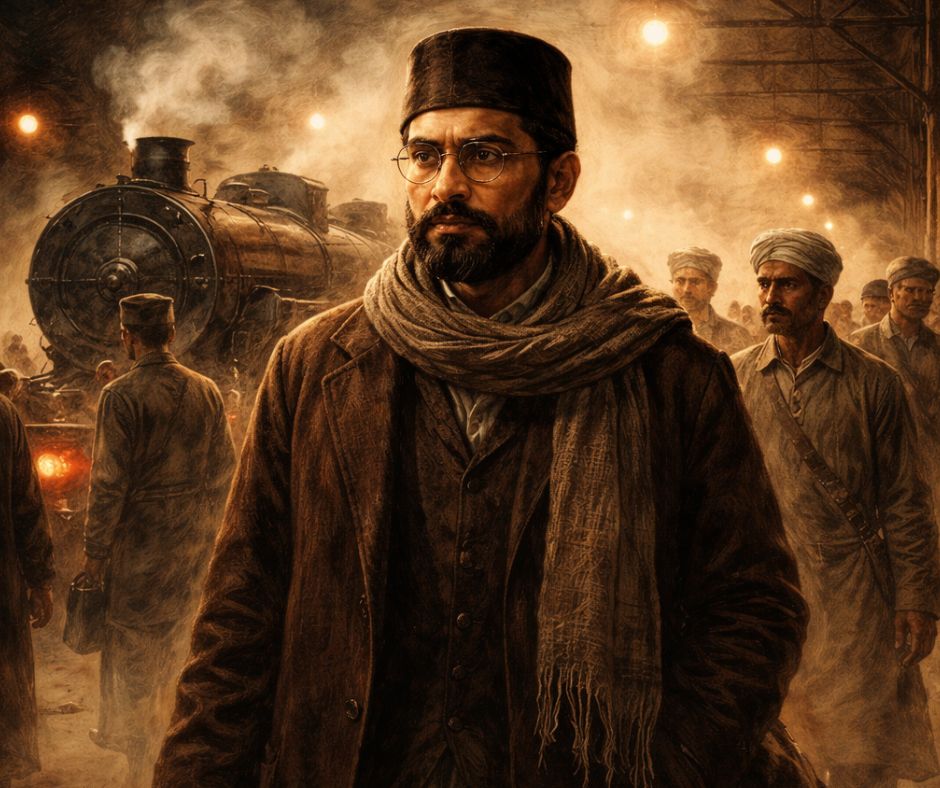
2nd Story: Three Disguises To Berlin: The night Calcutta learned how to hold its breath was not…
3rd Story: The Radio That Roared: The radio arrived in the village like a rumour. No one could …
4th Story: The Secret Voyage Aboard U-180: The sea does not announce itself when it decides to…
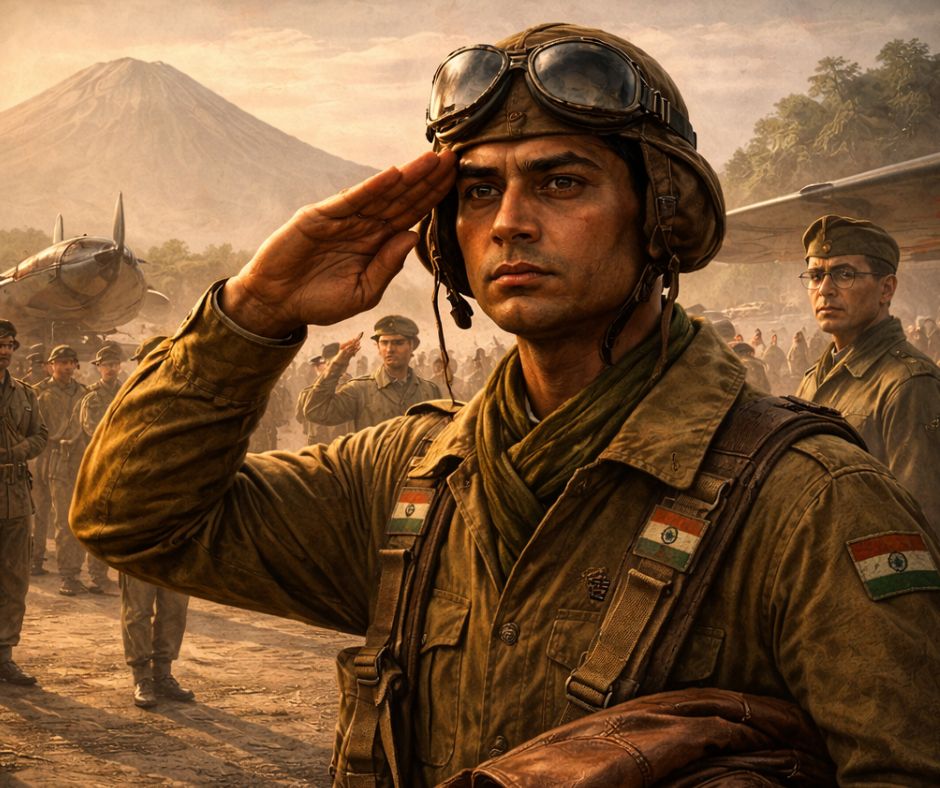
5th Story: The Tokyo Cadets: They arrived in Tokyo carrying the smell of salt, sweat, and old paper…

6th Story: The Shadow of Renko-ji: The temple does not face the street. It turns inward, as though…
Copyright © 2026 TRISHIKH DASGUPTA
This work of fictionised history, written by Trishikh Dasgupta, is the author’s sole intellectual property. It draws inspiration from documented escapes, lived silences, and the perilous thresholds crossed by Netaji Subhas Chandra Bose during the Indian freedom movement. While this story can be read and experienced independently, it also forms the second part of a six story narrative arc, where each piece stands alone yet together deepens the understanding of Netaji’s choices, transformations, and the unseen paths that shaped his journey. Some characters, incidents, places, and facts may be real, while others are imaginatively reinterpreted.
All rights are reserved. No part of this story may be reproduced, distributed, or transmitted in any form or by any means, including printing, photocopying, recording, or other electronic or mechanical methods, without the prior written permission of the author, except in the case of brief quotations embodied in critical reviews and certain other noncommercial uses permitted by copyright law. For permission requests, send an email to the author at trishikh@gmail.com or get in touch with Trishikh on the CONTACT page of this website.
ABOUT THE AUTHOR

Trishikh Dasgupta
Adventurer, philosopher, writer, painter, photographer, craftsman, innovator, or just a momentary speck in the universe flickering to leave behind a footprint on the sands of time... READ MORE
These stories are Free and if you have found something here that stayed with you, some of my other books (collection of short stories, novels, and more) are now available in print and digital editions. They gather many unique journeys, quieter questions, and stories that continue beyond this page.

You may also like to read my1st Published novel now available on Kindle and Paperback versions.
 Weekend Stories by Trishikh
🙏
Aum Shanti
LikeLiked by 1 person
Thank you.
LikeLiked by 1 person
Nicely done!
LikeLiked by 1 person
Thank you so much.
LikeLike
Yet another wonderful tale.. thank you ❤️
LikeLiked by 1 person
Dear Fiona, thank you so glad that you liked it. Your appreciation has always given me much joy.
LikeLiked by 1 person
well written as always and took me back to those times. Now waiting for the next part..
LikeLiked by 1 person
Dear Savitha, so glad that you also liked the 2nd story in this series. I am sure that you would love the remaining four also.
LikeLike
A hauntingly vivid scene! It beautifully captures a city pausing in quiet suspense, where atmosphere and memory speak louder than words or events.
LikeLiked by 1 person
So happy that you liked the way the sights, sounds, and smells in the story have been portrayed. You have rightly unidentified, the “atmosphere” is something that I take a lot of care to prepare in any of my stories. And ah! The “memory” is something that is very sacred to this piece.
LikeLiked by 1 person
Many thanks for the like! 💖 I’ve started a new channel, and your subscription along with your feedback would truly make a difference.
LikeLiked by 1 person
Yes, I have already subscribed.
LikeLike
Very well-written story on the escape of Netaji in disguise.
LikeLiked by 1 person
So glad that you liked it Indrajit. Always a pleasure to receive your appreciation.
LikeLiked by 1 person
Another well written tale, very vividly told!
LikeLiked by 1 person
Thank you so much. It really makes my day when someone enjoys one of my stories.
LikeLiked by 1 person
another wonderful story friend..
LikeLiked by 1 person
Thank you so much William. Much appreciate your constant appreciation for my stories. It is a real joy and pleasure to share them with the world.
LikeLiked by 1 person
Beautifully written. I could feel the tension and anxiety.
I look forward to the rest of the story.
LikeLiked by 2 people
Thank you so much Katelon, always a treat to share a story, and it does certainly become very special, when comments such as yours comes through. It really makes my day.
I am glad that I could bring forth a bit of the actual tension and anxiety.
Yes, keep an eye out for the next story next Friday.
LikeLiked by 1 person
Loved the beautiful pen picture. I could visualize each scene and feel the tension in the air. Reminded me of the way Sabyasachi was depicted in Pather Dabi by one of my most favourite and revered Bengali Authors Saratchandra Chattopadhyay. I read the Letter to RSS too. Equally arresting. Thank you for writing this.
LikeLiked by 2 people
Your appreciation for my story gives me great joy. Glad that you read the first two stories in this series. I will be releasing four remaining stories of the series in the coming Fridays.
Saratrachanda Chattpadhyay has gives us stories that are immortal. I too am a great fan of his stories. If my story found a bit of resemblance to his style of writing, then I accept it as a huge compliment.
LikeLiked by 1 person
A remarkably described journey, you have given a rich set of materials – images, sounds, ideas, emotional triggers – for reflection.
It is the willingness of the peril, marking out the strength of our conviction; however, in hindsight we are not always making the right choices when under duress. But who is to judge?
LikeLiked by 1 person
Thank you for reading the journey with such attentiveness. I am especially drawn to your thought on peril revealing conviction, and yet how duress complicates judgment in ways that only hindsight attempts to simplify. Perhaps the story rests in that unresolved space, where choices are made not to be judged, but to be understood within the weight of the moment that demanded them. I am grateful that the journey invited you into that reflection.
LikeLiked by 1 person
Netaji, the mystical and mysterious soldier, the deathless fighter of freedom, the controversial conspirator who joined hands with the abhored Axis. But to us always the undaunted, adorable leader who tricked the Britishers and crossed borders – the master of disguise.
A very timely post as 23.01.2026 comes closer – his birthday.
I loved the Unseen Witness – the Chronicler of Time – as invisible as Bose himself who listened and observed. Surreal , he reminded me of the trio in Harry Potter who observed themselves as doers from another realm of time.
LikeLiked by 3 people
Thank you for such a rich and generous reading. I am glad you felt the many contradictions that surround Netaji, the mystic and the strategist, the controversial and the undaunted, held together rather than resolved. That sense of the Unseen Witness as a chronicler of time, present yet invisible, listening more than acting, is exactly what I hoped would surface. Your comparison to observers from another realm feels especially apt, because this journey is as much about watching history happen as it is about shaping it. I am grateful that the story could travel with you in that way, especially as his birthday draws closer and memory grows more attentive.
LikeLiked by 2 people
What struck me most here is how this story shifts from the weight of words to the discipline of silence. If The Lost Letter to RSS lingered in what could not be said, this piece lives in what must not be seen.
The disguises feel less like costumes and more like acts of erasure—each one carefully chosen, each one costing something human. I also appreciate the presence of the Unseen Witness, quietly stitching memory to movement. It makes the journey feel less cinematic and more truthful, in the way history often is when stripped of spectacle.
LikeLiked by 4 people
Thank you, Livora, for such a discerning and generous reading. Your distinction between what could not be said and what must not be seen feels exactly right, and I am grateful you sensed that shift from words to discipline, from expression to erasure. The disguises were meant to cost something human, not to add drama but to subtract visibility, and your reading of the Unseen Witness as quietly stitching memory to movement honours that intent beautifully. When the journey feels less cinematic and more truthful, I feel the story has arrived where it needed to be.
LikeLike
Trishikh, another masterpiece! I love the way you create a persuasive atmosphere in your storytelling. The tension is palpable as the story unfolds. Well done, my friend.
“He had learned long ago that history rarely announced its turning points with spectacle; more often, it whispered, and only those who listened closely survived to answer.”
This is profound. It highlights the magnitude of the mission without revealing the immediate strategy, similar to a bait-and-hook method. ~ Dave
LikeLiked by 2 people
Thank you so much, Dave, for reading with such care and generosity. I am glad the atmosphere and tension carried you through the journey, because this escape depended less on cleverness than on attentiveness. Your reading of that line as a quiet bait-and-hook is especially perceptive, the mission had to remain larger than any single tactic, guided by listening rather than spectacle. I am grateful, as always, for the way you listen so closely to the work and reflect it back with such thoughtfulness.
LikeLiked by 1 person
You have captured the mystery of Netaji’s disappearance with great finesse, Trishikh.
LikeLiked by 3 people
Thank you, Kajoli, for reading it with such sensitivity. I am glad the sense of mystery came through, because I wanted it to feel held rather than solved, a space where history pauses and listening begins. Your words mean a great deal to me.
LikeLiked by 1 person
Good that I continued with this story instead of reading the latest one.
What a journey he undertook to flee from the British Raj!
First I was wondering why he would go to Nazi Germany. But they supported a free India against the British, so that explains it. Good for India (and everybody) that Germany lost the war. They might have claimed special gratefulness from India for their support. A fascinating story!
LikeLiked by 1 person
Thank you for staying with the journey and for thinking through it so honestly. Your hesitation about Germany is understandable, because Netaji’s choices were shaped by the pressures and limited options of his time, where opposing British rule sometimes meant engaging with deeply uncomfortable alliances. I am glad the story could hold that complexity without simplifying it, and that you felt the weight of the journey rather than just its destination. History rarely offers clean choices, only urgent ones, and I am grateful that you read it with that awareness.
LikeLiked by 1 person
I definitely felt his journey as the main thing, it must have been weary, physically and mentally. I read up about him and, therefore, could understand his choice of allies (I am German by the way). He did what he thought was best for India at that moment. Still, it was a good thing that Hitler didn’t win, for everybody.
LikeLiked by 1 person
You have captured the pain that accompanied the escape so well. You are doing a marvellous job documenting Bengal in all its colours.
LikeLiked by 1 person