They arrived in Tokyo carrying the smell of salt, sweat, and old paper. Some had crossed oceans. Some had crossed borders that no longer existed on maps. A few had crossed nothing more than the narrow circumference of their own fear. Yet when they stood together on the parade ground, boots aligned, shoulders squared, they looked remarkably alike, young men shaped by hunger, purpose, and a promise they could not yet fully articulate.
The Unseen Witness watched them from the edge of the field. He had been assigned to keep records, not names that history would later recognise, but numbers, dates, weights, hours flown, hours failed. He wrote neatly, carefully, as though precision itself might offer protection. The paper smelled faintly of ink and dampness, a reminder that nothing here was permanent, not even memory.
The Tokyo air carried a different discipline. Even in the early mornings, before the city fully stirred, there was movement. Trains whispered past. Flags stirred softly. Somewhere, always, an engine coughed awake. The cadets rose before dawn, their bodies learning the rhythm of command, their ears tuning themselves to whistles and shouted instructions delivered in clipped syllables they barely understood. They learned quickly. They had to.
Among them was Arjun Mukherjee, barely twenty, his hands still carrying the softness of someone who had once turned pages more often than tools. He had grown up in a narrow lane in Shyambazar, his nights filled with borrowed books and distant tram bells. He had never imagined the sky as anything other than an abstraction, something poets wrote about, and kites flirted with. Now the sky waited for him every day, vast and demanding.
Training was relentless. They learned the language of machines, the delicate balance between trust and control. The aircraft were temperamental, unforgiving, their metal skins cold to the touch. The smell of fuel clung to everything, hair, clothes, skin, a scent that followed them into sleep and settled into dreams.
The instructors were precise, their expectations unyielding. Mistakes were corrected sharply, not out of cruelty, but necessity. War did not forgive hesitation. Gravity did not negotiate.
At night, the cadets gathered quietly in the barracks. Someone always read aloud. Letters from home, fragile with distance. News clippings folded until the edges frayed. Sometimes a poem, remembered imperfectly, recited anyway. The sound of voices filled the space where courage was still learning how to sit comfortably. The Unseen Witness listened.
He listened to the tremor in certain voices, the bravado in others. He listened to the silences after bad news, when no one knew which words were safe. He wrote nothing of this down. Some records were not meant for paper.
One evening, Netaji came to see them. There was no grand announcement. No flourish. He walked onto the ground as he had walked onto ships and into rooms before, with economy, with awareness. The cadets straightened instinctively, a collective tightening of spines and resolve.
He spoke to them without notes. He spoke of discipline, not as punishment, but as freedom from doubt. He spoke of the sky, not as conquest, but as responsibility. He spoke of India, not as an idea, but as people whose names he would never know, whose lives would nonetheless be altered by choices made here, now. He did not promise survival. He promised meaning.
Arjun felt the words settle somewhere deep, quieter than excitement, heavier than fear. He realised then that he was no longer training to become a pilot. He was training to become a decision.
The days grew harder. Accidents happened. A misjudged landing. A stall recovered too late. The sound of impact carried across the field like a crack in the world itself. Training paused, then resumed. There was no other way. Grief was folded into routine, carried forward without ceremony.
The Unseen Witness stood with the others during the brief moments of silence. He noticed how the cadets listened differently afterwards, how they respected the machines more, how laughter became rarer but sharper, edged with urgency. He wrote the date. He closed the ledger.
Letters home changed in tone. They grew careful, reassuring. Details were omitted. Bravery was framed as normalcy. Mothers were told of meals eaten, of friendships formed, of weather patterns. Fathers were told of progress, of competence, of pride. No one wrote about the sound of engines failing mid-air. No one wrote about the weightlessness that felt briefly like peace before panic took hold.
Arjun wrote anyway. Not everything. Just enough. He wrote about the sky at dawn, how it blushed before yielding to blue. He wrote about the way clouds looked solid until you passed through them, then dissolved into nothing. He wrote about learning that some things could not be held, only trusted.
The Unseen Witness read these letters before they were sent. Not to censor, but to ensure they arrived. He learned to recognise the cadence of hope shaped to survive distance. He returned the letters sealed, untouched in appearance, though he carried their echoes with him long after.
As months passed, the cadets grew leaner, sharper. They moved with a confidence that had been earned, not assumed. Their laughter returned, quieter now, threaded with understanding. They spoke of the future in fragments, never whole sentences. Superstition was not discussed, but practised.
One night, Arjun confessed his fear to the Witness. Not of death. Of forgetting. “I am afraid,” he said softly, “that if I do not return, I will become a footnote. A number. A line someone else reads without knowing my face.” The Witness considered this. “You are already more than that,” he replied. “Because you are choosing.” Arjun nodded. He did not look convinced, but he slept afterwards.
When deployment orders arrived, they were read aloud. Names echoed in the hall, each one landing differently. Some were met with clenched jaws, others with bowed heads. There was no cheering. No applause. Only the sound of paper being folded, of boots being laced with deliberate care.
Netaji did not attend the send-off. He did not need to. His presence lingered in the discipline, in the language of purpose the cadets now spoke fluently. He had given them what could not be reclaimed, a reason that did not depend on outcome.
The morning they left, Tokyo was unusually quiet. Mist clung to the airfield. Engines warmed slowly, their growl restrained, respectful. The cadets lined up, their uniforms crisp, their expressions composed. The Unseen Witness stood back, notebook closed. Arjun turned once, searching the crowd. Their eyes met. No salute was exchanged. No gesture. Just recognition.
The planes lifted one by one, cutting through the mist, dissolving into the sky that had claimed them long before any order did. The sound lingered after they were gone, a fading roar that settled into silence. The Unseen Witness remained. He recorded departures. He waited for returns that came unevenly, if at all. He learned the language of absence, the way it shaped space without occupying it.
History would later speak of the Tokyo Cadets as an audacious footnote, a dream interrupted by surrender and circumstance. It would measure success narrowly, outcomes harshly. It would not speak of dawn briefings whispered in broken Japanese and Bengali. It would not speak of hands shaking before first solo flights. It would not speak of letters read aloud in dim barracks, voices steady because they had to be. But the sky remembered. And so did those who learned to trust it. The Unseen Witness closed his notebook for the last time. Somewhere far away, engines faded into memory. And the young men who had learned to fly carried India with them, not as territory, but as breath, held carefully, until the very end.
Other stories in this series of six stories sorrounding the life and time of Netaji Subhash Changda Bose:

1st Story: The Lost Letter To RSS: The monsoon had not yet slipped fully into the memory of summer…
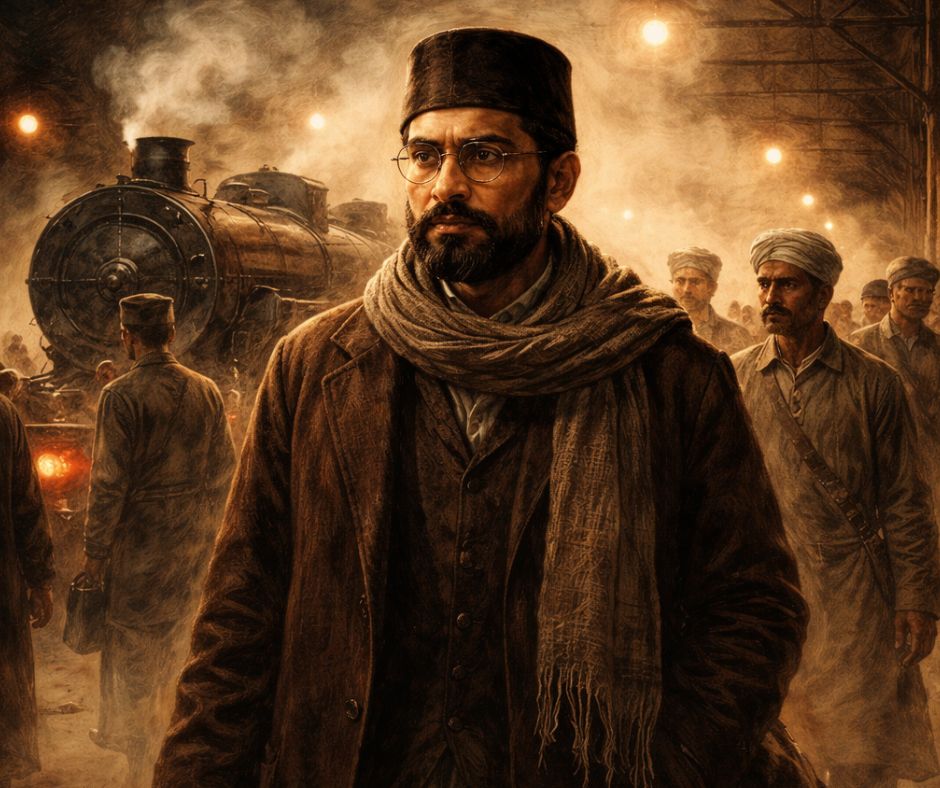
2nd Story: Three Disguises To Berlin: The night Calcutta learned how to hold its breath was not…
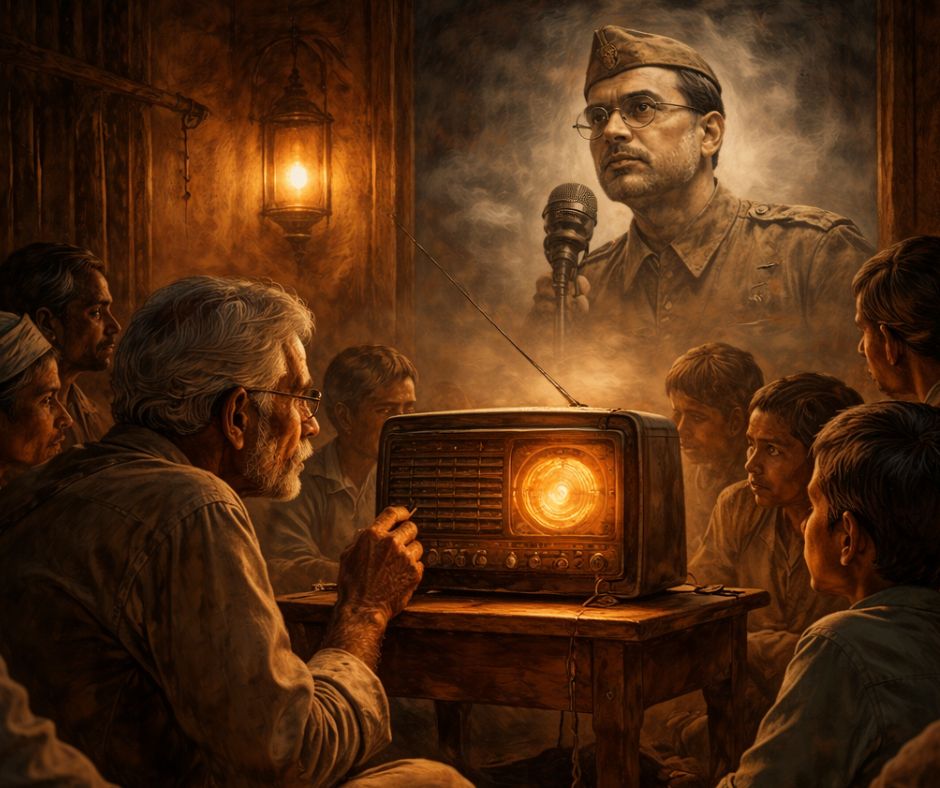
3rd Story: The Radio That Roared: The radio arrived in the village like a rumour. No one could …
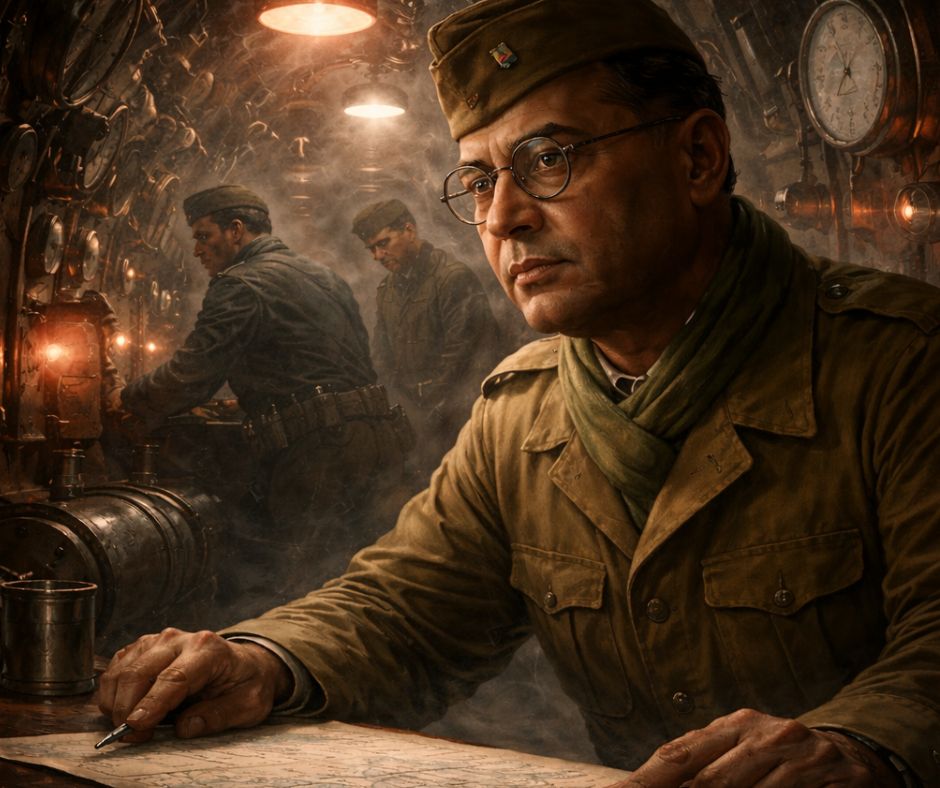
4th Story: The Secret Voyage Aboard U-180: The sea does not announce itself when it decides to…
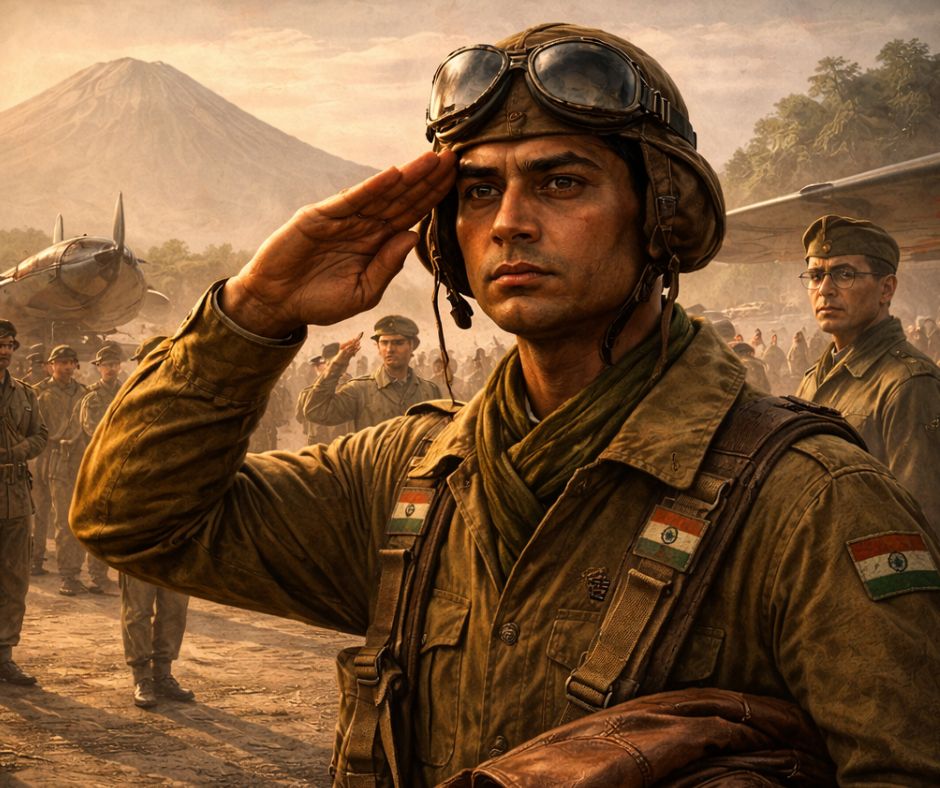
5th Story: The Tokyo Cadets: They arrived in Tokyo carrying the smell of salt, sweat, and old paper…

6th Story: The Shadow of Renko-ji: The temple does not face the street. It turns inward, as though…
Copyright © 2026 TRISHIKH DASGUPTA
This work of fictionised history, written by Trishikh Dasgupta, is the author’s sole intellectual property. It draws inspiration from documented wartime training efforts, the little known story of the Tokyo Cadets, and the young Indian lives shaped by Netaji Subhas Chandra Bose’s call during the Indian freedom movement. While this story can be read and experienced independently, it also forms the fifth part of a six story narrative arc, where each piece stands alone yet together deepens the understanding of Netaji’s legacy as it passed from vision to voice, from journey to inheritance. Some characters, incidents, places, and facts may be real, while others are imaginatively reinterpreted.
All rights are reserved. No part of this story may be reproduced, distributed, or transmitted in any form or by any means, including printing, photocopying, recording, or other electronic or mechanical methods, without the prior written permission of the author, except in the case of brief quotations embodied in critical reviews and certain other noncommercial uses permitted by copyright law. For permission requests, send an email to the author at trishikh@gmail.com or get in touch with Trishikh on the CONTACT page of this website.
ABOUT THE AUTHOR
Trishikh Dasgupta
Adventurer, philosopher, writer, painter, photographer, craftsman, innovator, or just a momentary speck in the universe flickering to leave behind a footprint on the sands of time... READ MORE
These stories are Free and if you have found something here that stayed with you, some of my other books (collection of short stories, novels, and more) are now available in print and digital editions. They gather many unique journeys, quieter questions, and stories that continue beyond this page.
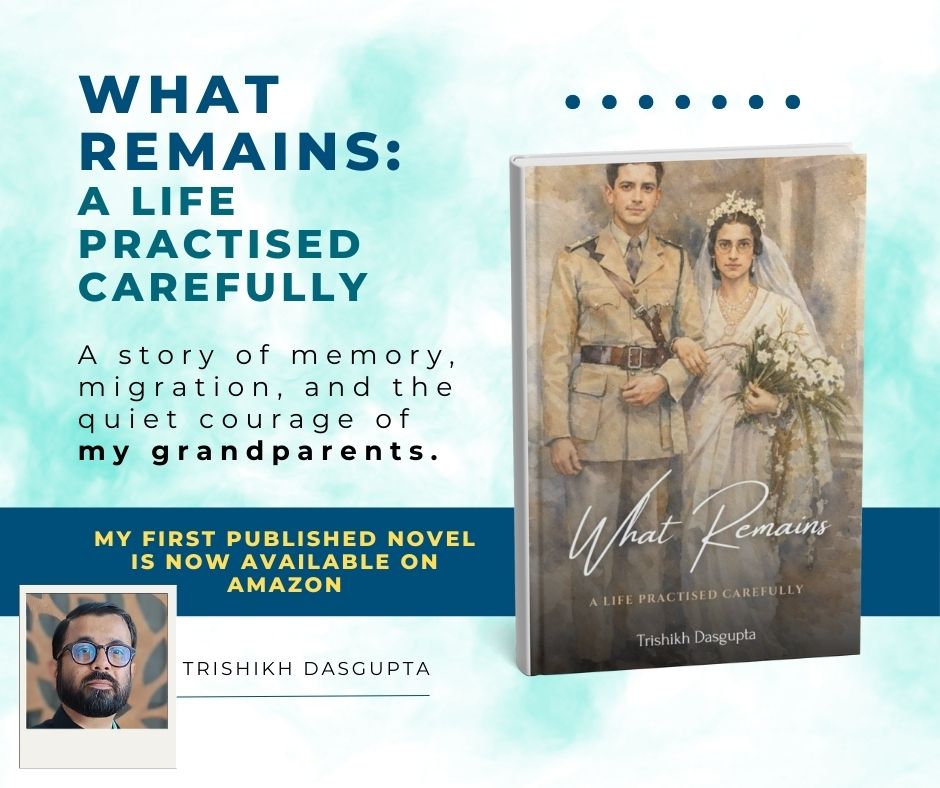
You may also like to read my1st Published novel now available on Kindle and Paperback versions.
 Weekend Stories by Trishikh
Dear William, thank you for liking the story. The first comment to my story is always very special, and I am indebted to you for it. I like war stories too, unfortunately they have so much to teach us. More than the action, which is exciting at times, I feel the human emotions, decisions, and consequences of war time are something worth studying. They give us a rare glimpse into the human mind.
LikeLike
ah thats my kind of scene, a war story, and almost feeling it was real.. well done pal..
LikeLiked by 3 people
Thank you William for liking the story. I treasure your constant appreciation for my stories.
I love war stories too. Yes the action is always interesting, but I am really intrigued by the human emotions that come out during war time. All wars are unfortunately sad and devastating no matter what results they bring.
LikeLiked by 2 people
Well save this one for later
LikeLiked by 2 people
Thank you. I am sure that you would love this story too.
LikeLiked by 1 person
I always do my friend. Couldn’t read it yesterday do to……stress. But I intend to read it soon.
LikeLiked by 1 person
Did those cadets fight for India, or for the Japanese? Did they all die? How did Indian soldiers getting involved in fighting on that side help free India.?
This powerful post moved me inside that tension, mixed with duty, perhaps some excitement and fear that all soldiers must feel. And these pilots had to also count on the planes to be reliable. We’ll done.
LikeLiked by 4 people
Thank you, Katelon, for asking this so thoughtfully. Your questions sit right at the heart of the tension the story tries to hold, and they deserve a careful, honest response rather than a simple one.
The cadets you read about, often referred to historically as the “Tokyo Boys,” were trained in Japan under the aegis of the Indian National Army (INA). Their declared allegiance was to Azad Hind and to the idea of an independent India, not to Japan as a nation or to Japanese imperial ambitions. However, in practical terms, their training, equipment, and movement were made possible only because the INA operated in alliance with Imperial Japan. That reality creates an unavoidable ambiguity: while their intention was India’s freedom, the machinery that enabled them belonged to another empire altogether.
Not all of these cadets died. Many were still in training when the war ended and were taken prisoner after Japan’s surrender. Several survived, returned to India or neighbouring regions, and went on to live civilian lives or even serve in post-independence institutions. Their story is often remembered as one of preparation and promise rather than battlefield combat, which is part of why it remains less visible in popular history.
As for whether their involvement “helped” free India, the answer lies more in politics and psychology than in military success. The INA, including these cadets, did not defeat the British militarily. The campaigns faltered, resources were stretched thin, and the odds were overwhelming. But the very fact that Indian soldiers were willing to fight the British crown under an alternative flag deeply unsettled the moral authority of the Raj. The INA trials, the public response to them, and the unrest they triggered within the British Indian armed forces played a significant role in hastening the end of colonial rule. In that sense, their impact was indirect but profound.
What moves me most, and what you sensed so clearly, is the human weight of their position. These young men lived inside overlapping pressures: duty, excitement, fear, nationalist idealism, and the very real risks of unreliable machines and uncertain futures. They did not know whether their actions would bear fruit or vanish into obscurity. That willingness to act without guarantees, to accept that history might forget them even as they risked everything, is where their courage truly lies.
Your reading touches exactly that space, where duty and doubt coexist, and where history’s clean summaries fail to capture what it felt like to stand there, young, trained, hopeful, and unsure. I am grateful that you stepped into that tension with the story and allowed it to remain unresolved, because that is where its truth lives.
LikeLiked by 3 people
Thank you for such a detailed answer. I appreciate learning more about history through your lush and emotional way with language and the sensitive way you write Trishikh.
LikeLiked by 2 people
You are most welcome Katelon. It is my honour to share the little bit that I know. This question of your’s demanded a longer answer.
LikeLiked by 2 people
Well written and you have captured the emotions beautifully.
LikeLiked by 1 person
Dear Savitri, thank you for always appreciating.
LikeLike
🙏
Aum Shanti
LikeLiked by 1 person
Thank You.
LikeLiked by 1 person
What struck me most in this chapter is how the arc quietly shifts from solitary discipline to shared formation.
These cadets are not yet pilots, and not quite soldiers either — they feel like decisions in the process of being learned, shaped through repetition, loss, and restraint rather than belief alone.
I was especially moved by how the Unseen Witness no longer carries or follows, but simply records departures. In that gesture, the story seems to release heroism altogether and attend instead to preparation — the kind that accepts obscurity as part of its cost.
Placed after the letter unsent, the body erased, the voice dispersed, and the crossing endured, this chapter reads less like escalation and more like inheritance: a discipline passed on without guarantees, held carefully, and carried forward by many rather than one.
Thank you for trusting the cadets to remain unfinished here. That restraint feels deeply faithful to the journey you have been tracing all along.
LikeLiked by 3 people
Dear Livora, thank you for always reading my stories with such attentiveness and generosity. Your sense of the shift from solitary discipline to shared formation touches exactly the movement I hoped this chapter would make, where the cadets are not yet roles or outcomes, but decisions still being learned through repetition and loss. I am especially moved by your reading of the Unseen Witness as one who now simply records departures, because that felt like the moment when heroism could be set aside in favour of preparation and inheritance. If the chapter could hold that sense of something being passed on without guarantees, carried forward by many rather than resolved in one figure, then it has remained faithful to the journey I have been tracing. I am grateful for the care with which you listened to it.
LikeLiked by 2 people
This is quietly powerful and deeply moving. Your writing carries a rare restraint—nothing is overstated, yet every emotion lands. The use of The Unseen Witness is especially effective, giving the story a moral and emotional anchor while honoring those who history reduces to numbers. Arjun feels achingly real, and the final image of India carried “not as territory, but as breath” is beautiful and unforgettable.
LikeLiked by 2 people
Dear Verma’ji, thank you, as always, for reading with such care and generosity. Your sense of restraint as a moral choice, rather than an absence of emotion, means a great deal to me. I am especially moved by your reading of the Unseen Witness as an anchor that honours those whom history reduces to numbers, because that quiet accounting felt essential to this chapter. That character of Arjun Mukherjee felt real to you, and that the image of India carried “not as territory, but as breath” stayed with you, tells me the story found its truest register. I am deeply grateful for the way you continue to listen to these silences and give them language.
LikeLiked by 2 people
Yet another wonderful tale.. thank you.. ❤️
LikeLiked by 1 person
Dear Fiona, thank you so much. Your appreciation means a lot to me. I have come to treasure them as a great source of encouragement over the years.
LikeLiked by 1 person
Great write up!! Thank you!
LikeLiked by 1 person
Thank you so much Jyoti for reading the story and liking it.
LikeLiked by 1 person
Trishikh
Another great piece by a true master, capturing the anxious and futile feelings of young men going to war through no fault of their own.
“The planes lifted one by one, cutting through the mist, dissolving into the sky that had claimed them long before any order did. The sound lingered after they were gone, a fading roar that settled into silence.”
I believe this effectively conveys the weight, helplessness, and stark reality the airmen must have faced, knowing that once committed to the mission, they might never return. ~ Dave
LikeLiked by 1 person
Dear Dave, thank you for reading it with such empathy and precision. Your understanding of those anxious, almost futile feelings the young men carried means a great deal to me, because the story was written with that awareness of commitment without guarantee. I am especially glad that the image of the planes lifting into the mist spoke to you, because it was meant to hold that moment where choice gives way to inevitability, and silence becomes the only honest witness. I am grateful, as always, for the care with which you listen to the work and reflect it back.
LikeLiked by 1 person
A story, composed richly in metaphor and poetic insights. History accounts with glories only for the winning side, we rarely hear about the experiences of the vanquished with equal emphasis.
LikeLiked by 2 people
Thank you for reading the story with such sensitivity. I am glad the metaphors and quiet insights spoke to you, because this piece was meant to sit with those lives that history often leaves in its margins. As you say, victory tends to monopolise memory, while the experiences of those who did not “win” are reduced to footnotes or silence. I wanted to honour that other side of history, the lived experience of effort, loss, and discipline, regardless of outcome. Your reflection touches precisely the space the story hoped to inhabit.
LikeLiked by 1 person
I could almost feel the tremors and excitement in their young hearts. How wonderfully you have portrayed important historical events in such a captivating manner. Deepest respect for your work. 🙏
LikeLiked by 2 people
Poetic and extremely poignant.
This passage made me realise the humungous organisational activities that were undertaken to enlist, train, prepare and finally motivate the cadets, irrespective of their successes or failures.
History is partial. It does not chronicle the narratives of endeavours. Only achievements and outcomes. And neatly records the reasons for failure. It’s grossly unfair.
LikeLiked by 1 person
Dear Geeta, thank you for such a thoughtful and deeply felt response. I am glad the story could open up that awareness of the immense, often invisible labour behind those young lives, the organising, training, preparing, and sustaining of belief, regardless of outcome. What you say about history’s partiality resonates strongly with me. Endeavour, effort, and intention are rarely granted the dignity of remembrance unless they culminate in success, and that imbalance is indeed unfair. This story was my attempt to sit with those unseen narratives of trying, of carrying forward something larger than oneself even when the ending remained uncertain. Your reflection touches that space with great clarity, and I am grateful for it.
LikeLiked by 1 person
Trishikh: Thank you for the time you put into every story, painting the details so realistically that your readers are there. ❤️
LikeLiked by 2 people
Thank you Carolyn. Reading your words at the end of a fulfilling and tiring work day brings a great sense of accomplishment and satisfaction. Painting the sights, sounds, and smell of the time, place, and people is a big criteria for me when I write any story. Glad that you like and acknowledge that constantly.
LikeLiked by 1 person
Arjun saying he was afraid of becoming just a footnote hit hard. That one confession made the whole story feel personal, not historical.
You don’t just write about Netaji’s era, you humanise it in a way that makes people lean in and feel it. This series is becoming something serious now. Keep going. 🇮🇳
LikeLiked by 1 person
Dear Vidisha, thank you so much. Glad that you could feel this key element in the story, Arjun’s thought of becoming just a footnote.
So much has been written about Netaji that it took me a while to ponder what new can I write about him, in a series of six short stories, and then these ideas came to me. I am glad to have been able to complete the six stories about Netaji, they are free to read on my website now.
LikeLiked by 1 person
Great!
LikeLiked by 1 person
Dear Vidisha, thank you so much.
LikeLiked by 1 person