There are streets in a city that merely carry traffic, and then there are streets that carry memory. College Street in Kolkata belongs to the latter. In the early mornings, before the buses begin their impatient honking and before the tram bell rings its metal warning, the street wakes slowly. Booksellers lift the tarpaulin sheets that protected their stalls through the night. Dust rises from piles of second-hand textbooks. The smell of old paper mingles with the aroma of tea brewing in blackened aluminium kettles balanced over coal stoves.
For more than two centuries this street has been a republic of books. Students from Presidency College and the University of Calcutta have walked these pavements since the nineteenth century, searching for knowledge, rebellion, poetry, or simply a cheap copy of an expensive textbook. The Indian Coffee House nearby has heard debates that lasted longer than empires. Generations of thinkers, professors, revolutionaries, and dreamers have wandered through this corridor of ink and paper. Yet somewhere in the middle of the endless bookstalls there once stood a man who sold something different.
His stall was small and easily overlooked. Two wooden planks rested upon old tea chests, and above them hung a faded canvas sheet that had long ago surrendered its original colour to sun and rain. Instead of novels or exam guides, the stall displayed rolled parchment sheets tied with cotton thread. They were maps, not your usual kind required mostly by students for school projects. Old maps, new maps, and maps that seemed older than the city itself. The man who sold them was known simply as Mukherjee Babu. No one remembered exactly when he had first appeared there. The older booksellers insisted he had arrived sometime in the late 1970s, though others claimed they had seen him earlier. By the time anyone bothered to notice him properly, he was already part of the landscape of College Street, like the tramlines or the endless rows of books.
Mukherjee Babu was thin, almost delicate, with a silver beard that seemed permanently dusted with paper fibres. He wore thick spectacles and a neatly folded dhoti, and his fingers were always faintly stained with ink. Unlike other sellers, he rarely called out to customers. He simply sat behind his maps and waited. Occasionally someone would stop and examine them. At first glance they looked like ordinary city maps, but a closer look revealed something strange. The streets they showed did not always match the Kolkata outside. Some bore unfamiliar names. Others curved where no road existed. Rivers appeared where there were now buildings, and neighbourhoods vanished entirely.
A young man noticed this one afternoon. His name was Arindam Sen, a doctoral researcher from Jadavpur University who had come to College Street hunting for old archival texts. His subject was urban history, and he spent most of his days buried in libraries that smelled of dust and mildew. On that particular day the monsoon had arrived early. Rain hammered against the tarpaulins above the stalls, and the street had become a river of umbrellas. Arindam ducked beneath Mukherjee Babu’s canvas sheet simply to escape the rain, but the maps caught his attention immediately. One showed the Hooghly River bending far closer to the eastern districts than it does today. Another displayed tram routes he had never heard of. A third marked a large cemetery where modern apartment blocks now stood.
“These are incorrect,” Arindam said politely, pointing to a road that curved impossibly across north Kolkata. Mukherjee Babu looked up slowly from the map he had been repairing with delicate strokes of glue. “Incorrect?” he repeated with mild amusement. “Yes. The streets don’t exist.” The old man adjusted his spectacles and studied the parchment. “They existed once.” The rain outside intensified, drumming on the tarpaulin like distant artillery. Arindam leaned closer. “You mean these are historical maps?” Mukherjee Babu considered the question before reaching beneath the table and pulling out another sheet. “Not exactly,” he said after a moment. “Look at this one.”
The map showed Kolkata as it might have appeared in the early nineteenth century. Wide marshlands stretched across what was now Salt Lake. Narrow lanes wound around ponds and gardens long vanished. Near the river, small clusters of colonial buildings stood beside bustling native bazaars. “This,” said Mukherjee Babu quietly, “is the city in 1825.” Arindam examined the parchment carefully. “How did you reconstruct it?” “I didn’t reconstruct anything,” the old man replied, his voice carrying no trace of pride. “I remembered it.” Arindam laughed, assuming the old man was joking, but the bookseller did not smile.
Over the next few weeks Arindam returned often. At first he came out of academic curiosity. Kolkata’s geography had changed repeatedly over the centuries, shaped by rivers shifting course, colonial urban planning, and relentless expansion. Yet the maps Mukherjee Babu produced did not resemble the ones found in archives. They seemed more intimate, as though drawn by someone who had walked those vanished streets himself. One afternoon Arindam unrolled a map that stopped him cold. At the centre was a neighbourhood he recognised immediately, yet something was missing.
“Where is this road?” he asked. Mukherjee Babu leaned forward and studied the sheet carefully. “Ah,” he said softly. “That road had not been built yet.” The map showed the area around College Street itself, but instead of the crowded avenue Arindam knew, the parchment displayed a quiet landscape of gardens and ponds. A few narrow paths crossed open fields where cattle grazed lazily. To the west stood the early buildings of Hindu College, which would later become Presidency College. “This is impossible,” Arindam whispered. “It is only memory,” said the old man. “Memory of what?” Mukherjee Babu tapped the map gently. “Of the city before it learned how to forget.”
By now Arindam had begun keeping notes. He recorded the details of each map and compared them with historical records. Astonishingly, many of the features matched fragments of old survey documents scattered across libraries: forgotten canals, disappeared burial grounds, tram routes abandoned decades earlier. It was as though Mukherjee Babu possessed an invisible archive inside his mind. One evening Arindam finally asked the question that had been troubling him. “Why do you draw these?” Mukherjee Babu did not answer immediately. The street outside was glowing in the amber light of sunset. Students were drifting toward the Coffee House, and the air smelled of frying telebhaja from a nearby stall.
Finally the old man spoke quietly. “Cities change. That is their nature. Rivers shift. Buildings rise and fall. Streets are renamed. People leave.” He lifted one of the maps gently between his fingers. “But if no one remembers what came before, a city becomes only stone and concrete.” Arindam studied the delicate lines of ink spreading across the parchment and slowly realised what the old man was doing. “You are mapping memory,” he said. Mukherjee Babu nodded.
For nearly a year Arindam continued visiting the stall. Sometimes he bought maps, and sometimes he simply sat and listened as Mukherjee Babu spoke of vanished Kolkata. He spoke of the days when College Street was still forming around the new institutions of learning built by the British in the early nineteenth century, and of how booksellers began gathering there because students needed cheap textbooks. He described how intellectual debates spilled from classrooms into tea shops and eventually into the legendary Coffee House. He spoke of tramlines that once ran like veins through the city, of gardens that disappeared beneath railway tracks, and of entire neighbourhoods erased when the river altered its course. Gradually Arindam realised something unsettling: Mukherjee Babu never spoke as though he had read about these things. He spoke as though he had witnessed them.
One winter morning Arindam arrived at the stall carrying a small gift, a leather notebook he hoped Mukherjee Babu might use to record his knowledge. But the stall was empty. The canvas sheet fluttered in the breeze. The tea chests were gone. Only a single rolled map remained on the wooden plank. Arindam waited for hours until the neighbouring booksellers eventually noticed him. “Looking for Mukherjee Babu?” one of them asked. “Yes. Do you know where he went?” The bookseller shrugged. “He packed his things yesterday evening.” “Did he say anything?” The man shook his head gently. “Old people leave quietly.”
Arindam unrolled the map slowly. At first it appeared ordinary. It showed modern Kolkata, with its familiar districts and roads. But as he looked closer, subtle details began to emerge. Thin ghostly lines traced streets that no longer existed. Faint markings revealed old tram routes beneath the current ones. Beneath the dense geometry of the present city lay another map entirely, many maps layered upon each other, centuries of Kolkata breathing beneath the asphalt. Near the centre of the sheet was a small dot. Beside it Mukherjee Babu had written a single word in careful Bengali script: Home.
Arindam looked up from the map. College Street was alive with its usual chaos. Students bargained loudly over textbooks. Vendors shouted prices. The tram bell clanged as it moved slowly through the crowd. The city had not noticed the disappearance of the map seller, for cities rarely notice such things. Yet as Arindam rolled the parchment carefully and placed it in his bag, he understood what Mukherjee Babu had been doing all those years beneath that faded canvas sheet. He had not been drawing maps. He had been rescuing memory. Because cities, like people, forget, and sometimes it takes one quiet man sitting among piles of old paper to remind them where they once stood.
Copyright © 2026 TRISHIKH DASGUPTA
This work of fiction, written by Trishikh Dasgupta, is the author’s sole intellectual property. The story is set against the historical and cultural backdrop of College Street in Kolkata, a place long associated with books, education, and intellectual life. While references to real institutions, locations, and aspects of the area’s history are included to provide context and atmosphere, the characters, events, and narrative elements in this story are products of the author’s imagination and creative interpretation.
All rights are reserved. No part of this story may be reproduced, distributed, or transmitted in any form or by any means, including printing, photocopying, recording, or other electronic or mechanical methods, without the prior written permission of the author, except in the case of brief quotations embodied in critical reviews and certain other noncommercial uses permitted by copyright law.
For permission requests, send an email to the author at trishikh@gmail.com or get in touch with Trishikh on the CONTACT page of this website.
ABOUT THE AUTHOR
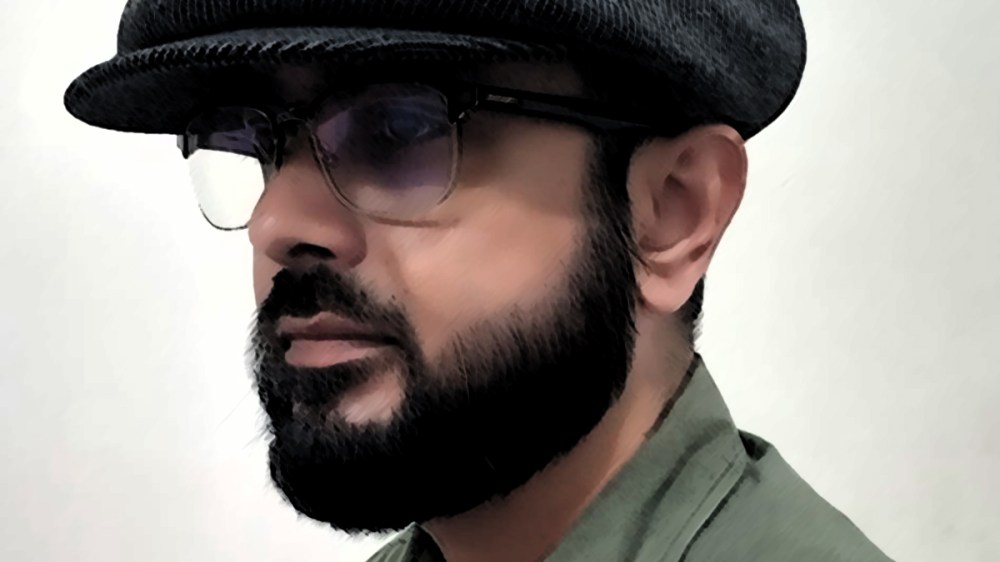
Trishikh Dasgupta
Adventurer, philosopher, writer, painter, photographer, craftsman, innovator, or just a momentary speck in the universe flickering to leave behind a footprint on the sands of time... READ MORE
This story is Free, and if you have found something here that stayed with you, some of my books (collection of short stories, novels, and more) are available in print and digital editions. They gather many unique journeys, quieter questions, and stories that continue beyond this page.
 Weekend Stories by Trishikh
Ohhhh nice saving this for later
LikeLiked by 1 person
Yes, this is a full free short story. I know that you would like it.
LikeLiked by 1 person
Last night and today are both very busy
LikeLiked by 1 person
Being busy is a blessing.
LikeLiked by 1 person
Not to me my friend. It would be nice to have a calm time. Not be overworked. It’s different if I was busy at something fun. Something that relaxed me. But I am not having fun.
LikeLiked by 1 person
That is also so true, relaxation, peace, and calm are something that always rejuvenates.
LikeLiked by 1 person
That’s why I often read your stories to finally find calm.
LikeLiked by 1 person
And I treasure it as a great honour and privilege.
LikeLiked by 1 person
Thank you my friend. You have given me the gift of peace. And shown me a world of kindness.
LikeLiked by 1 person
And you have the gift of appreciation and encouragement, which is a rare treasure.
LikeLiked by 1 person
Your words have touched my heart my friend. And I finally got to read it just now! I had to make the time but I am so pleased I did. The Map Seller is that one older friend in life we all wish we had. I hope Arindham Sen goes to the spot on the map to find his friend again.
LikeLiked by 1 person
Dear MM, so glad that you got to read the story. I also wish that Arindam goes to meet Mukherjee Babu at his home, who knows what other mysteries he would find there.
LikeLiked by 1 person
I began to suspect that he has lived longer than most suspected. There were subtle hints that only Arindam has apparently guessed at. Everyone else just ignored him as background.
LikeLiked by 1 person
Yes, you might be right over there. Most of my stories have hidden stuff in them. And you have something very interesting hidden in this tale.
LikeLiked by 1 person
I don’t want to speculate because I suspect this character has many meanings and layers to him.
LikeLiked by 1 person
You can always speculate, these conversations adds to the stories.
LikeLiked by 1 person
I believe one of four things
1) He’s simply a long lived man
2) He’s a a mystic who learned to extend his own life.
3) He’s a God who reincarnated as a human
4) He remember his past lives
LikeLiked by 1 person
Wow, these are some amazing angles. Now I think that I have to write a sequal.
LikeLiked by 1 person
Ohhhhhh really? If you do I can’t wait!
LikeLiked by 1 person
I gave been thinking for a while to do sequals to some of my stories. Let’s hope for the best and keep our fingers crossed.
LikeLiked by 1 person
🙏
LikeLiked by 1 person
That one story about the man who lived in the cemetery and buried the dog always stayed with me
LikeLiked by 1 person
Yes, the story is called “Roscoe and the Others” https://storynookonline.com/?s=Roscoe
LikeLiked by 1 person
YES!!!! That one is my very favorite. The Map Seller is my other!
LikeLiked by 1 person
Thank you Ned for sharing my story on your website.
LikeLike
Very sweet story. I love maps of all kinds.
I could feel in this story that loving, nurturing embrace that Mukherjee Babu had for his home. How he honored each geographic detail as much more than just a point on a map, but rather an entity that was a precious part of the whole.
LikeLiked by 1 person
Dear Katelon, thank you for reading the story so thoughtfully. I am glad the maps and Mukherjee Babu’s quiet affection for the city resonated with you.
While writing the story, I did not deliberately design Mukherjee Babu as a supernatural entity. I imagined him more as a gentle custodian of memory, someone who carries within him the layered history of a place like Kolkata. Cities often forget the landscapes and stories that existed before them, and in a small way he tries to preserve those traces.
That said, your interpretation of him almost as a spirit of place is a beautiful one. Stories sometimes grow beyond the writer’s intention, and it is always fascinating to see how readers discover meanings that quietly live between the lines.
With kind regards,
Trishikh
LikeLike
You have quite a bit in common with the Map Seller!
LikeLiked by 1 person
Dear Geoff, that is such a big compliment. Yes I try my best to share bits and pieces about Kolkata, about India, its sights, sounds, and smells, its history, geography, culture, and people, and the little things which even perhaphs history overlooks.
LikeLiked by 1 person
🙏👍
Aum Shanti
LikeLiked by 1 person
Thank you.
LikeLiked by 1 person
Lovely story and lovely to read a complete one again. Thank you ❤️
LikeLiked by 1 person
Dear Fiona, thank you. I will keep on posting complete stories “Every Fridays” llike I have been doing always. The other days I will post other things.
LikeLiked by 1 person
What a beautifully evocative piece of writing. Your description of College Street captures not only the physical atmosphere of the place but also its deep cultural memory—the smell of old books, the slow morning rhythm, and the timeless conversations that have shaped generations.
The character of Mukherjee Babu and his mysterious maps adds a wonderful layer of intrigue, blending history with a touch of quiet magic. It feels like a tribute to Kolkata itself—a city where the past never fully disappears but lives on in memory, stories, and hidden corners. A truly engaging and atmospheric narrative.
LikeLiked by 1 person
Dear Verma’ji, thank you for reading the story with such attentiveness and warmth. Your words capture exactly the quiet spirit I hoped to evoke while writing it.
College Street has always felt to me like more than just a marketplace of books. It is a living archive of conversations, ideas, and memories layered across generations. When one walks through that street early in the morning, before the full rush of the day begins, there is a peculiar feeling that the past has not quite left. It lingers in the smell of old paper, in the creak of wooden shelves, and in the silent patience of books waiting to be opened again.
Mukherjee Babu emerged from that feeling. In many ways he represents the unseen custodians of memory who quietly exist in every old city. People who may not write history themselves, yet somehow preserve fragments of it through stories, habits, and the spaces they occupy.
Your observation that Kolkata never fully lets its past disappear is beautifully put. Perhaps that is why the city lends itself so naturally to stories where memory and place quietly intertwine.
I am truly grateful that you walked through this small fictional corner of College Street and found the atmosphere alive.
Warm regards,
Trishikh
LikeLiked by 1 person
I have yet read this story. I completed Bandook Gali a few days , I loved the book. The story was absorbing . All the best.
LikeLiked by 1 person
Do read this story at your leisure. It is free. I am sure that you would like it.
I am glad that you liked Bandook Gali.
I must thank you for the beautiful and thoughtful review about the book that you left on Amazon.
It was the first review, so I will treasure it for life.
LikeLiked by 1 person
Thank you, I usually check before submitting anything. I was horrified to see two mistakes. Do excuse me.
LikeLiked by 1 person
It happens to all of us.
LikeLike
I love this story. Thank you.
LikeLiked by 2 people
It is my pleasure to have been able to write this story.
LikeLike
Beautiful. It is early morning and I read it to Aravind. He was reminded of the story, The Immortal by Borges. Aravind had studied the works of Borges, John Hull and Stephen Kuusisto for his Phd. I remembered the time we spent in College Street.
LikeLiked by 1 person
That is such a beautiful experience to share.
Inspired by your request, and Arvind’s desire to listen to my stories, I have started to convert my stories into audio formats.
Now you can listen to my audio stories on YouTube: https://youtube.com/@shortstoriesbytrishikh?si=_HIZdJgVbbhmEXt1
Slowly I will convert all my free stories to Audio versions.
LikeLiked by 1 person
Thank you so much. God bless.
LikeLiked by 1 person
You are most welcome.
LikeLiked by 1 person
Intriguing….Nostalgic….Pensive….Wistful…..An eternal longing….A quest for the world gradually vanishing….The story makes readers acutely aware of the imperceptible passage of time….the agonising truth that moments….life is passing by and time we have today in hand is the only truth and if lost will never return … Sadaude…. perhaps describes it best.
LikeLiked by 1 person
Dear Geeta,
Your words read like a poem in themselves. Thank you for experiencing the story with such depth and sensitivity.
What you describe, the quiet awareness of time slipping through our fingers and of moments dissolving even as we live them, sits very close to the emotional core of this story. Cities change, streets transform, and in that constant movement something intangible is always being left behind. Perhaps what we call nostalgia is simply our way of holding on to what cannot be held.
“Sadaude” captures that feeling beautifully, the ache of something that is both present and already gone.
I am truly grateful that the story could evoke that sense of longing within you.
With kind regards,
Trishikh
LikeLiked by 1 person
This is a wonderful story told by a master.
Gwen.
LikeLiked by 1 person
Thank you so much Gwen. So happy that you liked the story.
LikeLiked by 1 person