They first tasted it in the wind. Not with their tongues, not yet. It came as a sting on cracked lips, a dryness that did not belong to thirst alone, a strange whisper carried through the air that licked their skin and stayed. The men of Alexander the Great’s army had crossed mountains that tore at breath and rivers that swallowed sound. They had seen cities burn and kings kneel. Yet here, in a land of low, undulating hills under a tired sun, something unseen held them in quiet arrest.
“Do you feel it?” asked Philon, a young foot soldier whose beard still struggled to declare him a man. Beside him, older, broader, with scars that had outlived their stories, stood Diodoros. He spat into the dust. The spit dried faster than it should have. “It is not the wind,” Diodoros said. “It is the earth itself. It tastes us back.”
They were part of a detachment sent ahead of the main army, a small ripple of steel and fatigue moving through what would one day be called the Pothohar Plateau, rising from the Indus Plain of the Punjab. To them, it was nameless, just another stretch of land between ambition and exhaustion. Behind them lay the great crossing of the Hydaspes, where elephants had screamed and men had drowned beneath the weight of armor and fear. Ahead lay uncertainty, and the restless hunger of a king who believed the world was a circle meant to be completed. But here, for the first time in months, their march slowed not because of resistance, but because of curiosity.
It was the horses that found it first. One by one, they began to veer from the path, tugging at reins, nostrils flaring, moving toward a cluster of rocky outcrops, their hooves striking stone with a sound that felt different. Not hollow, not dull, but sharp and alive. “Hold them,” barked Diodoros, but even he could not resist following. Philon reached out, placing his hand against the rock. It was cool despite the sun. He scraped at it with his dagger, and a fragment broke free, crystalline, faintly pink. He stared at it, puzzled, then with the instinct of a man who has known scarcity, brought it to his tongue. His eyes widened. “Salt,” he whispered.
Diodoros took the fragment, tasted it, and for a moment the hardness in his face softened into something almost like wonder. “Not just salt,” he said slowly, “a mountain of it.” Word spread quickly through the detachment, carried not by command but by excitement. Men gathered, chipping at the rock, tasting, laughing. Some wept without knowing why. Men on adventure had been heard, searching for a drop of water to survive, but to crave for a grain of salt was not commonly heard. In Alexander’s army, for months, salt had been rationed like mercy, a pinch to keep the body from failing, a grain to remind the tongue of life. Here, it lay in abundance, embedded in the bones of the earth.
When the news reached the officer in charge, a man named Lysandros, he ordered a halt. “No one moves forward,” he said, “not until this is understood.” Under his command, the men began to explore. What seemed like a simple outcrop revealed itself to be an opening, a narrow fissure in the rock just wide enough for a man to pass through. Philon was among the first to enter, and inside, the air changed. It was cooler, denser, carrying a scent that was both sharp and clean. The walls shimmered faintly, catching what little light entered and bending it into soft hues of pink and amber. “By the gods,” he breathed. “Or perhaps,” said Diodoros, who had followed, “by something older than them.”
They moved deeper, their footsteps echoing in a space that felt both enclosed and infinite, the tunnel widening, branching into chambers that seemed carved not by hand but by time itself. Philon ran his fingers along the wall, feeling the salt smooth in places and jagged in others, as if the earth had been both careful and careless in its making. “Why would the earth hide this?” he asked. Diodoros did not answer immediately. He had seen enough of the world to know that not all questions were meant to be answered quickly. “Perhaps,” he said at last, “it is not hiding. Perhaps it is waiting.”
When they emerged, the sun had begun its descent, and the land outside looked different now, as if the knowledge of what lay beneath had altered its surface. Lysandros listened to their account, his expression unreadable. “We will mark this place,” he said, “and we will report it to the king.” “And then?” Philon asked, unable to contain himself. “Then,” Lysandros replied, “it will become what all such discoveries become.” “Which is?” “A reason for men to return.”
That night, the campfire burned brighter than usual, not because of more wood, but because of the mood it carried. The men spoke not of battles or wounds, but of the mine. They passed around fragments of salt, tasting them again and again, as if to confirm that it was real. Philon sat apart, turning a piece of salt in his hand. He thought of his mother, far away in a village that now felt like a memory from another life. He remembered how she would measure salt carefully, her fingers precise, her eyes watchful. “Too much,” she would say, “and it ruins the food. Too little, and it ruins the soul.” He had never understood what she meant, until now.
“Do you know,” said Diodoros, sitting beside him, “that men have fought wars for this?” Philon looked at him, incredulous. “For salt?” “For what it means,” Diodoros corrected, “preservation, flavor, life. Without it, the body weakens, the mind falters. It is small, yes, but it holds the world together in ways we do not see.” Philon nodded slowly. “And yet,” he said, “it lies here, untouched.” “Not untouched,” Diodoros said, “unclaimed.” There was a difference.
Days later, when Alexander the Great himself arrived, the mine had already begun to change. Paths had been cleared, markers placed, the entrance widened slightly to allow easier passage. What had been a hidden whisper in the earth was now a point of interest, a place of intention. Alexander stood at the mouth of the mine, his gaze fixed on the darkness within. “So,” he said, “this is what the horses found.” Lysandros stepped forward. “Yes, my king, a vast deposit of salt unlike anything we have seen.” Alexander took a fragment, tasted it, and smiled. “The earth offers gifts even as we conquer it,” he said, “or perhaps it reminds us that we conquer nothing at all.” He turned to his men. “This place will be noted, not for what it is now, but for what it will become.” “And what will it become, my king?” asked Lysandros. Alexander looked once more into the mine, as if trying to see its future. “A memory,” he said, “and a necessity.”
Years passed, then decades, then centuries. The footsteps of Macedonian soldiers faded, replaced by others, traders, wanderers, rulers who came and went like seasons, while the mine remained. It grew, not in size, but in purpose. Tunnels were carved deeper, chambers expanded, and what had once been discovered by chance became a source of sustenance, of trade, of quiet wealth. Empires rose and fell around it, the Mauryas, the Mughals, the Sikhs, and later the British, each leaving their mark not just on the land above, but within the mine itself.
Under Ranjit Singh, the mine found a new rhythm. It was no longer just a resource, but part of a system, a network of trade that connected distant lands through something as simple as taste. Later, under the British, the tunnels were structured, ordered, made to serve efficiency. Tracks were laid, chambers numbered, the chaos of nature shaped into the discipline of industry. And yet, beneath all that, the original discovery remained unchanged, the taste of the wind, the pull of the horses, the wonder of men who had not expected to find something so essential, so quietly powerful.
Today, the mountain no longer waits in silence. The Khewra Salt Mine has become a living cathedral of salt and time, drawing nearly a quarter of a million visitors each year into its glowing heart. Trains now glide where soldiers once hesitated, carrying curious eyes through tunnels lit by the quiet blush of ancient crystals. Within, a delicate mosque rises from multi-coloured salt bricks, a shimmering Sheesh Mahal reflects light like frozen dawn, and bridges arch over still, dark saline pools that remember centuries. Replicas of monuments, inscriptions formed by nature’s own hand, and even chambers of healing where breath is restored through salt-laden air have transformed the mine into more than a resource. It is an economy carved in mineral, a sanctuary shaped by history, and a place where wonder has learned to coexist with industry.
Back in that first moment, Philon had taken a small piece of salt and kept it, not for its value, but for its meaning. He carried it through battles, through marches, through the slow realization that the world was not a circle to be completed, but a tapestry to be understood. Years later, when he returned home, older and quieter, he placed the piece of salt in his mother’s hand. She looked at it, then at him. “Where did you find this?” she asked. “In a mountain,” he said, “a mountain that tastes like the sea.” She smiled, a smile that held both pride and sadness. “Then you have seen something rare,” she said, “not because of what it is, but because of what it teaches.” “And what is that?” Philon asked. “That the smallest things,” she said, “are often the ones that sustain us the most.”
He nodded, and in that moment the journey of thousands of miles, the battles, the losses, the victories all seemed to condense into something as simple as a grain of salt, something that preserved, something that endured, something that, even in its silence, spoke of life. The mine still stands today, its tunnels glowing softly, its walls whispering stories to those who listen. Men come and go, as they always have, but the salt remains, waiting, tasting the wind, remembering the first men who discovered it not with maps or intent, but with curiosity and need. And perhaps, in that memory, there is a quiet truth, that the world does not reveal itself to those who seek to conquer it, but to those who pause, taste the air, and listen.
Copyright © 2020 TRISHIKH DASGUPTA
A Mountain That Remembered the Sea, written by Trishikh Dasgupta, is the author’s sole intellectual property. This work of fiction, while inspired by historical events, is a dramatized and imaginative interpretation. All characters, narrative elements, and fictionalised depictions are protected under applicable copyright laws. All rights are reserved.
No part of this story may be reproduced, distributed, transmitted, stored in a retrieval system, or translated into any form or by any means, including printing, photocopying, recording, scanning, or other electronic or mechanical methods, without the prior written permission of the author, except in the case of brief quotations embodied in critical reviews, academic commentary, and certain other non-commercial uses permitted by copyright law.
Any resemblance to real persons, living or deceased, beyond the historical references, is purely coincidental within the fictional narrative framework.
For permission requests, send an email to the author at trishikh@gmail.com or get in touch with Trishikh on the CONTACT page of this website.
ABOUT THE AUTHOR
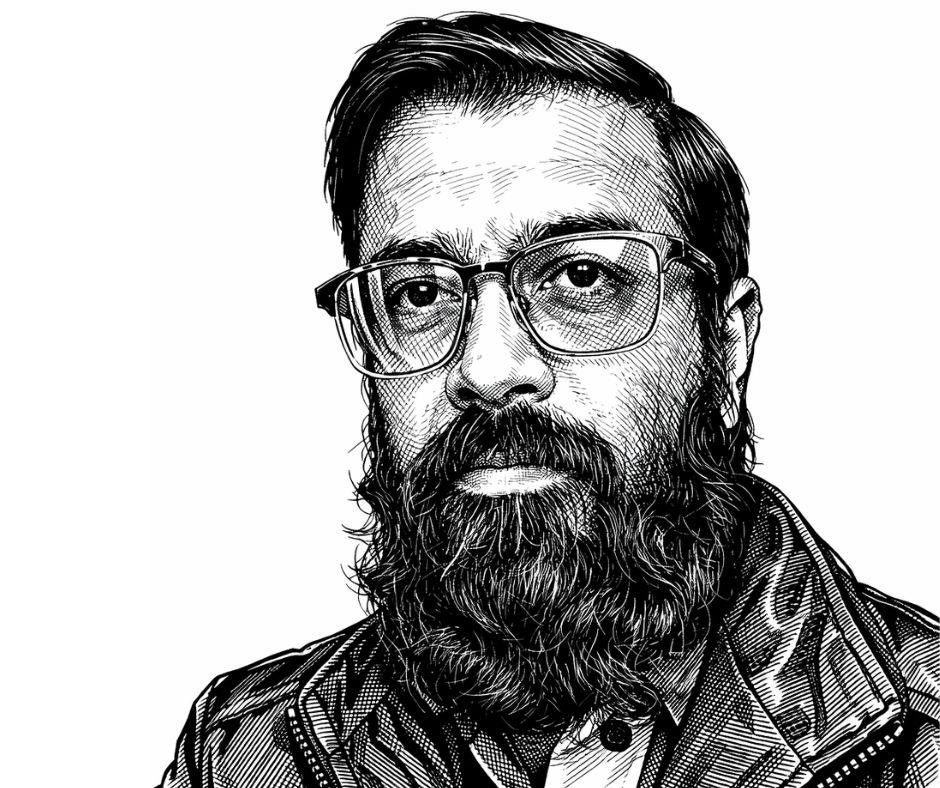
Trishikh Dasgupta
Adventurer, philosopher, writer, painter, photographer, craftsman, innovator, or just a momentary speck in the universe flickering to leave behind a footprint on the sands of time... READ MORE
This story is Free, and if you have found something here that stayed with you, some of my other books (collection of short stories, novels, and more) are available in print and digital editions. They gather many unique journeys, quieter questions, and stories that continue beyond this page.
 Weekend Stories by Trishikh
Dear Ned, thank you so much. Always treasure your efforts in promoting my stories in your blog.
LikeLike
This is a beautifully immersive and evocative piece. The sensory detail—the taste of salt in the wind, the texture of the earth—draws the reader deeply into the moment. Your portrayal of the soldiers, especially Philon and Diodoros, adds emotional depth and quiet humanity to the narrative.
The discovery feels almost mystical, blending history with wonder in a way that lingers. A powerful and poetic glimpse into a forgotten moment—truly captivating.
LikeLiked by 1 person
Dear Verma’ji, this means a great deal. Thank you.
I am especially glad the sensory details and the quiet presence of Philon and Diodoros stayed with you. That moment of discovery was less about finding something new, and more about recognising something that had always been there, waiting.
Your words capture that spirit beautifully. It is always reassuring to know that the silence between the lines has reached the reader.
Grateful, as always, for your thoughtful reading.
LikeLiked by 1 person
🙏👍
Aum Shanti
LikeLiked by 2 people
Blessings and Peace to you also.
LikeLiked by 1 person
🙏🙌🏼Thanks
Aum Shanti
LikeLiked by 1 person
The air turned sharp, carrying the metallic tang of something ancient and unravelling. It wasn’t just a scent; it was a weight, a shift in the atmosphere that warned of a coming change long before the first drop ever touched the dust.
LikeLiked by 3 people
Dear Safia, thank you for this. You have caught something I had hoped would be felt more than noticed. That quiet shift, where the air begins to carry memory before the mind can name it. It is often in those moments that the story truly begins, not in action, but in anticipation.
Your words bring that feeling alive again, almost as if the wind itself paused to listen. Grateful for the way you read, and for the way you return it with such texture.
LikeLike
War and discoveries and trade are so intrinsically interlinked. Yes, things which are too small and perhaps taken for granted truly sustain us.
Conquests seem to be natural to humans. Though it always has consequences but from time immemorial we have kind of thrived on wars. It’s sad but true that we as a species never thought of an alternate mode to satisfy our curiosities, thirst for power and the urge to possess. I wonder whether progress, growth and development are off shoots of our need to survive or aftermath of devastative battles.
LikeLiked by 2 people
Dear Geeta, thank you for this deeply reflective reading. You’ve touched upon the quiet undercurrent that runs beneath the story. Discovery, trade, and war often walk the same road, sometimes indistinguishable from one another. What begins as curiosity can turn into conquest, and what is taken in victory often becomes the foundation of what we later call progress.
Your question lingers. Perhaps growth is both. A response to survival, and at times, an inheritance from conflict. What we build often carries the memory of how it was won.
And yet, I like to believe that somewhere within that cycle, there are moments like this one, where curiosity pauses, not to conquer, but simply to understand.
Grateful for your thoughtful engagement, as always.
LikeLiked by 1 person