The city woke before the sun did. In the narrow gullies of colonial Calcutta, dawn did not arrive as light. It arrived as sound. The clatter of wooden wheels over cobblestones. The hoarse cry of chai sellers stirring boiling leaves into tannin-rich darkness. The metallic clang of tram tracks stretching awake. And somewhere beneath all of it, like a slow breath rising from the lungs of the earth, came the smell of coal. Thick. Bitter. Patient. It settled on everything. On window ledges, on drying sarees, on sleeping dogs curled into themselves, on the skin of men who woke before their names were remembered. And on a boy.
Chintu stood barefoot on the cobbled lane, his small frame wrapped in a faded dhoti that had once been white and had long since surrendered to shades of soot. His hair was a stubborn nest of curls that seemed permanently dusted with black. His eyes, however, remained untouched. They held a brightness that coal could not claim. Beside him stood his father, Ramlal, a man carved not by time but by labour. His shoulders were broad but slightly bent, as though years of carrying invisible weight had taught them to lean forward. His palms were thick, calloused, and permanently lined with black. When he placed one of those hands on Chintu’s head, it was both an anchor and a blessing.
They were chimney cleaners. But that phrase, spoken lightly by those who had never inhaled its meaning, did no justice to what they truly were. They were climbers of darkness, readers of smoke, whisperers to walls that hid more than they revealed.
“Ready, beta?” Ramlal asked, tying a rope around a bundle of brushes and tools that hung like a cluster of thin ribs. Chintu nodded, his small fingers already tightening around the coiled rope. There was no fear in his face. Or perhaps fear had long ago become something familiar enough to no longer announce itself.
They walked, and the city changed as they did. From narrow lanes where poverty clung like a second skin, they moved toward wide avenues where silence was polished and wealth carried its own kind of arrogance. The houses grew taller, their facades decorated with pillars that tried to imitate distant lands. Iron gates guarded manicured gardens. Servants moved like shadows that had forgotten how to speak. And above it all rose chimneys. Tall. Red. Silent. Each one a throat through which the city exhaled.
Their destination that morning stood at the edge of a sprawling estate, a mansion that did not belong to the land it occupied. Its architecture was a foreign language spoken loudly, as though volume alone could make it understood. White columns rose like stiff soldiers. Windows were tall and narrow, their shutters painted in a shade of green that seemed too deliberate to be natural. A British officer lived here.
The gate opened before they knocked. A guard, dressed in uniform that carried authority without kindness, looked them over with the kind of gaze that measured worth in silence. “Chimney cleaners?” he asked, though the answer was already written in their clothes. Ramlal nodded, and they were led inside.
The mansion smelled different. Not of life, but of control. Polished wood, imported liquor, and something else beneath it all, something metallic, something that did not belong in a home. Chintu noticed it first. He always did.
The main chimney rose from the kitchen, a massive structure that seemed less like part of the house and more like its spine. Its mouth was wide, blackened with years of burning coal and cooking fires that never quite belonged to the hands that prepared them. “Go on,” Ramlal said softly, and Chintu stepped forward.
There was always a moment before he entered, a breath that hovered between two worlds. Outside, where the sky existed. Inside, where it did not. Then he climbed, and the chimney swallowed him.
Inside, the world changed shape. Light disappeared first, then sound. The walls pressed close, their surfaces rough and unforgiving. Soot clung to everything, turning air into something that had to be negotiated with every breath. Chintu moved with the ease of someone who had learned to belong in spaces that were never meant for him. His small body slipped through narrow passages, his hands and feet finding holds where none seemed to exist. The brush in his hand moved in steady rhythms, loosening layers of accumulated darkness.
And then he heard it. At first, it was nothing more than a vibration, a faint murmur that travelled through the walls. But chimneys, he had learned, were not just conduits for smoke. They were conduits for sound. Voices, muffled, urgent.
Chintu paused, pressing his ear against the soot-lined brick. The words were broken, scattered like pieces of something that did not want to be found. “…tonight… shift them… no witnesses…” Another voice, sharper, cut through. “The cellar is secure. No one goes down there without my orders.”
Chintu’s fingers tightened around the brush. The word cellar hung in the darkness like a door slightly ajar. He moved further down, following the sound. The chimney branched, its pathways connecting to different parts of the house like veins. In one such narrow passage, he found a small opening, not large enough to crawl through, but enough to see.
Below him was a room, dimly lit and bare. And in it, behind iron bars, sat men. Their clothes were torn. Their faces carried exhaustion that had forgotten how to rest. One of them looked up, as though sensing something unseen, and for a moment his eyes met the darkness where Chintu hid. Then he spoke, softly, almost to the walls. “Hold on.” Chintu did not understand everything, but he understood enough. These were not criminals. They were prisoners of silence.
He climbed out faster than he had ever done before. When he emerged, his face was no longer just black with soot. It carried urgency. “Baba,” he whispered, pulling Ramlal aside, and words spilled out, broken, hurried, but sharp.
Ramlal listened. The lines on his face deepened, not with confusion, but with recognition. He had seen enough of the world to understand what power did when it was afraid. “They will kill them,” Chintu said.
Ramlal looked at his son. There are moments when a man is asked a question without words, moments when the answer defines not just what he will do, but who he is. “We are just chimney cleaners,” he said quietly, but even as he said it, the words felt smaller than they should have, as though they had shrunk somewhere between his chest and his tongue. Chintu did not speak. He simply looked at his father, and in that gaze was something that refused to be reduced. It was not defiance. It was not innocence. It was something steadier, like a truth that had not yet learned to bend. Ramlal exhaled slowly, feeling that gaze settle into him like a weight he could not set aside. “No,” he said, more to himself than to the boy. “We are not just that.”
The plan did not arrive all at once. It formed in fragments, like the very conversations Chintu had overheard, assembling itself out of memory, instinct, and the quiet intelligence of survival. Ramlal knew the architecture of such houses. Chimneys were not solitary shafts. They branched, merged, and often ran parallel to narrow ventilation ducts that connected kitchens, storage rooms, and sometimes even basements. Wealthy homes hid their efficiencies behind walls, and men like Ramlal had spent years learning how those hidden systems breathed. If the cellar existed below, then somewhere above or beside it ran a narrow flue or vent meant to carry out damp air and smoke from auxiliary hearths or storage fires. It would be too small for a grown man, but not for a child who had spent his life inside walls.
That afternoon, under the pretence of routine work, they returned to the chimney with greater attention. Chintu climbed again, but this time he was not just cleaning. He was mapping. His fingers traced the curves of brick, the slight shifts in air, the places where the soot thinned and the draft changed direction. At one such bend, he felt it, a faint current of cooler air brushing past his cheek. He scraped gently, loosening a section where the mortar had aged and cracked. Behind it lay a narrow passage, barely wider than his shoulders, sloping downward at an angle. He did not enter it then. He only marked it, a thin crescent of soot scratched into the wall, a sign for himself, for his father.
Ramlal, below, understood when he saw the mark. That evening, they made their second move. Moving from house to house in the neighbouring row, they used their work as cover, entering kitchens, climbing chimneys, leaving behind not just marks but messages. In one house, where the cook still remembered a brother taken away months ago, Ramlal let slip a sentence too carefully shaped to be casual. In another, he tapped twice, paused, then tapped thrice along a shared chimney wall, a pattern known among workers who had learned to speak through stone when speech was dangerous. Word travelled, not in declarations, but in recognitions. By dusk, a small network had formed, invisible yet alert, men who would wait in the alleys, women who would keep doors unlatched, boys who would watch the guards’ movements from rooftops.
When night fell, they returned to the mansion for what would appear to be their final round of cleaning. The guards, accustomed now to their presence, barely watched them. Chintu slipped into the chimney once more, his small body finding the marked passage with certainty. This time, he entered it. The air grew colder as he descended, the smell changing from soot to damp earth. The passage opened into a narrow vent just above the cellar ceiling, its mouth covered by a rusted iron grille. Through it, he could see the prisoners below.
He worked quickly, his small hands prying at the weakened edges where rust had eaten into the metal. The grille did not fall at once. It resisted, groaning softly, each sound a risk. Below, one of the prisoners looked up, understanding flickering across his face. He moved closer, raising his arms silently. Together, with careful coordination, they eased the grille free, lowering it instead of letting it drop.
Chintu slid down first, landing lightly on the cellar floor. Up close, the men looked thinner, their eyes sharper than their bodies suggested. “No noise,” he whispered, his voice barely a breath. He pointed to the vent, then to the corridor beyond the barred door. The prisoners understood. One of them, older, nodded and moved toward the lock. It was not as strong as it appeared. Neglect had weakened it, and desperation lends strength where tools are absent. Using a loosened iron rod from the grille, they pried at the hinges, working in slow, controlled movements until the wood around the lock began to splinter. It took time, each second stretched thin with the fear of discovery, but the door finally gave, opening just enough for them to slip through.
Above, the signals had already begun. From neighbouring chimneys came faint taps, guiding timing, marking the guards’ positions. Outside, in the alleys, the watchers moved into place. When the prisoners emerged from the cellar corridor, they did not rush. They followed the rhythm that had been set, slipping through service passages, through kitchens where sympathetic hands briefly turned away, through back doors left deliberately unlatched.
By the time the alarm rose, it was already too late. The prisoners had dissolved into the night, splitting into smaller groups, each guided by someone who knew the streets better than any map could teach. Some vanished into the river’s edge, where boats waited without questions. Others disappeared into the labyrinth of the city, where names could be shed as easily as clothes. And above it all, the chimneys stood silent again, their work done, holding no trace of the passage they had witnessed.
Chintu and Ramlal were gone. They did not run. They simply moved, through the same lanes that had watched them arrive, through the same air that carried the smell of coal and morning. They became part of the city again, unremarkable, unseen. Behind them, the mansion stood empty in ways it had never known before. The cellar no longer held its secrets. The walls no longer whispered the same stories.
At the edge of the city, where the roads began to forget their names, Ramlal stopped, and Chintu looked up at him. “Did we do the right thing?” the boy asked. Ramlal smiled, not the kind of smile that belonged to easy answers, but one that carried a quiet certainty. “Some fires are not meant to burn,” he said. “They are meant to be freed.” Chintu nodded, though he did not fully understand. But he would, in time.
They walked on. Ahead of them lay another town, another chimney, another house that would not know their names. But somewhere, in the spaces between walls and whispers, their story would travel. Not as a tale of rebellion, but as a reminder that even those who live in soot can carry light, and sometimes, it is the smallest hands that move the heaviest silence.
Copyright © 2020 TRISHIKH DASGUPTA
Chintu Chimney, written by Trishikh Dasgupta, is the author’s sole intellectual property. This work of fiction, while inspired by the socio-cultural realities of colonial India, is a dramatized and imaginative interpretation. All characters, narrative elements, and fictionalised depictions are protected under applicable copyright laws. All rights are reserved.
No part of this story may be reproduced, distributed, transmitted, stored in a retrieval system, or translated into any form or by any means, including printing, photocopying, recording, scanning, or other electronic or mechanical methods, without the prior written permission of the author, except in the case of brief quotations embodied in critical reviews, academic commentary, and certain other non-commercial uses permitted by copyright law.
Any resemblance to real persons, living or deceased, beyond the historical references, is purely coincidental within the fictional narrative framework.
For permission requests, send an email to the author at trishikh@gmail.com or get in touch with Trishikh on the CONTACT page of this website.
ABOUT THE AUTHOR
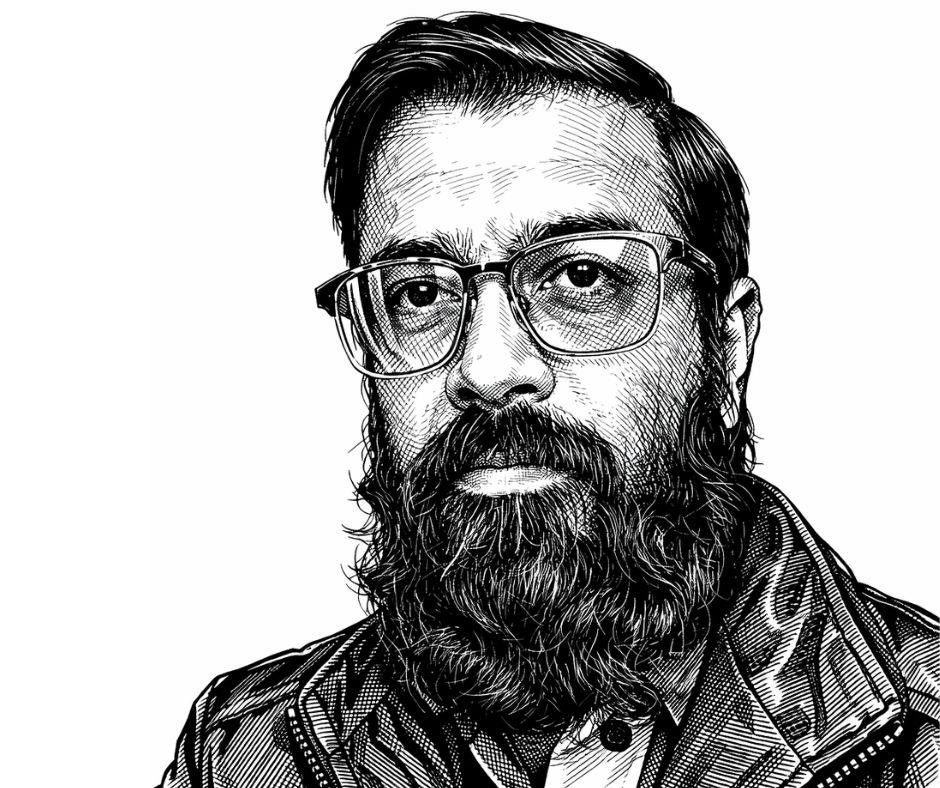
Trishikh Dasgupta
Adventurer, philosopher, writer, painter, photographer, craftsman, innovator, or just a momentary speck in the universe flickering to leave behind a footprint on the sands of time... READ MORE
This story is Free, and if you have found something here that stayed with you, some of my other books (collection of short stories, novels, and more) are available in print and digital editions. They gather many unique journeys, quieter questions, and stories that continue beyond this page.


This is a richly immersive and powerful piece of storytelling. 🌑
Your opening alone—where dawn arrives as sound, not light—pulls the reader instantly into the world. The sensory detail is exceptional; the textures of coal, the rhythm of the city, and the contrast between poverty and colonial wealth are all vividly alive.
LikeLiked by 4 people
Dear Verma’ji, it is always such a delight to receive a comment from you. Reading your words gives me immense joy, and established in me a sense of accomplishment in writing these stories.
So glad that you always like the way I paint my stories with colours of words.
I am very interested in colonial times. Life, people, sights, sounds, and smell of these years have always attracted me much. There were so many emotions in the air during those days. Hence I feel compelled to write about those times a lot.
Keep on reading many more and new great free short stories to come. Free audio stories to be told, and collections to be released which my fans can buy.
LikeLiked by 1 person
Thank you so much for your warm and generous words. 🌿 It is truly a pleasure to read your reflections, and I’m glad my response could contribute even in a small way to your sense of accomplishment. That joy of writing you describe — of shaping stories with “colours of words” — is something deeply special, and it clearly comes through in your work.
LikeLiked by 1 person
Thank you so much Verma’ji.
LikeLiked by 1 person
You are welcome, dear.
LikeLiked by 1 person
🙏👍
Aum Shanti
LikeLiked by 1 person
Thank you so much.
LikeLiked by 1 person
Thank you so much, Trishikh, for the heartrending story, beautifully written, that will stay in the reader’s memory forever.
Joanna
LikeLiked by 1 person
Dear Joanna, thank you for liking the story so much and sharing such a beautiful comment. Glad to have been able to write this little tale.
LikeLike
Not only this one, Trishikh, but many more because you are supremely talented!
Joanna
LikeLiked by 1 person
Thank you.. that was a wonderful tale.. ❤️
LikeLiked by 2 people
Dear Fiona, you are most welcome. I always treasure your appreciation for my stories.
LikeLiked by 2 people
Wonderful. Thank you for this story.
LikeLiked by 2 people
Dear Lakshmi, thank you for liking this story. Your comment gives me great joy. I shall do my best to keep on writing these free stories, releasing free audio stories, and ocassionally publish collections for sale.
LikeLiked by 2 people
The true heart of a city is felt not in its daylight splendor, but in the quiet, iron-willed spirits who wake it from the dark. 🌿🕊️🙏
LikeLiked by 2 people
That is such a great thought Safia, so deep and profound. Glad that you liked this story of mine.
LikeLiked by 1 person
Well share
LikeLiked by 2 people
Thank you so much. Glad that you like it.
LikeLiked by 1 person
Trishikh…what a delightful story. Chintu’s bravery really speaks to the idea that courage is a choice we make regardless of our stature, fueled by the values passed down by a strong role model and by the wonderful bond between father and son, which creates a tangible atmosphere. ~ Dave
LikeLiked by 2 people
Dear Dave, it’s such a delight to hear from you. So glad that you liked my latest (150th) short story.
I have always been intrigued by the concept of selfless courage. Blessed are those who are able to muster it.
I am glad the way this story came out. I did not think so deeply about the father and son bond while writing the story. Now that you mention it, I realise how strong and beautiful it has come out.
LikeLiked by 2 people
Wonderful story Trishikh. Thank you. I could not imagine crawling through such a tight sooty space.
LikeLiked by 1 person
Dear Katelon, thank you for liking the story so much and sharing such a beautiful comment.
I too feel claustrophobic at times. Of recent I do not like watching movies depicting too much claustrophobia. It is a fear that I never had, but somehow it has crept in a little in me. I perhaps need to face it a few times to overcome it.
LikeLiked by 1 person
Thanks. I meant to type sooty not soothing. I was put in hot steamy oxygen tents as a child so don’t like closed spaces. Hope you overcome your discomfort of tight spaces.
I love that the chimney sweeps were able to help the captives escape and escape retribution themselves.
LikeLiked by 3 people
Yes, I corrected it. I hate it when the computer corrects my spellings and changes the entire meaning of a sentence.
Ya, my discomfort of closed spaces is a fairly new experience, and I am sure that it will go away soon.
So happy that you liked the story.
LikeLiked by 1 person
It’s a wonderful story. Your words, “Some fires are not meant to be lit, but to be let loose,” are beautiful. And the last paragraph is magnificent.
LikeLiked by 2 people
Thank you so much. Your appreciation gives me great joy. I am so happy that you like the way I use the words.
Yes, the last paragraph came out very nice. Much to my satisfaction.
LikeLiked by 2 people
Thank you for this moving story. And many thanks for your interest in my blog.
LikeLiked by 3 people
You are most welcome. Your blog is great too.
LikeLiked by 2 people
disappointed you didn’t comment on even one post after all those likes 😦
LikeLiked by 3 people
Oh dear John, I have such a hectic work, home, writing life, that most of the times I am drowning trying to balance things. Though I want to make comments, I am unable to most of the time, so I like the posts. I have not visited my own blog for the past 5 days. But I will certainly try to share a few comments on your posts as well.
LikeLiked by 1 person
thanks I appreciate that candid comment: I have a policy that I comment on bloggers who comment on my posts; a sort of reciprocity —
LikeLiked by 1 person
Dear John, I like your post, I will certainly leave comments.
LikeLiked by 1 person
That moment—“we are not just that”—shifted something quietly.
And the closing line…“some fires are not meant to burn, but to be freed”—
it stayed a little longer.
Not as something explained,but something that seems to move through the whole story—especially in how everything unfolds so quietly,almost unseen.
It leaves a kind of courage that doesn’t announce itself.
LikeLiked by 2 people
Dear Livora, thank you. You understood the story exactly where I had hoped it would be understood, not through the escape itself, but through the quietness with which it unfolds.
For people like Chintu and Ramlal, courage could never afford to be loud. It had to travel softly, through soot, walls, whispers, and unseen hands. Perhaps that is why the story moves the way it does, almost like smoke finding its own path through darkness.
And yes, that line stayed with me too while writing it. Some fires destroy. Some liberate.
Thank you for reading so deeply.
LikeLiked by 1 person
We are so glad that the fires of the freedom fighters burnt the shackles of Mother India. The story is so intense. Loved every bit of it. I had the fortune of living in several of these colonial bungalows for some time. They do hold a bit of sadness and gloom. Though the huge chimneys are all blocked up now, the fire places are a reminder of the colonial lifestyle.
LikeLiked by 2 people
The previous generations of Indians sacrificed so much, so that we can have this free life in this beautiful country. Unfortunately many of us in the present times, do not know about the struggles of the past, or do not respect, what we have received for free.
Colonial bungalows have their own charm, though they can be a reminder of an oppressive past, still they can be admired for their architecture, beauty, and utility.
LikeLiked by 2 people
Absolutely. 🙏
LikeLiked by 1 person
This is another amazing story, just like your other stories.
LikeLiked by 3 people
Thank you so much. I always treasure your appreciation.
LikeLiked by 1 person
A wonderful story ❤️
LikeLiked by 1 person
Thank you so much for appreciating.
LikeLike
This gave me goosebumps!
LikeLiked by 1 person
Thank you. So glad that you liked it.
LikeLike
I read this again partly, because I’ve run out of your free stories to read lol (I’m struggling with high gas prices and high everything prices too but I will buy some of your books, for me and for my grandchildren) Literary writing is my favorite and your writing is like a beautiful, descriptive poem, full of detail and meaning, in every line. I could read it many times, in the same way that I can look at a Van Gogh painting and realize a new emotion a new detail of energy, that I didn’t see before. I can’t encourage you with money right now, so I encourage you with my words; please know they aren’t written from a place of flattery but in recognition of a true artist with his own unique vision, expertly expressed.
LikeLiked by 2 people
Your words are a gift, and one I will treasure for a very long time.
Please don’t worry about buying books right now. Stories have always travelled far beyond commerce. The fact that you spend your time reading them, returning to them, and finding new meanings in them is encouragement enough for any writer. There are many many free stories here written by me, you will enjoy most of them, I am sure of that.
Your comparison to revisiting a painting touched me deeply because that is exactly the kind of experience I hope to create. Not a story that is consumed once and forgotten, but one that reveals a different colour, shadow, or emotion each time a reader returns to it.
As for your kind words about artistry, thank you. Every writer hopes to find their own voice amidst the noise of the world. Knowing that you can recognize mine, and that it resonates with you, is perhaps one of the greatest compliments I could receive.
I am especially moved by your thought of sharing the stories with your grandchildren someday. Stories are, after all, little bridges between generations.
Thank you for your generosity of spirit, your thoughtful reading, and your friendship across the miles. Readers like you make the long hours at the writing desk feel worthwhile.
LikeLiked by 1 person
It makes this old lady happy to read work of substance and not just salacious shock. Encouragement is reciprocal and hard work is evident. I wish you great success.
LikeLiked by 1 person
…and I treasuere our interactions.
LikeLiked by 2 people
Me too. All us common folk all over the world have so many things in common. Those who don’t need government to control their behavior are the hearts in which world peace can arrive. Something to be received among understanding friends that dominating warlords will never achieve. Hope you’re sleeping well. Chat again soon.
LikeLiked by 1 person
I think you are right. Most ordinary people, wherever they live, want remarkably similar things: a little dignity, a little kindness, meaningful work, the well-being of their families, and a chance to live without fear. The headlines may divide us, but everyday life has a way of revealing how much we share.
Perhaps that is why stories travel so easily across borders. They remind us that beneath our different languages, histories, and customs, the human heart still recognises itself in another.
And I suspect you have touched on something important: peace cannot be imposed. It can only be received, nurtured, and shared among people willing to see one another as fellow travellers rather than opponents.
Thank you for this thoughtful conversation. Exchanges like these are one of the unexpected joys of writing. I am sleeping well, and I hope you are too.
Until our next chat, my friend. By the way, I am Trishikh and what do I call you?
LikeLiked by 1 person
My name is, Pam. I’m awake when I shouldn’t be…but hopefully, soon. I agree that conversation is important and avoiding the manipulation of the U.S. media helps lol we live behind a kind of digital iron curtain that is more about entertainment and sway than informing people. Strange time we are living in.
I’m off to really try and get some sleep, or receive sleep, I’m trying to change my thinking on that. lol May you receive a beautiful day in India.
LikeLiked by 1 person
Dear Pam, I hope that by the time you read this, sleep has found you rather than the other way around. I rather like your idea of “receiving” sleep. Some of life’s best gifts seem to arrive that way, not when we chase them, but when we make room for them.
We certainly live in interesting times. Every age probably believes itself to be unique, but ours does seem particularly noisy. Perhaps that is one reason I value conversations like ours. They feel refreshingly human amidst all the competing voices trying to tell us what to think, fear, or desire.
What continues to amaze me is that a story written in one corner of India can find a thoughtful reader in another part of the world, and before long, two strangers are discussing sleep, stories, media, peace, and the curious business of being human. That, to me, is one of the quiet miracles of our age.
Thank you for your kind wishes. As I write this, India is beginning another day. The morning birds are already negotiating ownership of the trees outside my window, and the sunlight is slowly finding its way across the room.
May you receive a restful sleep, a peaceful morning, and many small reasons to smile when you wake.
Until our next conversation, my friend.
LikeLike