On certain monsoon evenings, Russell Street still remembers the British. Not through flags or statues, but through smell. The smell of wet teakwood rising from cracked staircases. Damp velvet curtains holding decades of cigarette smoke. Polish melting slowly from mahogany tables beneath tired yellow bulbs. The faint medicinal odour of old paper that has survived termites, floods, inheritance disputes, and Independence itself. And at the centre of that memory stood The Russell Exchange.
By 2026, the old auction house looked less like a business and more like a stubborn relic refusing to die. Ceiling fans rotated with arthritic hesitation above rows of colonial chairs, porcelain figurines, brass hookahs, Belgian mirrors, ivory-handled walking sticks, gramophones, chandeliers, clocks, and forgotten gods wrapped in newspaper. Every Sunday, collectors, dealers, decorators, film people, antique hunters, and curious drifters gathered there like moths around a dying lantern. The auctioneer’s hammer still struck with ceremonial dignity. “Going once… going twice…” Outside, Kolkata hurried toward glass towers and app-based deliveries. Inside Russell Exchange, time coughed softly and remained seated.
The portrait arrived on a Thursday afternoon during heavy rain. Two labourers carried it wrapped inside old quilted cloth. The canvas was enormous, nearly six feet tall, and smelled strongly of mildew and burnt mustard oil. Attached to it was a fading inventory tag from a demolished mansion in North Kolkata near Beadon Street. The estate had belonged to the Banerjee family, whose descendants now lived in Toronto and wanted everything auctioned before the municipality converted the property into apartments.
When the wrapping came off, conversations inside the hall slowed. The woman in the portrait appeared to be in her late twenties. She wore a deep blue silk saree with thin silver borders. One hand rested on a tanpura. Her face was oval, luminous, intelligent. Not beautiful in the conventional sense, yet impossible to ignore. But it was her eyes that disturbed people. They carried a strange stillness, as if the painter had interrupted her midway through a sentence she never finished. Above the portrait’s lower frame, nearly erased by time, were the initials: M.G. 1933.
“Courtesan perhaps,” murmured one collector. “No,” replied another quietly. “Too educated in the eyes.” The man assigned to authenticate the portrait was Dr. Anirban Chatterjee, sixty-two, art historian, restoration consultant, and perhaps the greatest living expert on forgotten Bengal portraiture. He arrived Saturday evening wearing a cream linen panjabi that smelled faintly of tobacco and old libraries. His fingers were stained with varnish chemicals. He carried a magnifying loupe in his pocket and spoke in patient whispers, as though paintings could overhear criticism.
By eight that evening, rain had swallowed Russell Street entirely. Water slapped against shuttered windows. Somewhere outside, the old horn of a rustic yellow Ambassador taxi brayed through the storm like an exhausted memory. Only a handful of people remained inside the auction house. There was Mahendra Shaw, the current owner of Russell Exchange, whose grandfather had started working there before Independence. There was Priyanka Dey, a young journalist researching Kolkata’s disappearing auction culture. There was Arjun Mitra, a wealthy real-estate developer interested in acquiring heritage objects for his luxury hotel chain. And there was Niloy Sen, a restorer assisting Dr. Chatterjee.
The portrait stood upright near the auction stage under a temporary lamp. Dr. Chatterjee examined the rear canvas carefully. Then his expression changed. “What is it?” asked Mahendra. The historian did not answer immediately. He merely touched the backboard again, this time slower. “There was another layer here once,” he murmured. “Something was removed.”
Rain hammered harder against the windows. At 8:25 PM, the building lights failed. The generator coughed to life after several seconds, throwing weak amber light across the hall. During that brief darkness, someone heard a metallic sound from the corridor leading to the washrooms. Niloy assumed it was plumbing. Nobody moved. Five minutes later, Dr. Chatterjee excused himself and walked toward the washroom corridor carrying his torch. He never returned.
At 8:47 PM, Mahendra grew uneasy and went searching. The corridor smelled sharply of phenyl and damp walls. One of the washroom doors was locked from inside. “Doctor-babu?” he called. No reply.
They broke open the door together. Dr. Anirban Chatterjee lay collapsed beside the sink, blood darkening his cream panjabi near the ribs. His spectacles had fallen beneath the basin. The small washroom window above remained shut from inside. On the rear wooden frame of the portrait, scratched crudely with something sharp, appeared two Bengali words: ফিরে এসেছি. I have returned.
Police arrived shortly before midnight. Officer Debashis Roy had spent twenty years investigating murders across Kolkata, but he disliked cases involving old families and inherited secrets. Such murders rarely belonged to the present. They arrived carrying entire graveyards behind them.
The washroom presented a puzzle. Single entrance. Window bolted from inside. No hidden passage. No weapon recovered. Suicide was impossible because of the wound angle. Murder, then. But how had the killer left?
Roy began quietly observing. The first oddity lay near the sink. The floor was wet from rainwater footprints, yet one section near the door remained completely dry, as though someone had carefully avoided stepping there.
The second oddity emerged from witness accounts. During the power failure, Priyanka remembered hearing something metallic fall near the portrait. Arjun Mitra distinctly recalled smelling attar perfume moments after the lights returned. Mahendra insisted nobody crossed the hall during the outage. And Niloy mentioned something else. When Dr. Chatterjee first examined the painting, he had suddenly asked for turpentine. “Why?” Roy asked. Niloy hesitated. “He thought something had been painted over.”
The next morning, Roy revisited the portrait in daylight. The woman’s face now seemed even stranger. The eyes held not melancholy, but recognition, as if she knew somebody in the room. The officer requested restoration lights and chemical solvents. Beneath layers of aged varnish, faint Bengali lettering slowly emerged near the canvas edge: Mrinalini Ghosh. The initials M.G.
Roy searched records. Mrinalini Ghosh had once been a well-known singer and courtesan who performed in elite Bengali households during the 1930s. But scattered newspaper archives revealed something more interesting. She had also been linked to underground nationalist circles carrying messages between revolutionaries and wealthy patrons during British surveillance years. Then suddenly, in 1935, she disappeared. No death certificate. No marriage record. Nothing. Gone.
By afternoon, another discovery surfaced. Inside the portrait frame cavity, investigators found a folded envelope hidden beneath loosened backing cloth. The paper inside was decades old. It contained a confession written in Bengali. The letter claimed that Mrinalini Ghosh had been murdered in 1935 inside the Banerjee mansion after threatening to expose certain nationalist financiers who had secretly betrayed revolutionaries to British authorities in exchange for protection and property.
One signature appeared repeatedly. Hemangshu Banerjee. Grandfather of the family whose mansion had recently been demolished.
Officer Roy sat silently for several minutes. The motive now became clearer. Dr. Chatterjee had discovered the hidden confession beneath the portrait. Someone present feared exposure connected to that old crime. But who?
Then Roy remembered the smell of attar. Not many people still used traditional ruh gulab perfume. Except one. Arjun Mitra. The developer.
Roy visited him the next evening at his Ballygunge residence. Antique marble lions guarded the entrance. Inside, the house looked like a museum trying too hard to appear modern.
Arjun received him calmly. “You believe I killed him?” “I believe,” said Roy, “that you knew what was hidden behind the painting.” Arjun smiled faintly. “Many collectors chase secrets.”
“Yes. But only one person in that room had family ties to the Banerjees.” That smile disappeared.
Roy continued quietly. “Your mother was born Arundhati Banerjee before marriage. You concealed the connection.” Silence settled heavily between them. Rain tapped softly against glass windows.
Finally Arjun spoke. “My grandfather destroyed many lives. We discovered portions of the truth only after the old house began demolition. There were rumours about a murdered singer. About missing jewellery. About political betrayal.”
“But Dr. Chatterjee recognised something.”
“Yes,” Arjun admitted. “He recognised my grandmother in the portrait.” Roy said nothing.
“The woman painted as Mrinalini Ghosh,” Arjun whispered, “was not merely a courtesan. She became my grandfather’s mistress. My grandmother found out. There was violence. Someone died. The family buried everything.”
“But you still didn’t kill Dr. Chatterjee.”
“No.”
Roy believed him.
The answer came unexpectedly later that night when he reopened witness statements. One detail suddenly sharpened. During the blackout, Niloy had gone briefly near the portrait to fetch restoration supplies. And Niloy was left-handed.
Roy revisited the washroom. The stab wound angle suddenly made sense. A left-handed attacker standing extremely close. The dry patch near the entrance now mattered too. The killer had removed rain-soaked shoes before entering to avoid leaving identifiable footprints on the wet mosaic. Restoration workers often did this instinctively.
Niloy Sen was arrested the following morning near Sealdah Station while attempting to board a train.
Under interrogation, the truth finally surfaced. Niloy was the great-grandson of Mrinalini Ghosh. His grandmother had raised him on stories whispered like prayers. Stories of a woman erased from history. A singer murdered and hidden behind silence while wealthy families prospered across generations.
When the Banerjee mansion demolition began, Niloy secretly searched the estate and discovered references to the portrait. He joined Dr. Chatterjee’s restoration team hoping to recover proof. But the historian recognised him. Not by face. By resemblance.
“The eyes,” Niloy said brokenly during confession. “He kept staring at my eyes. Then he said… ‘You look exactly like her.’”
Dr. Chatterjee had apparently intended to reveal everything publicly after authentication. Niloy panicked. During the blackout, he loosened a sharp metal restoration blade from his toolkit. Later, inside the washroom corridor, he confronted the historian. The argument escalated. Fear overtook reason.
One thrust. One lifetime collapsing into another.
“And the writing behind the portrait?” Roy asked. Niloy lowered his head. “I wanted them to know she had returned.”
The portrait was eventually withdrawn from auction. Months later, visitors at Russell Exchange still spoke about the murder in lowered voices. Some who claimed to have seen the portrait again said the woman’s eyes appeared different now. Others swore they smelled attar perfume near the staircase on rainy evenings.
The auction house survived, as old institutions often do, by quietly swallowing tragedy into routine. Sundays resumed. The hammer continued striking wood. Chairs filled again with collectors chasing forgotten histories. Outside, Kolkata kept moving.
Inside Russell Exchange, beneath fans turning through slow circles of dust and memory, the portrait of Mrinalini Ghosh remained wrapped in protective cloth inside a locked storage room, waiting perhaps not for justice, but for remembrance.
Copyright © 2026 TRISHIKH DASGUPTA
The Woman in the Auction Portrait, written by Trishikh Dasgupta, is the author’s sole intellectual property. This work of fiction, while inspired by the historical legacy of The Russell Exchange, the cultural landscape of Kolkata, and certain socio-political undercurrents of pre-Independence Bengal, is a dramatized and imaginative literary creation. All characters, incidents, dialogues, narrative elements, and fictionalised interpretations are protected under applicable copyright laws. All rights are reserved.
No part of this story may be reproduced, distributed, transmitted, stored in a retrieval system, or translated into any form or by any means, including printing, photocopying, recording, scanning, or other electronic or mechanical methods, without the prior written permission of the author, except in the case of brief quotations embodied in critical reviews, academic commentary, and certain other non-commercial uses permitted by copyright law.
While the story references real locations, institutions, and historical atmospheres associated with Kolkata and The Russell Exchange, all central events, characters, relationships, and criminal acts depicted in the narrative are fictional. Any resemblance to real persons, living or deceased, beyond historical references, is purely coincidental within the fictional framework of the story.
For permission requests, send an email to the author at trishikh@gmail.com or get in touch with Trishikh on the CONTACT page of this website.
ABOUT THE AUTHOR
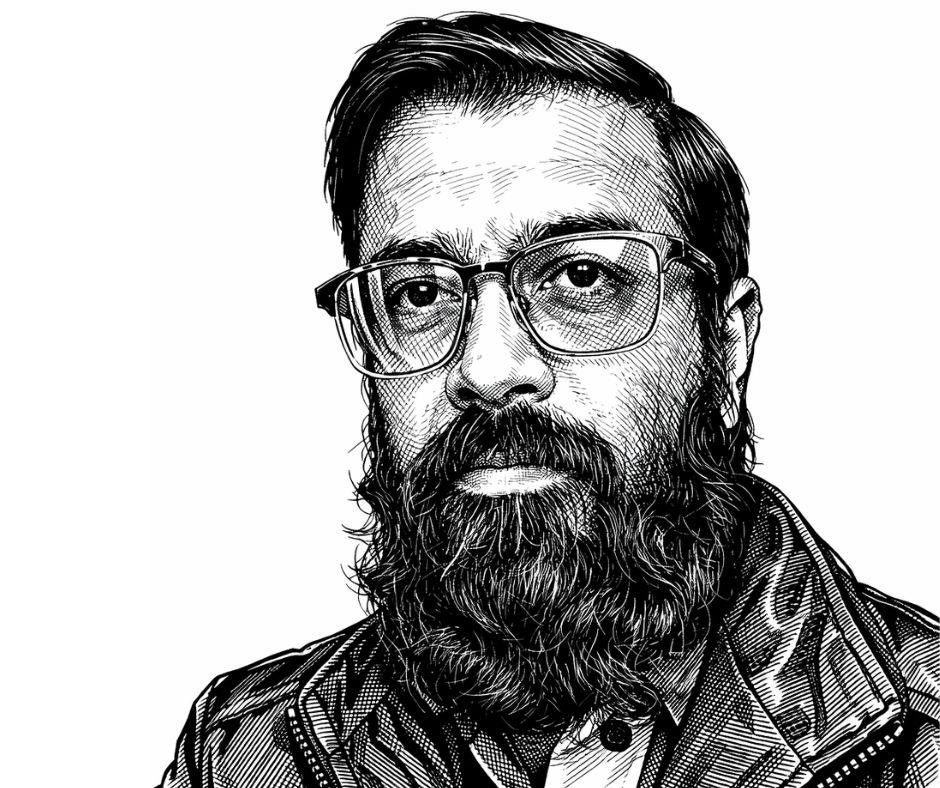
Trishikh Dasgupta
Adventurer, philosopher, writer, painter, photographer, craftsman, innovator, or just a momentary speck in the universe flickering to leave behind a footprint on the sands of time... READ MORE
This story is Free, and if you have found something here that stayed with you, some of my other books (collection of short stories, novels, and more) are available in print and digital editions. They gather many unique journeys, quieter questions, and stories that continue beyond this page.


Saved for later
LikeLiked by 2 people
Do read it at your leisure. Always look forward to you enjoying my stories.
LikeLiked by 2 people
Thank you my friend
LikeLiked by 1 person
Now you have turned into a Murder Mystery Fictioneers. Intriguing storytelling.
LikeLiked by 3 people
Well I want to write every kind. History, geography, and philosophy always remain at the core of my stories, if not prominent, certainly subtly.
Thank you for liking this story. I always treasure your appreciation, they give me much encouragement to keep on writing these stories.
LikeLiked by 1 person
Yes, as a writer one must try all forms. However, for a murder mystery a lot of attention to detail is required. But I am sure you will be able to do it.
LikeLiked by 1 person
That is true. I think details are a very important part of any story for that matter, they help create the hidden subtle message – may it be philosophical, moral, or mystery for that matter. I will try my best to do justice to these stories as well.
LikeLiked by 1 person
Thank you, Trishikh, for the fascinating story one could not stop reading! This is what true talent is, which will take the writer to the high position in the literary world.
Joanna
LikeLiked by 2 people
Dear Joanna, you are too kind with your appreciation, and I treasure it. This was my first attempt at a ‘short fair-play mystery story’.
LikeLiked by 1 person
🙏
Aum Shanti
LikeLiked by 1 person
Thank you for liking the story.
LikeLiked by 1 person
I loved that story, although it ended tragically for the lady’s great grandson as well. A nice touch of mysticism added by the unaccounted for Attar fragrance. A pleasure to read, as always.
I was away for a while. So much happened here, you have published four books. I have to look into that.
LikeLiked by 1 person
It is such a delight to hear from you after a long time. I am so happy that you are back. In the meanwhile I have written many, many more short stories, and am also regularly releasing audio versions of my stories. I have published a total of 5 books as of now. One sort of biography about by Maternal grandparents, 1 novel, and 3 collection of short stories. Do read them if you get a chance, they are available in Kindle, papeerback, and hardcover (depending on the book). They are printed in Cleveland, Ohio, so are cheapest and most easily available in the US. They are available in other countries too.
LikeLiked by 1 person
I will definitely have a look at everything. I will have more time now. A lot happened here as well, and I only read very short things. I hardly posted on my own page either, only the regular columns. But it looks all better and brighter now, more relaxed. So, I hope to have more time to enjoy your stories as they should be enjoyed. 🙂
LikeLiked by 1 person
That is good to hear. Wishing you all the best with your renewed vigour for blogging. Looking forward to you enjoying more of my stories.
LikeLiked by 1 person
Yet another wonderful tale, thank you ❤️
LikeLiked by 2 people
Dear Fiona, thank you so much. Glad that you liked my latest short story. Always treasure your appreciation.
LikeLiked by 2 people
Interesting read.
LikeLiked by 1 person
Thank you Verma’ji. Your constant appreciation and encouragement works wonders for my writing engine. So glad that you liked my latest short story.
LikeLiked by 1 person
I enjoyed reading this. An excellent piece, which captured a time gone by.
LikeLiked by 2 people
Thank you so much. So happy that you liked my story.
LikeLike
That’s quite a family history. Thanks for sharing it.
LikeLiked by 4 people
You are most welcome Katelon.
LikeLiked by 1 person
A richly atmospheric opening—evoking memory, colonial history, and sensory nostalgia through the monsoon air and the lingering presence of the past. 🌧️✨
LikeLiked by 3 people
Thank you so much for appreciating the imagery. I think what a writer paints with words has a long lasting effect on our thinking.
LikeLiked by 1 person
I was hooked from beginning to the end. Wonderful story.
LikeLiked by 3 people
Dear Sumita, thank you so much. It was my first attempt at a murder mystery. Exactly not the genre that I specialise in.
LikeLiked by 2 people
Reminded me of Feluda. Great writing. Murder mystery is favourite across generations.
LikeLiked by 1 person
Thank you Sumita.
LikeLiked by 1 person
☺️
LikeLiked by 1 person
Spectacular mystery story! Well done!
LikeLiked by 3 people
Thank you so much for liking the story. It really makes my day when someone enjoys one of my stories.
LikeLiked by 2 people
Love the last line. The story is very good and the last line left a hint of a deeper mystery.
LikeLiked by 2 people
Thank you so much, so glad that you liked the mystery so much. Yes, there are so many clues all around.
LikeLiked by 2 people
Trishikh, this is a very interesting story with twists and turns embedded in social history!
LikeLiked by 2 people
Thank you Kajoli, so glad that you liked the story.
LikeLiked by 2 people
A story that pulls one in. Most intriguing.
LikeLiked by 2 people
Thank you so much. So happy that you liked the story. Murder mysteries are not my speciality, but I tried to write this one.
LikeLike
Un relato emocionante. Aparte de la interesante historia que cuenta, me han encantado las descripciones y la ambientación con las que lo has plasmado.
Enhorabuena y gracias por compartirlo.
Un abrazo.
Daniel A.M.
LikeLiked by 1 person
Dear Daniel, I am so glad that you find my story so interesting and like the descriptions especially. Sights, sounds, and smell of the time, place, and people are very important for me in any of my stories. I take a lot of effort in painting these pictures with words. And when someone acknowledges this art, it really makes my day. Thank you so much, keep on enjoying many more stories to come.
LikeLiked by 1 person
Thank you for appreciating so many of my collections, Trishikh
LikeLiked by 2 people
You are most welcome Javier.
LikeLike
Well written
LikeLiked by 1 person
Thank you so much.
LikeLike