The jungle had spent nearly two centuries reclaiming the temple. Sea winds drifting in from the Bay of Bengal had carried salt into its stones, banyan roots had crept into tiny cracks and slowly split sculptured pillars apart, while monsoon rains had washed away staircases where pilgrims once climbed with folded hands and whispered prayers. Moss softened every carving. Creepers swallowed gateways. What had once echoed with temple bells and conch shells now belonged to parrots, cicadas, snakes and the mournful cries of peacocks greeting the dawn. The villagers no longer remembered its ancient name. They simply called it Bhoota Deula, the Ghost Temple. No one entered its grounds after sunset. Hunters claimed they had seen lamps glowing beneath the broken sanctum on moonless nights. Woodcutters spoke of hearing a conch shell sounding from somewhere below the earth. Others insisted that the fragrance of sandalwood sometimes drifted through the forest where no shrine remained to burn incense. The old men never argued over such stories. They merely advised strangers to take another road.
In the winter of 1905, the Archaeological Survey of India arrived to examine the forgotten ruins. The expedition was led by Assistant Superintendent Narayan Mukherjee, a twenty-nine-year-old archaeologist educated in Calcutta and already respected for his careful work at Sarnath. He possessed the calm confidence of a man who trusted evidence more than rumour. His leather satchel held measuring instruments, notebooks, brushes, excavation reports and enough scientific certainty to dismiss every ghost story between Bengal and Madras.
The villagers accepted the work because it paid better than harvesting paddy, yet every evening they hurried home before darkness settled over the forest. Even the boldest labourers refused to remain after sunset. Narayan smiled at their fears and buried himself in work. Day after day he brushed centuries of dust from carved lintels, copied faded inscriptions and measured broken foundations while the winter sun warmed the old stones until they released the earthy scent of moisture trapped within them for generations. Langurs watched silently from fractured cornices, green bee-eaters flashed through shafts of sunlight, and somewhere beyond the trees the sea wind carried the distant cry of unseen gulls.
The temple belonged to an age long forgotten. Weathered sculptures still revealed Narasimha, celestial dancers, elephants and endless lotus garlands, yet something about the structure troubled Narayan. The sanctum appeared larger than its foundations should have allowed. Whenever labourers drove iron rods into the earth beneath the innermost chamber, the ground answered with an unusually hollow sound. That evening he wrote a brief note in his field diary: Possible chamber beneath the sanctum. Excavation recommended.
The digging began the next morning. Fallen stones were removed one by one. Dust floated lazily through the air while iron crowbars struck hidden masonry beneath the earth. Shortly before sunset, one of the labourers paused and called everyone over. He struck the same spot again. Instead of the dull resistance of compacted soil, the blow echoed hollowly beneath their feet. Narayan climbed into the trench and listened for himself. There could be no mistake. An empty space lay below. His pulse quickened. Hidden chambers beneath temples were rare but not unheard of. They sometimes concealed sacred relics, copper plates or manuscripts hidden during invasions. Whatever lay beneath this forgotten shrine had remained untouched for centuries.
The work continued until the following afternoon, when the first stone slab emerged. Unlike the collapsed masonry around it, this block had been carved with extraordinary precision. Three symbols adorned its surface, a conch, a trident and a closed lotus. No inscription explained their meaning. Ropes were fastened around the slab, and after enormous effort it was slowly raised from its resting place. A cool breath of air rose from the darkness below. It was not stale. It was fresh, carrying with it a faint fragrance that no one could identify. Every conversation stopped as Narayan lowered a lantern through the opening. Its trembling light revealed a narrow staircase disappearing into darkness.
Beside him, the oldest labourer quietly folded his hands. “Babu,” he whispered, “let us close it again.” Narayan smiled. “If our ancestors wished it hidden forever, they would never have built stairs.” Taking the lantern himself, he descended. The air became cooler with every step. Moisture glistened upon the ancient walls, while fine roots hung from cracks overhead like strands of grey hair. Somewhere unseen, drops of water fell with slow, patient rhythm. At the foot of the staircase lay a chamber scarcely large enough for a single man. There were no chests of treasure, no sculptured idols and no forgotten manuscripts. Only a low stone platform. And upon it sat an old ascetic.
Narayan stopped where he stood. The man sat cross-legged in perfect meditation. His body was astonishingly thin, his beard flowed across his lap, and enormous coils of matted hair surrounded him like the roots of an ancient banyan. Dust rested gently upon his shoulders, yet there was something strangely untouched about him, as though time itself had settled upon his body without daring to disturb his meditation. His hands rested upon his knees. His eyes remained closed. Most astonishing of all, the chamber carried no smell of decay. Instead, the faint fragrance of fresh sandalwood lingered in the still air.
Narayan struggled to explain what he was seeing. No human body could remain preserved like this. There was no sign that anyone had entered the chamber in generations. He stepped forward and slowly extended his fingers towards the old man’s wrist. Before he could touch it, a frightened labourer shouted from the staircase above. “Babu! Come away!” The cry echoed through the chamber. At that instant the ascetic’s eyelids trembled. Narayan stumbled backwards. He stared without blinking. Then, before his unbelieving eyes, the old man’s chest rose in one slow, measured breath. The lantern flame flickered. Someone screamed above. Another labourer ran blindly up the stairs. Narayan stood frozen as a second breath followed the first, weak, slow, yet unmistakably alive.
By sunset, the discovery had spread through every nearby village. Hundreds gathered outside the ruined temple, too frightened to descend into the underground chamber. Women placed flowers beneath the banyan trees. Men whispered prayers. Children clung silently to their mothers. Before midnight the district magistrate arrived with policemen and two physicians from Puri. They examined the silent ascetic for nearly an hour before climbing back into the night, their faces drained of colour.
“He should have died centuries ago,” one doctor whispered. “But he has not.” Silence settled over the gathering until an elderly temple priest spoke. “If this is truly a yogi in jiva samadhi, no physician can awaken him.” Narayan looked at the old man. “Then who can?” The priest turned slowly towards the east, where beyond forests and rivers lay the sacred city of Jagannath. “There is an old master in Puri,” he said softly. “If anyone still remembers the forgotten science of awakening such a soul, it is he.”
The jungle stood silent beneath the stars. Far below the broken sanctum, the ancient ascetic remained seated in perfect stillness, as though history itself had paused beside him, waiting for him to open his eyes.
The messenger left for Puri before dawn, riding a horse borrowed from the district magistrate. By the time the first rays of sunlight filtered through the forest canopy, word of the impossible discovery had travelled farther than the messenger himself. Pilgrims, mendicants, scholars and curious villagers began arriving from every direction. Some came carrying garlands, others with offerings of fruit and flowers. A few merely wished to glimpse the man who had breathed after centuries beneath the earth. Narayan watched the growing crowd with mixed emotions. His training demanded caution, documentation and scientific scrutiny, yet the atmosphere surrounding the ruined temple had changed into something no field manual had ever prepared him for. The place no longer felt like an archaeological site. It had become a place of waiting.
The ascetic remained exactly as he had been found. His breathing was slow enough to escape notice unless one watched him for several minutes. His skin, though dry and pale, retained an uncanny warmth. The physicians admitted defeat. They had examined his pulse, his eyes and the faint rhythm of his heart, but none could explain how a man sealed beneath the earth for generations still possessed life. Narayan filled page after page of his notebook, carefully recording every observation. He measured the chamber, sketched the seated figure and noted the fragrance that continued to fill the underground room. Yet when he paused to read his own words, they sounded absurd even to him. Facts alone could not explain what lay before his eyes.
Late in the afternoon, the messenger returned with an elderly yogi from Puri. His name was never announced with ceremony, nor did he ask for recognition. Wrapped in a simple saffron cloth, carrying only a wooden staff and a small cloth bundle, he descended into the underground chamber without hesitation. His beard was white, but his eyes shone with remarkable clarity. He neither bowed nor spoke. Seating himself before the ancient ascetic, he closed his own eyes and entered meditation. The chamber fell silent. Even those gathered above seemed instinctively to lower their voices, as though the earth itself demanded reverence.
Minutes passed. Then an hour. The yogi finally opened his eyes and drew from his bundle a pinch of sacred ash and a small copper vessel containing Ganga water. Softly, almost inaudibly, he began chanting ancient Sanskrit mantras that seemed older than the temple itself. The words flowed through the chamber with measured rhythm, rising and falling like distant waves upon a shore. He sprinkled a few drops of water upon the ascetic’s forehead, placed the sacred ash between his brows and gently touched the crown of his head. Nothing happened.
The chanting continued. The air seemed to grow strangely still. Even the flame of Narayan’s lantern ceased its restless flickering. Then, so gradually that no one could later say precisely when it began, the old ascetic’s breathing deepened. His fingers twitched. His shoulders rose ever so slightly. After several long moments, his eyelids opened.
They were clear. Not the clouded eyes of an old man awakening from sleep, but bright, steady eyes that carried neither confusion nor fear. They wandered slowly around the chamber before resting upon the yogi seated opposite him. A faint smile appeared upon both faces, as though two old friends had resumed a conversation interrupted only yesterday.
The ascetic spoke. His voice emerged dry but remarkably firm. “How long?” The yogi lowered his head respectfully. “Nearly four centuries.”
The old man closed his eyes once more, not in disbelief but in quiet acceptance. His lips moved silently, perhaps in prayer, perhaps in gratitude. When he looked up again, his gaze settled upon Narayan. “What kingdom rules this land?” Narayan hesitated. “The British Raj.” For the first time, genuine surprise crossed the ascetic’s face.
“The Mughals have gone?” “They have.” “And the Gajapati kings?” “They too belong to history.” The old man remained silent for a long while. His eyes wandered slowly across the stone walls, lingering upon carvings worn away by centuries he himself had never witnessed. Finally he whispered, almost to himself, “So much has changed … while I remained still.”
Over the next two days, he spoke little. He accepted only water and a few drops of milk. Curious scholars questioned him endlessly, but he answered only those questions he considered meaningful. He remembered the names of kings whose reigns had faded into forgotten manuscripts. He described forests where thriving towns now stood and spoke of temples that had vanished long before anyone present had been born. Yet he never claimed greatness for himself. Whenever someone asked how he had survived beneath the earth, he merely smiled. “The body obeys laws that the mind has not yet understood.”
Narayan spent every possible moment beside him. The young archaeologist had arrived believing that history existed only in inscriptions, monuments and buried artefacts. Now history itself sat before him in flesh and blood. One evening he gathered the courage to ask the question that had haunted him since the chamber was opened. “Were you never afraid?”
The old ascetic looked towards the setting sun filtering through the broken temple roof. “Afraid of what?” “Of dying.” A gentle smile crossed his weathered face. “When the river reaches the ocean, does it fear becoming the sea?” Those words remained with Narayan long after the conversation had ended.
On the morning of the fourth day, the ascetic announced that he would leave. No procession was organised. No miracles were performed. Refusing the offers of palanquins and horses, he picked up a simple bamboo staff and began walking southward. Before departing, he paused beside Narayan. “You came searching for stones,” he said quietly. “Never forget that the greatest discoveries are sometimes still breathing.”
Narayan bowed instinctively. The old ascetic smiled once more and disappeared along the forest path, his frail figure slowly dissolving into the morning mist. Years later, travellers would speak of a mysterious sage living in quiet meditation near Simhachalam, while others claimed to have met him in distant pilgrim towns across India. Narayan never sought to verify those stories. Some truths, he realised, did not become stronger through proof.
He completed his excavation report exactly as duty required. Every measurement, every architectural detail and every recovered sculpture found its rightful place within its pages. Yet one section remained forever unwritten. No official document could accommodate a man who had taken his next breath after centuries beneath the earth. That part remained only in Narayan’s private journal, locked away until the end of his life.
Many dismissed his account as imagination. Others accepted it as evidence of forgotten yogic science. The villagers, however, needed no debate. They returned to calling the ruins Bhoota Deula, though the name slowly acquired a different meaning. They no longer feared the temple because ghosts wandered there. They revered it because somewhere beneath its shattered stones, time itself had once paused to allow a single man to finish his meditation.
Even today, legends still drift through the villages of Odisha with the sea breeze. Some say the sage eventually laid down his body near Simhachalam in June 1993, after a life spanning four centuries. Others believe true siddhas never really depart, choosing only to withdraw from the world when their work is complete. No historian can prove either claim, and perhaps that is exactly as it should be.
For history records the lives of kings, wars and empires. Legends preserve something altogether different. They remind us that beyond the reach of calendars and chronicles lies a quieter world, where faith sometimes walks beside memory, where impossible stories refuse to fade, and where, every now and then, centuries pass between two simple breaths.
Copyright © 2026 TRISHIKH DASGUPTA
Centuries Between Breaths is an original work of historical fiction inspired by the enduring legend of Jatala Sadhu, also known as Sri Rama Viswambharanadh, a revered yogi whose extraordinary life forms part of India’s rich spiritual folklore. While the story draws upon traditional accounts associated with the saint, archaeological references, historical settings, and certain cultural elements, the narrative, characters, conversations, events, chronology, and dramatic interpretations are the author’s own creative imagination. It is intended as a literary exploration of the intersection between history, legend, faith and mystery, and should not be regarded as a historical or biographical record.
No part of this story may be reproduced, distributed, transmitted, stored in a retrieval system, or translated into any language or reproduced in any form or by any means, including printing, photocopying, recording, scanning, or other electronic or mechanical methods, without the prior written permission of the author, except in the case of brief quotations embodied in critical reviews, academic commentary, and certain other non-commercial uses permitted by copyright law.
This story is published exclusively on StoryNookOnline.com. Any unauthorised reproduction, distribution, translation, adaptation, or publication on any website, social media platform, digital service, printed medium, or artificial intelligence training dataset without the express written consent of the author is strictly prohibited.
For permission requests, send an email to the author at trishikh@gmail.com or get in touch with Trishikh on the CONTACT page of this website.
ABOUT THE AUTHOR
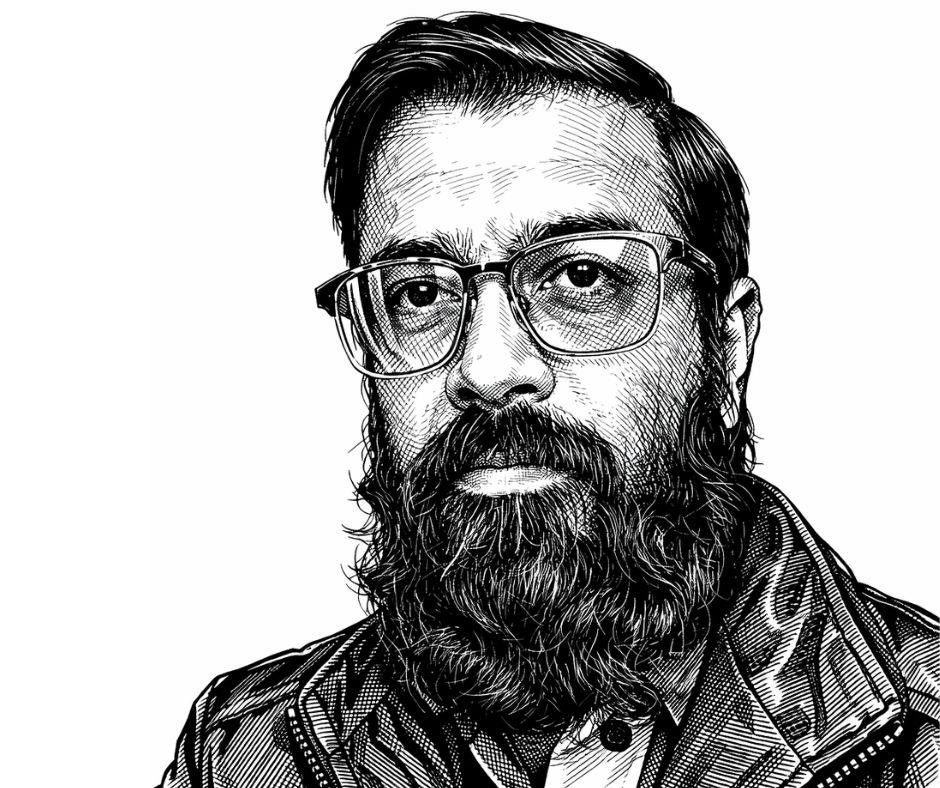
Trishikh Dasgupta
Adventurer, philosopher, writer, painter, photographer, craftsman, innovator, or just a momentary speck in the universe flickering to leave behind a footprint on the sands of time... READ MORE
This story is Free, and if you have found something here that stayed with you, some of my other books (collection of short stories, novels, and more) are available in print and digital editions. They gather many unique journeys, quieter questions, and stories that continue beyond this page.


🙏👍
Aum Shanti
LikeLiked by 2 people
Thank you so much.
LikeLiked by 1 person
You are truly a skilled storyteller. 👌🌟
LikeLiked by 1 person
Thank you so much Ana. Really treasure your appreciation.
LikeLiked by 1 person
A temple lost for centuries. A yogi breathing beneath the earth. A scientist searching for answers. What if the real mystery was not how he survived, but why time allowed him to return? Saturn represents the waiting. Ketu represents withdrawal. The 8th house hides the secret. The 12th house opens the door.
LikeLiked by 1 person
Dear Friend, thank you for sharing such a thoughtful interpretation. I especially liked your line, “the real mystery was not how he survived, but why time allowed him to return.” That captures the spirit in which I wanted this story to be read. Whether one approaches it through history, spirituality, astrology, or simply as a legend, each perspective adds another layer to the mystery. Your reflections on Saturn, Ketu, the 8th house and the 12th house offer a fascinating lens through which to view the tale. I appreciate you taking the time to read so deeply and to enrich the conversation around the story.
LikeLiked by 1 person
A beautifully atmospheric and immersive piece of historical fiction. The vivid descriptions of the forgotten temple, the mysteries hidden within its ruins, and the balance between archaeology and legend create a captivating sense of wonder. The storytelling beautifully brings the past back to life and leaves readers eager to uncover the secrets of Bhoota Deula. ✨📖
LikeLiked by 1 person
Dear Safia, thank you so much for your generous and beautifully expressed words. It is deeply rewarding to know that the atmosphere of the forgotten temple and the delicate balance between archaeology and legend resonated with you. My hope was not merely to tell a story, but to invite readers into a place where history whispers, mystery lingers, and imagination fills the spaces that time has left behind. Your appreciation for the world of Bhoota Deula means a great deal to me. Thank you for reading so thoughtfully and for sharing your reflections.
LikeLike
Is it really true? Beautiful story 👏🏼. Sometimes science can’t explain something.
LikeLiked by 1 person
Dear Priti, thank you so much. I’m delighted that you enjoyed the story. The legend of Jatala Sadhu has fascinated people for generations, but whether it is literally true or not remains a mystery. That uncertainty was precisely what drew me to it. Sometimes history leaves questions unanswered, and sometimes science has not yet found every answer. Between those two spaces, legends continue to breathe. Thank you for reading and for sharing your thoughtful comment.
LikeLike
Thank you so much, Trishikh, for the fascinating story that touched my heart! As always, your writing is beyond praise!
Joanna
LikeLiked by 1 person
Dear Joanna, thank you from the bottom of my heart for your wonderfully kind words. Knowing that Centuries Between Breaths touched your heart is the greatest compliment a storyteller could receive. The legend of Jatala Sadhu has lived for generations because it invites us to wonder, and I am grateful that, through this story, I could share a little of that wonder with you. Your constant encouragement and thoughtful support mean more to me than I can express. Thank you for walking this literary journey with me.
LikeLike
Thank you so much, Trishikh, for the beautiful reply! As always, you are more than welcome!
Joanna
LikeLiked by 1 person
hey
LikeLiked by 1 person
Hello.
LikeLike
I really enjoyed this story Trishikh. It makes perfect sense to me that and ascetic could survive underground for hundreds of years.
I loved the line about the river joining the sea, to describe the lack of fearing death. During my last near death experience, while I sat in a sea of sparkling stars of light all-around me, it was clear how easy it would be to just dissolve into that sea as I knew the sea was also me.
I appreciate your skills and power as a story teller.
LikeLiked by 2 people
Dear Katelon, thank you so much for your beautiful and deeply personal reflection. I was especially moved by your description of your near-death experience, of sitting in a sea of sparkling stars and feeling that you could simply dissolve into it because the sea was also you. That is a profoundly evocative image, and it echoes the very spirit behind the line about the river joining the sea. Across many spiritual traditions, death is seen not as an ending, but as a return to something infinitely larger than ourselves.
Whether Jatala Sadhu’s legend is taken literally or symbolically, I wanted the story to explore that quiet transcendence rather than the miracle itself. Knowing that it resonated with your own experience makes your words especially meaningful to me. Thank you for your generous appreciation of my storytelling and for sharing something so personal. It is readers like you who make this journey as a writer truly rewarding.
LikeLike
Another mesmerising thought provoking story from the master story teller. Everyone wants to hear a story and you do an excellent job of telling it. Jatala Sadhu’s story is an awe inspiring one. It’s believable in India as the meditative mind is capable of doing anything it wants.
LikeLiked by 1 person
Dear Sumita, thank you so much for your incredibly kind and encouraging words. Your appreciation means a great deal to me. The legend of Jatala Sadhu fascinated me because it exists in that intriguing space where history, spirituality and mystery quietly meet. Whether one believes it literally or sees it as a powerful symbol of the limitless potential of the meditative mind, it certainly inspires awe. I am truly grateful that you found the story both thought-provoking and engaging. Thank you, as always, for your generous support and for being such a wonderful companion on this storytelling journey.
LikeLiked by 1 person
The honour is entirely mine. It’s a privilege to read your stories and gain so much knowledge from them. That’s what I like best about your stories.
LikeLiked by 1 person
What an amazing story. Beautifully written
LikeLiked by 1 person
Thank you so much. So happy that you liked it.
LikeLiked by 1 person