The jungle always announced strangers long before men could see them. Leaves whispered differently beneath unfamiliar boots. Bamboo sighed with a nervous rhythm. Cicadas that had screamed without pause for hours suddenly fell silent together, as though some invisible conductor had lowered his baton. Even the damp earth carried messages. The smell of crushed fern, wet bark and fresh sweat drifted upon the midnight air before any rifle ever spoke. Rifleman Lachhiman Gurung lifted his head above the edge of the trench and breathed through his nose. “They’re coming,” he whispered.
The two Gurkhas crouching beside him had learnt to trust his instincts. They were older soldiers, hardened by years of campaigning, but the youngest man inside that lonely trench possessed something experience alone could not teach. He listened to the jungle the way shepherds listened to the hills of Nepal.
Nearly a hundred yards behind them lay the main company position of C Company, 4th Battalion, 8th Gurkha Rifles. Between them stretched a narrow jungle track climbing towards the platoon, the only approach an enemy force could use. If that track fell, the company itself would soon follow.
Beyond the trees, unseen in the darkness, flowed the Irrawaddy River. Its broad waters breathed steadily into the humid night. Sweat clung stubbornly to every uniform. Boots remained damp. Rifles gathered moisture as though the jungle wished to reclaim even steel. Lachhiman drew an oily rag along the barrel of his Lee-Enfield. Every click of the bolt sounded louder than thunder.
He was only twenty-seven. Back in Dakhani village, among the green terraces of Tanahun, his mother still believed he looked like a child whenever he smiled. Villagers often joked that he disappeared behind the basket of firewood he carried. At four feet eleven inches, he had never looked like the giant that stories expected soldiers to become. Yet mountains never measured courage by height. His father often reminded him that the smallest pine survived the fiercest storms because it bent where taller trees refused. Remembering those words, a faint smile appeared on his face.
One of the men beside him noticed it. “What are you smiling at?” “My village.” “You are thinking of food.” Lachhiman nodded. “Always.” Their quiet laughter drifted away into the darkness. For a fleeting moment Burma disappeared. He could smell millet bread baking upon a clay hearth, wood smoke curling through stone houses, buffalo bells echoing across misty valleys, and hear his mother’s voice calling him home before darkness covered the mountain paths.
A mosquito whined beside his ear, dragging him back into the Burmese jungle. Silence settled once more. Then came another sound. Not footsteps. Metal. Somewhere ahead, hidden among the bamboo, steel had accidentally struck steel. Every man inside the trench turned towards the darkness. Lachhiman quietly laid his khukri upon the parapet within easy reach. The polished blade caught a sliver of moonlight before vanishing again. “If they come this close,” he murmured, “they will not leave alive.”
Hours had passed without movement, yet none of them believed the night would remain peaceful. Only days earlier the Gurkhas had crossed the Irrawaddy to block the Japanese withdrawal through the Taungdaw Valley. Now B and C Companies found themselves surrounded, cut off from communications and uncertain when relief might arrive. No one spoke of retreat.
Suddenly a bird burst screaming from the canopy. Another answered. Then another. Branches quivered. Bamboo trembled. “They’re here,” Lachhiman whispered. His words had scarcely faded when shadows detached themselves from deeper shadows. Nothing moved directly, but the jungle had come alive.
The first grenade sailed through the moonlight and landed upon the lip of the trench with a dull metallic clink. Without hesitation, Lachhiman snatched it up and hurled it back into the darkness. The explosion tore through the bamboo almost instantly. Japanese voices cried out in surprise. His companions laughed once. Only once.
The second grenade landed inside the trench. Again his arm reacted before thought itself. He grabbed it, twisted and threw it back over the parapet. Another explosion followed, much closer than the first. Splinters hissed through the leaves overhead.
Then came the third. It bounced once upon the muddy floor directly in front of him. His hand reached instinctively. His fingers closed around cold steel. There was no time left. The explosion swallowed everything. For a few terrible seconds there was neither sound nor sight. Only white light and unbearable pain. The blast hurled him backwards against the trench wall. Mud showered over his face. Blood filled his mouth.
When his vision returned, it came only through his left eye. The right side of his world had become darkness streaked with blood. He tried to rise but his right arm would not obey him. Looking down, he saw that his fingers were gone. Torn flesh hung where his hand had been. His sleeve was ripped apart, bone protruded through shattered muscle, and blood poured steadily onto the muddy floor.
Beside him, both Gurkhas cried out in agony. One clutched a shattered shoulder while the other held his bleeding thigh. Both had survived the blast but neither could fight. Smoke drifted slowly upwards. Earth crumbled from the damaged walls. The trench filled with the bitter smell of cordite, wet clay, fresh blood and burned flesh. Then the grenades stopped.
Lachhiman understood why before he heard the shouting. A roar rose from the jungle. Hundreds of voices answered together. The Japanese had finished throwing grenades. Now they were coming.
He reached for his Lee-Enfield. Pain surged through his shattered arm and the rifle almost slipped from his grasp. For a single dreadful heartbeat he wondered whether he could still fight. The answer came almost immediately. He had one good hand left. That was enough.
He rested the rifle upon the parapet and worked the bolt with his left hand. It felt painfully awkward, nothing like the effortless rhythm learnt during training, but the cartridge slid into the chamber.
Beyond the drifting smoke, dark figures emerged shoulder to shoulder between the bamboo. Bayonets glimmered beneath the moon. More soldiers poured onto the jungle track until they seemed to merge into a single advancing wall.
Lachhiman settled the rifle against his shoulder. His shattered right arm could no longer support it. His left arm would now have to become both hands. He drew one slow breath and steadied the sights upon the leading ranks. Somewhere behind them an officer shouted the order to charge. Lachhiman answered with words that had echoed across battlefields wherever Gurkhas had fought. “Come then… Jai Mahakali, Ayo Gorkhali!” His finger tightened upon the trigger. The first shot shattered the night.
The first Japanese soldier fell before he had taken three strides. The second stumbled over the first. The third disappeared in the flash of another muzzle burst. Lachhiman worked the bolt with his left hand, dragged it back, pushed it forward, steadied the rifle against his shoulder and fired again. Every movement sent a fresh wave of agony through his shattered arm, but pain had already become another sound in the jungle, no more distracting than the cries of night birds or the crackle of bamboo splintering beneath boots.
The Japanese came on relentlessly. They had expected a shattered trench occupied by dying men. Instead, every few seconds another rifle report echoed through the valley, each shot arriving with unnerving precision. The narrow jungle track that had seemed an open gateway moments earlier became a funnel of death. Men threw themselves behind tree trunks, crawled through the undergrowth and charged again, only to be met by another bullet from the tiny Gurkha who refused to surrender his post.
Beside him, his two wounded comrades drifted in and out of consciousness. One tried to lift his rifle but collapsed with a cry of pain. The other whispered through clenched teeth, “Lachhiman…” “I’m here.” “They are too many.” Lachhiman never took his eye away from the sights. “So are my bullets.” The answer drew the faintest smile from the wounded soldier before another wave of attackers burst from the darkness.
Time dissolved into a relentless rhythm. Fire. Bolt. Reload. Breathe. Fire again. He stopped counting the enemy after the first dozen. The only numbers that mattered now were the cartridges remaining in his ammunition pouches and the few inches separating the advancing bayonets from the trench. Sometimes the attackers came so close that he could see the sweat upon their faces and hear their boots slipping in the wet clay. Once he saw a young Japanese soldier no older than himself hesitate for the briefest instant before raising his rifle. Lachhiman fired first. The soldier crumpled without a sound, disappearing into the grass as though the jungle had quietly reclaimed one of its own.
Between assaults, memories crept back into his mind uninvited. The smell of wet earth became the terraced fields after the first monsoon in Tanahun. The drifting smoke reminded him of evenings when his mother cooked over a wood fire while his father sharpened a khukri outside the house. He remembered carrying baskets of fodder up steep mountain paths, believing those climbs were the hardest work life could ever demand. He almost laughed. The mountains had been preparing him for this trench all along.
Another assault crashed against the position. The Lee-Enfield roared again. Its smooth bolt, designed to be worked with effortless speed by two strong hands, now obeyed only one blood-soaked left hand. The rifle slipped repeatedly against his shoulder. Each reload took longer than the last. His right sleeve had become a sodden bandage of blood, hanging uselessly beside him, yet he never looked at it again. That arm belonged to the past. The left belonged to the night.
The cries of “Banzai!” rolled through the jungle as the Japanese gathered for another rush. Lachhiman answered each charge with the same quiet determination. “Jai Mahakali, Ayo Gorkhali!” The words were never shouted in anger. They emerged almost like a prayer.
Hours crawled by. The moon slipped lower behind the trees. Smoke hung beneath the canopy until every breath tasted of cordite. The jungle floor became slippery with churned mud and blood. Bodies lay where they had fallen, making the attackers stumble over their own dead. The firing from the company position farther behind rose and fell like distant thunder, but no one could reach the isolated trench. Lachhiman and his two wounded companions stood alone.
At one point a Japanese soldier reached the lip of the trench. Lachhiman instinctively glanced towards the khukri lying where he had placed it before the attack. For a heartbeat he thought he would have to use it. Before the soldier could leap down, another rifle shot at almost point-blank range threw him backwards into the darkness. The khukri remained untouched upon the parapet, glistening silently beneath the fading moon.
Slowly, almost unnoticed, the eastern sky began to pale. The jungle sounds returned one by one. First a solitary bird. Then another. The deafening battle cries became fewer, more scattered. Finally, there came only silence. Lachhiman remained exactly where he was. His finger still rested upon the trigger. His left hand still gripped the rifle. He did not know the attack had ended. He merely waited for the next wave.
When his company finally reached the trench after first light, they found him sitting upright exactly as he had fought through the night. His uniform had stiffened with blood. His right hand was gone. One eye stared sightlessly into the distance. Yet his rifle remained ready across the parapet.
The officers looked beyond him. Bodies covered the jungle track. Later they counted eighty-seven Japanese dead around the company position. Thirty-one lay directly in front of Lachhiman’s trench. Only then did someone gently lower the rifle from his shoulder. The battle, however, was not yet over for him.
The battalion remained surrounded for days before relief finally reached them. Lachhiman lay where the stretcher-bearers had placed him, drifting between sleep and pain beneath the oppressive Burmese heat. Flies gathered constantly upon his blood-soaked bandages and around his ruined eye. They settled upon his wounds faster than weakened hands could brush them away. Comrades expected him to complain about the agony that consumed his shattered body. Instead, whenever anyone asked how he was, he answered with quiet irritation. “These flies…” Nothing more. Not his missing hand. Not the blindness in one eye. Not the wounds scattered across his body. Only the flies.
Months later, on 19 December 1945, in the grandeur of the Red Fort in Delhi, Lord Louis Mountbatten placed the Victoria Cross into the left hand of the quiet Gurkha from Tanahun. His elderly father had travelled for eleven exhausting days from their mountain village so that he could witness the moment. The medal recognised extraordinary courage, yet no piece of bronze could truly measure what had happened in that lonely trench beside the Irrawaddy.
Some battles are won by armies. Some by generals. And once, on a humid Burmese night in May 1945, one was held by a twenty-seven-year-old Gurkha who stood just four feet eleven inches tall, armed with a Lee-Enfield rifle, an untouched khukri, one good hand, and a courage that refused to surrender.
Long after the echoes of the gunfire faded through the jungle, one cry continued to march through history, carried wherever Gurkhas shouldered their rifles and tightened their bootlaces before battle.
Jai Mahakali, Ayo Gorkhali!
Copyright © 2026 TRISHIKH DASGUPTA
Ayo Gorkhali is an original work of historical fiction inspired by the extraordinary courage of Havildar Lachhiman Gurung VC of the 4th Battalion, 8th Gurkha Rifles during the Battle of Taungdaw in Burma on the night of 12–13 May 1945. While the story draws upon documented historical events, military records, the official Victoria Cross citation, geographical settings, and certain factual details associated with Havildar Gurung’s service, the narrative, characters, conversations, thoughts, emotions, descriptions, chronology, and dramatic interpretations are the author’s own creative imagination. It is intended as a literary tribute to one of history’s most remarkable acts of battlefield courage and should not be regarded as a historical or biographical record.
No part of this story may be reproduced, distributed, transmitted, stored in a retrieval system, or translated into any language or reproduced in any form or by any means, including printing, photocopying, recording, scanning, or other electronic or mechanical methods, without the prior written permission of the author, except in the case of brief quotations embodied in critical reviews, academic commentary, and certain other non-commercial uses permitted by copyright law.
This story is published exclusively on StoryNookOnline.com. Any unauthorised reproduction, distribution, translation, adaptation, or publication on any website, social media platform, digital service, printed medium, or artificial intelligence training dataset without the express written consent of the author is strictly prohibited.
For permission requests, send an email to the author at trishikh@gmail.com or get in touch with Trishikh on the CONTACT page of this website.
ABOUT THE AUTHOR
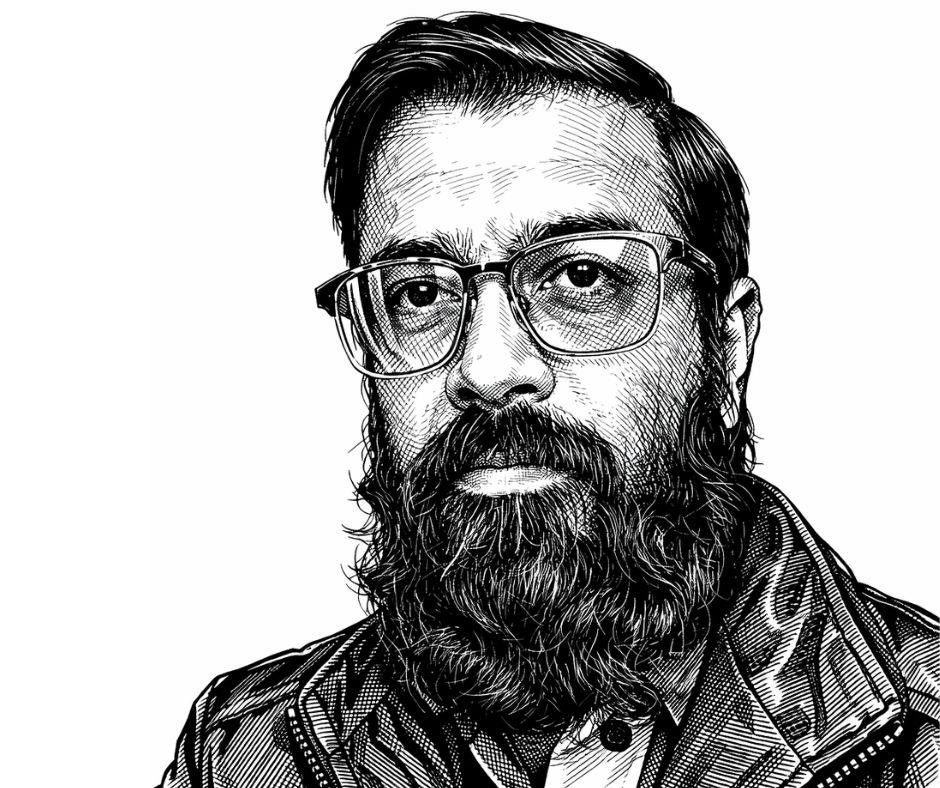
Trishikh Dasgupta
Adventurer, philosopher, writer, painter, photographer, craftsman, innovator, or just a momentary speck in the universe flickering to leave behind a footprint on the sands of time... READ MORE
This story is Free, and if you have found something here that stayed with you, some of my other books (collection of short stories, novels, and more) are available in print and digital editions. They gather many unique journeys, quieter questions, and stories that continue beyond this page.


What an incredibly powerful piece of storytelling! The very first lines pulled me straight into the Burmese jungle—the whispering leaves, nervous bamboo, suddenly silent cicadas, and the smell of wet earth creating an atmosphere filled with impending danger.
I was especially moved by the contrast between Lachhiman Gurung’s small physical stature and the enormous courage within him. His memories of his village, his mother, food, and the mountains of Nepal make him feel not merely like a soldier in a historical account, but like a real human being with a home, a family, and dreams.
LikeLiked by 2 people
Dear Verma’ji,
Thank you so much for your thoughtful words. It means a great deal that the opening transported you into the Burmese jungle, because creating that atmosphere was one of my biggest goals. I wanted readers to hear the silence before the battle as much as the battle itself.
I’m especially happy that you connected with Lachhiman Gurung as a human being rather than simply as a decorated soldier. History rightly celebrates his extraordinary courage, but behind every medal is someone who misses home, remembers a mother’s cooking, and carries the warmth of family into the darkest moments. Bringing that quieter side of him to life was my humble tribute to an extraordinary man.
Your encouragement is deeply appreciated. Thank you for reading so attentively and for sharing your reflections.
LikeLiked by 1 person
Thank you, Trishikh, for describing so eloquently the horror of war and the tragedy of the families of those who died fighting. We must never forget their bravery.
Joanna
LikeLiked by 3 people
Dear Joanna,
Thank you for your beautiful and heartfelt words. I couldn’t agree more. Beyond the strategies, victories and medals, every war leaves behind empty chairs at family tables and loved ones whose sacrifices are rarely recorded in history.
Lachhiman Gurung’s courage is rightly remembered, but countless others gave everything without recognition. If this story encourages even a moment of reflection on their bravery and the human cost of war, then it has achieved what I hoped it would.
Thank you for reading so thoughtfully and for reminding us why such stories continue to matter.
LikeLike
Thank you, Trishikh, for the wonderful reply! As always, you are more than welcome!
Joanna
LikeLiked by 1 person
🙏👍
Aum Shanti
LikeLiked by 2 people
Thank you. I always treasure your appreciation for my stories.
LikeLiked by 2 people
What a powerful and immersive opening. The vivid descriptions made me feel as if I were standing in the jungle alongside the Gurkhas. A fitting tribute to the extraordinary courage, instincts, and sacrifice of Rifleman Lachhiman Gurung. Looking forward to reading more!
LikeLiked by 3 people
Dear Safia,
Thank you so much for your kind words. I’m delighted that the opening drew you into the jungle alongside the Gurkhas. I wanted the sights, sounds and silence of that night to become as much a part of the story as the battle itself.
Lachhiman Gurung’s courage is legendary, but I hoped to honour not just his heroism, but also the quiet determination and humanity that lay behind it. Your appreciation of that means a great deal to me.
Thank you for reading so thoughtfully. I look forward to sharing many more journeys through history with you.
LikeLiked by 1 person
Well told, Trishikh
LikeLiked by 2 people
Thank you so much.
LikeLiked by 2 people
What an amazing story
LikeLiked by 2 people
Thank you so much. So glad that you liked it. Nothing makes my day better than a little bit of appreciation for one of my stories.
LikeLiked by 1 person
What a powerful story. I came back for a second read.
LikeLiked by 2 people
Thank you so much. So glad that you liked the story so much. If you came back for a second mean, certainly means that I have done something right with the story. Your appreciation really cheers myy day.
LikeLiked by 2 people
You’re most welcome!
LikeLiked by 2 people