In 1980, Makhdumpur was the sort of town that seemed to have been left halfway between two centuries. It sat in the Magadh country between Jehanabad and Gaya, though Jehanabad was still part of Gaya district then, and nobody in Makhdumpur cared much for the distinctions made by maps in distant government offices. The town had a railway line, a bazaar, a block office, a government hospital that smelled of phenyl and neglect, a cinema hall that changed its posters only when the monsoon arrived, and enough tea shops for every man to spend half his working day discussing politics without ever having to stand for election. Beyond the last row of brick houses, the Jamuna wandered through the fields, brown and sluggish in summer, swollen and quarrelsome during the rains. Ten or eleven kilometres to the southeast, the dark shoulders of Barabar rose from the plain, ancient and indifferent, their caves cut into stone long before Makhdumpur had a name.
The town had other landmarks, but none was as important as the little barber’s shop at the bend of the bazaar. It was hardly a shop at all. Two wooden posts supported a corrugated tin roof, a cracked mirror hung against a wall blackened by years of smoke, and a narrow wooden bench served as waiting room, shaving platform and, when necessary, political meeting hall. A faded calendar of a goddess hung beside a calendar advertising a fertiliser company. On a shelf stood three bottles of hair oil, two cakes of shaving soap, a chipped aluminium mug and a glass jar containing something that had once been talcum powder and had now acquired the colour of dust.
The barber was called Chhedi. Nobody remembered his full name. He was Chhedi Hajjam to everyone from the railway porter to the block development officer, and even the schoolmaster who had once tried to address him as Chhedi Prasad had abandoned the effort after hearing half a dozen customers laugh. Chhedi was a thin, wiry man with a small moustache, restless eyes and the physiognomy of someone who had spent a lifetime studying faces. He could tell, merely by the way a man sat in his chair, whether he had slept well, whether his wife had quarrelled with him, whether he owed money and whether he had come to the shop for a haircut or for conversation. Mostly, men came for the latter. The razor merely gave them an excuse.
By ten in the morning, the shop would be thick with the smells of hair oil, sweat, dust, tobacco and the sweet, slightly rotten fragrance of overripe bananas from the fruit stall next door. Flies moved lazily over the mirror. A transistor radio, usually balanced on a wooden crate, crackled with news from Patna, film songs from Bombay or the stentorian voice of a politician promising that the country was about to enter a glorious new age.
Chhedi listened to everything. He knew that the mukhiya of a nearby village had secretly mortgaged two bighas of land. He knew which constable took money at the police outpost. He knew that the schoolmaster who lectured children about discipline had been seen drinking mahua behind the grain market. He knew that the block officer’s younger brother had failed his matriculation examination twice and had nevertheless acquired a government job. He also knew when not to speak. That was perhaps the reason people trusted him.
One January morning, just after sunrise, Chhedi was shaving Lallan Singh, a local grain merchant whose paan had stained his lips the colour of dried blood. “Did you hear?” Lallan asked. Chhedi stretched the skin below his customer’s cheek and drew the razor down. “Hmm.”
“About the woman.” “What woman?” “The one near Barabar.” Chhedi rinsed the razor. “What did she do?” “Nothing.” “Then why are you talking about her?” Lallan glanced at the doorway. “They say she walks there at night.”
“Many people walk at night.” “Not like this one.” Chhedi smiled. “well she has not yet come to me for a haircut?” Lallan laughed, “women do not visit the barber shop,” but his laugh ended quickly. “They say she carries a lantern.” “Then perhaps she is looking for the road.” “She doesn’t need a road.” Lallan lowered his voice. “She is dead.” The razor paused against his cheek.
Outside, a bicycle bell rang twice. A bullock cart groaned through the bazaar. Somewhere a woman shouted at a child. From the railway line came the long, mournful whistle of a passing train. Chhedi resumed shaving. “Who saw her?”
“Ramotar.” “Ramotar sees ghosts whenever he drinks.” “He was sober.” “That is more serious.” Lallan’s face became grave. “They say she is the woman who disappeared thirty years ago.” Chhedi looked at him through the mirror. For the first time that morning, he did not smile. He knew the name. Everyone of a certain age in Makhdumpur knew it. Shanti.
In 1950, when Makhdumpur was little more than a bazaar strung along the road and the railway, Shanti had been nineteen. She was the daughter of a poor cultivator from a hamlet beyond the Jamuna, known for her singing voice and her stubbornness. One summer, she had disappeared.
The story had changed with every telling. Some said she ran away with a man from Gaya. Others said she had been taken by relatives. One version claimed she had fallen into the river. Another said she had gone mad and become a wandering mendicant. Her family had eventually stopped asking questions. That was how many things disappeared in those days. Not with an ending, but with silence.
Chhedi had been a boy then. He remembered Shanti. He remembered the blue sari. He remembered the silver anklets. Most of all, he remembered the man who used to come into his father’s barber shop and sit silently while his beard was trimmed. Bansidhar. The son of the largest landholder in that part of Makhdumpur. A handsome young man with a haughty face and polished shoes, who never looked directly at Chhedi’s father. Bansidhar had disappeared from town shortly after Shanti vanished. People said he had gone to Patna. Then they said Delhi. Then nobody said anything.
Three weeks after Lallan told him about the woman with the lantern, Chhedi saw her himself. It was a cold evening. The winter fog had descended early, turning the bazaar lamps into blurred yellow halos. Chhedi had stayed late because a railway clerk had come for a shave after his shift. By the time he locked the shop, the town had begun to settle into its nocturnal quiet. A dog barked somewhere near the grain market. A bicycle passed. Then silence.
Chhedi was walking home when he saw a light on the road towards Barabar. It moved slowly. A lantern. At first he thought it was a villager returning from a late visit. Then the figure stepped out of the fog. A woman. She wore a blue sari. Her hair hung loosely around her shoulders. She stood beside the road and looked at him. Chhedi stopped.
The woman raised the lantern. For one strange instant, the light fell upon her face. She was young. Far too young. Chhedi’s breath caught. The face was the face he remembered from thirty years earlier. Then she turned and began walking towards the hills. “Shanti!” he called. The woman stopped. The lantern trembled in her hand. Then she disappeared into the fog. Chhedi did not sleep that night.
For the next several days he told nobody. Then, one afternoon, an old customer named Rahim Ansari came to the shop. Rahim had worked for the railway since before Independence and had the habit of sitting quietly while Chhedi shaved him. Without looking up, Rahim said, “You saw her.” Chhedi’s hand stopped. “Who?” “Don’t obfuscate, Chhedi.” The old man’s eyes met his in the mirror. “Shanti.”
For a long moment, neither spoke. Then Rahim said, “I thought so.” “You saw her too?” “No.” “Then how do you know?” “Because I saw her once when she was alive.” Rahim told him the story.
In 1950, Shanti had been in love with Bansidhar. It was not the sort of love that Makhdumpur approved of. Her family was poor. His family owned land. There was no question of marriage. They had planned to run away. The plan had been discovered. Shanti had gone to Barabar to meet Bansidhar before leaving for Gaya. Bansidhar never arrived. Instead, two men from his household found her. Rahim had been at the railway halt that evening and had seen them take her away in a bullock cart. “Why did you say nothing?” Chhedi whispered. Rahim’s old eyes filled with shame. “Because I was twenty-two.” That was all. Because he was twenty-two. Because they were powerful. Because the police would not listen. Because the village elders would advise silence. Because the poor have always been expected to possess an inexhaustible resilience.
Rahim told him what happened next. Shanti was taken to an abandoned stone shed near Barabar. She escaped during the night and fled towards the caves. One of the men followed her. In the morning, they found her sandals near the hillside. No body was ever found. Bansidhar left Makhdumpur soon afterwards. “Why are you telling me this now?” Chhedi asked. “Because Bansidhar came back.”
Chhedi looked up. “When?” “Last month.” The news struck him like a slap. “Where is he?” “Old Singh house. He has been staying there.” The next morning, Chhedi went to see him. Bansidhar was seventy now. He had returned as a shrivelled old man with a walking stick, cataracts and a cough that rattled deep inside his chest. Time had done its work without mercy. The polished shoes were gone. The haughty face had collapsed into folds. But Chhedi recognised him immediately.
Bansidhar recognised Chhedi too. “You are the barber’s son.” “I am the barber.” The old man smiled faintly. “Still cutting hair?” “Still remembering faces.” Something passed across Bansidhar’s expression. Fear. It was unmistakable. Chhedi sat down. “Shanti.” Bansidhar closed his eyes. Outside, a crow called from a neem tree. “She died,” he whispered. “What happened?” “I was afraid.” “Of what?” “My father.”
Chhedi said nothing. Bansidhar’s confession came slowly, in fragments. He had intended to run away with Shanti. His father discovered the plan and threatened to kill her family. Bansidhar lost his nerve. He did not meet her at Barabar. He allowed the men to take her. But she escaped. And when he later went looking for her, he found her hiding inside one of the caves. “She was alive,” he said.
Chhedi leaned forward. “Then what happened?” “I left her there.” “Why?” Bansidhar began to weep. “Because I was a coward.” The words hung in the shanty. “She was frightened. She had injured her foot. She asked me to take her away. I promised I would return with food.” He stopped. “I never returned.” “How long was she there?” “I don’t know” “And then?” “I don’t know.” Chhedi stared at him.
For thirty years, Bansidhar had carried that uncertainty. Perhaps that was punishment enough. Perhaps it was not. The following morning, Chhedi closed his shop. He borrowed a bicycle and rode towards Barabar. The winter sun was pale. Mustard flowers spread across the fields like yellow cloth. Smoke from cow-dung fires drifted low over the villages, mingling with the smell of damp earth, woodsmoke and frying litti. Women in faded saris walked along the road carrying brass pots. Children ran barefoot behind buffaloes. A tractor passed, coughing black smoke into the cold air.
The road became rougher as he approached the hills. Barabar rose before him, austere and dark. The caves had been there for more than two thousand years, carved into granite by hands that had vanished into the anonymity of history. Their walls were polished so smoothly that even the weak winter light seemed to slide across them. Ancient inscriptions survived where men had carved their names and intentions into stone.
Chhedi entered one of the caves. His footsteps returned to him. He whispered, “Shanti.” The cave answered. “Shanti.” He heard another sound. A soft metallic jingling. An anklet. He turned. Nothing. Then the smell came. Not decay. Not incense. Jasmine. The faint fragrance of jasmine oil. The same scent he remembered from his childhood. He walked deeper into the cave. “Shanti?” The darkness remained still.
Then, from somewhere beyond the chamber, came a woman’s voice. “Chhedi.” He closed his eyes. When he opened them, he saw her. Blue sari. Lantern. Bare feet. Young face. She stood at the entrance, looking towards the sunlight. “Are you dead?” he asked. She smiled. “Does it matter?” Chhedi could not answer. She looked towards Makhdumpur. “Tell him I waited.” “Bansidhar?” She nodded. “Tell him I waited for two days.” The lantern flame flickered. “And then?” he looked at him. “I stopped waiting.”
That evening, Chhedi returned to Makhdumpur. He went straight to the Singh house. Bansidhar was sitting alone. Chhedi stood before him. “She waited two days.” The old man began to tremble. “Then she stopped waiting.” Bansidhar bowed his head. For a long time there was no sound except his breathing. “I loved her,” he whispered. “No,” Chhedi said. The old man looked up. “You loved yourself more.” Bansidhar did not argue. He died three nights later.
Nobody in Makhdumpur called it a mysterious death. The doctor signed the certificate. The priest performed the rituals. Men discussed the property. Women discussed the funeral. By the following week, the bazaar had found newer matters to occupy itself with. Chhedi reopened his shop. The transistor still crackled. The flies still gathered. Men still came to have their hair cut and their secrets heard. But sometimes, just before sunset, when the bazaar turned the colour of old brass and the smell of frying pakoras mingled with cow dung, dust and paan, Chhedi would look towards the road to Barabar.
Once, months later, he saw a woman walking there with a lantern. She stopped. Was she who he thought her to be? He was not sure. He did not call her name. He simply watched. The woman turned towards the hills. The lantern became smaller. Then smaller still. Until it was only a pinprick of light against the gathering dusk.
Chhedi stood beside his little shop, razor in hand, while the last train of the evening passed beyond the fields. Its whistle rolled across Makhdumpur. For a moment, the sound seemed to come from everywhere at once, from the railway tracks, from the river, from the dusty lanes and from the ancient granite chambers hidden among the hills. Then it faded. The town settled back into itself. And Makhdumpur, as it had done for generations, carried on. Keeping its secrets. Growing over its wounds. Remembering only what it could bear to remember.
Author’s Note
Makhdumpur is a work of fiction, but its landscape is real. I have always been fascinated by places that seem to exist quietly at the edge of history, carrying the weight of generations without ever appearing in the larger stories of a country. Makhdumpur, in Bihar’s Magadh region, is one such place. For this story, I imagined the town as it might have felt in 1980, when life moved more slowly, roads were rougher, information travelled by word of mouth, and the distance between power and poverty could be measured in little more than a few dusty lanes.
The story also draws inspiration from the ancient Barabar Caves, whose austere granite chambers and extraordinary echoes provide a fitting counterpoint to the ordinary lives of the people around them. The caves have witnessed more than two thousand years of human history, while the people of Makhdumpur have carried their own smaller histories, some remembered and others deliberately forgotten.
Chhedi, Shanti, Bansidhar and the events surrounding them are entirely fictional. Yet the silence, inequality, fear and social hierarchies that shape their story belong to a recognisable world. Sometimes, a town remembers what its people have chosen to forget.
Copyright © 2026 TRISHIKH DASGUPTA
No part of this story may be reproduced, distributed, transmitted, stored in a retrieval system, translated, adapted, or reproduced in any form or by any means, including printing, photocopying, recording, scanning, or other electronic or mechanical methods, without the prior written permission of the author, except in the case of brief quotations embodied in critical reviews, academic commentary, and certain other non-commercial uses permitted by applicable copyright law.
This story is published exclusively on StoryNookOnline.com. Any unauthorised reproduction, distribution, translation, adaptation, or publication on any website, social media platform, digital service, printed medium, or artificial intelligence training dataset without the express written consent of the author is strictly prohibited.
For permission requests, send an email to the author at trishikh@gmail.com or get in touch with Trishikh on the CONTACT page of this website.
ABOUT THE AUTHOR
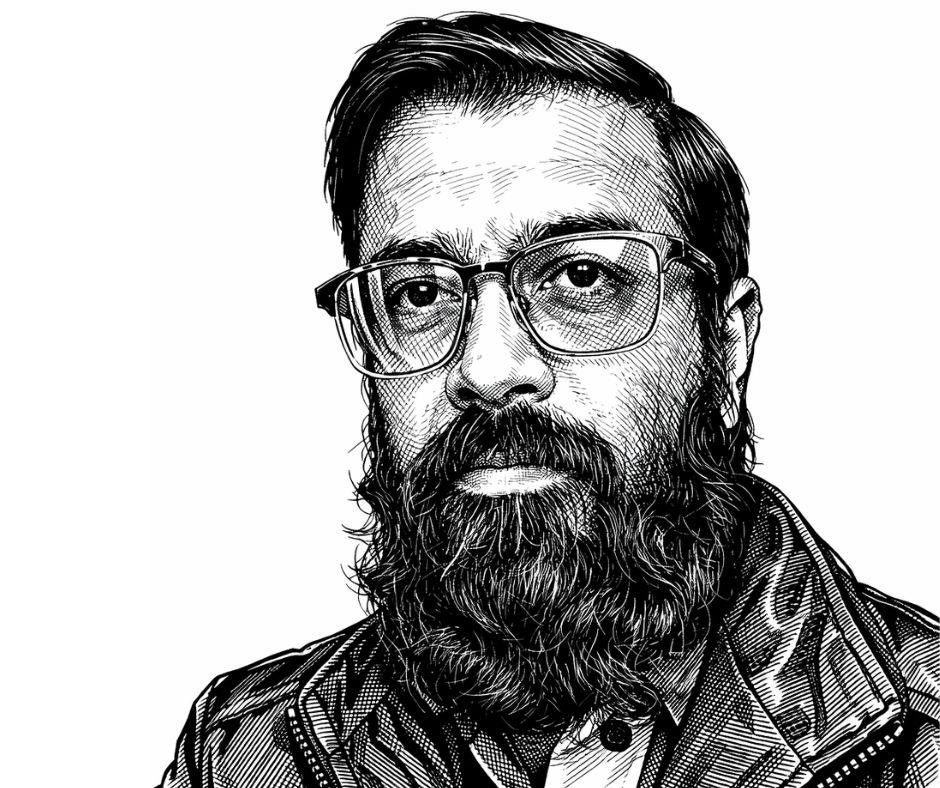
Trishikh Dasgupta
Adventurer, philosopher, writer, painter, photographer, craftsman, innovator, or just a momentary speck in the universe flickering to leave behind a footprint on the sands of time... READ MORE
This story is Free, and if you have found something here that stayed with you, some of my other books (collection of short stories, novels, and more) are available in print and digital editions. They gather many unique journeys, quieter questions, grand adventures, hair-raising anticipation, and stories that continue beyond this page.
 Weekend Stories by Trishikh
What a haunting and beautifully crafted story! “The Road That Vanished” brilliantly blends history, mystery, folklore, and human guilt. The atmosphere of 1980s Makhdumpur feels remarkably authentic, while the characters—especially Chhedi, Shanti, and Bansidhar—carry the emotional weight of the narrative.
I particularly loved how the ancient Barabar Caves become more than a setting; they almost feel like silent witnesses to a forgotten tragedy. The ending is subtle yet deeply moving, leaving the reader with a lingering sense of loss, memory, and unfinished justice.
LikeLiked by 2 people
Thank you for this wonderful story. I have been melancholic lately. And this acrually helped cheer me up.
LikeLiked by 3 people
🙏👍
Aum Shanti
LikeLiked by 2 people
Society may bury a truth, but it cannot always bury its memory!
LikeLiked by 2 people
What you are saying is so deep. I completely agree.
LikeLiked by 1 person