The first thing they noticed was what was missing. Rajkumari Dasi had once possessed enough gold to make even the wealthiest women of the neighbourhood envious, yet that August morning her wrists were bare, her ears empty and her neck stripped of every ornament. The jewellery had vanished, but the dark marks around her throat remained, livid against her skin. The second thing they noticed was the silence. The house in Pachu Dhobani Lane was never silent. Women quarrelled over water, servants shouted from the courtyard, brass vessels clanged against stone, and from some distant room there was almost always the nasal rise and fall of a Bengali classical song accompanied by the cacophony of an old harmonium and an untuned Tanpura. Yet on that August morning of 1884, when Rajkumari Dasi was found dead on a mat inside her room, the house seemed to be holding its breath. Nobody knew then that the most dangerous woman in Calcutta was standing among them.
Trailokyatarini watched the policemen enter. She brought water. She arranged the women in the courtyard. She answered questions with astonishing candor, remembering who had spoken to Rajkumari the previous evening, who had gone upstairs, who had risen before dawn. Her face was composed, very helpful. Only once, when a constable lifted the dead woman’s arm and examined the dark marks around her throat, did something flicker across Trailokyatarini’s physiognomy. It vanished so quickly that nobody noticed. Nobody except the detective who had already heard her name. Daroga Priyanath Mukhopadhyay had learned, years earlier, that certain faces followed death like shadows.
In the Calcutta of his time, the city ended and began in layers. Beyond the white facades and gaslit streets of the European quarter lay the crowded Black Town, where narrow lanes smelt of coal smoke, stale flowers, frying oil, sewage and wet earth. Carriages rattled past bullock carts. Sailors staggered out of taverns. Temple bells mingled with the cries of hawkers. At night, the city seemed to gather its secrets into the drains and courtyards, where they fermented until dawn. It was a city where a woman could disappear without anyone asking where she had gone.
Trailokyatarini had arrived from a remote village in Burdwan as a girl, carrying with her the fragile expectations of a respectable Hindu household. She had been married young and widowed young, before she had properly understood either marriage or widowhood. The world that should have protected her instead stripped her of colour, desire and choice. Somewhere along that long descent, a man named Gaur entered her life and carried her towards Calcutta. He did not carry her towards freedom. He carried her towards a neighbourhood that never slept, illuminated at night by a thousand lamps, yet dark in its soul as a moonless night.
At first she did not understand what the place was. Then she understood too much. The rooms were painted with cheap colours that looked bright by daylight and sordid after sunset. Perfume struggled against sweat, betel juice, incense and the smell of open drains. Men came laughing and left with their faces altered. Women learnt quickly that beauty was a currency that depreciated every day.
Trailokyatarini learnt faster than most in the unforgiving world of Sonagachi, Asia’s oldest and largest flesh market. She possessed beauty, but beauty alone would not have made her formidable. She possessed memory. She could read a man’s vanity, his greed, his appetite and his fear within minutes. She knew when to flatter and when to remain silent. Within years she had become prosperous, then notorious. A large house, servants, jewellery and armed guards surrounded her. Yet prosperity did not make her free.
Then came Kali Babu. Whether he loved her or merely understood how completely she needed to be loved, nobody could say. Trailokyatarini surrendered her money, her house and eventually the keys to her life. Kali Babu became the master of her household. Together they entered darker enterprises. There were fraudulent marriages, missing girls and schemes designed to extract money from desperate families. When Kali Babu was finally arrested for a murder connected with stolen jewellery, Trailokyatarini spent almost everything she possessed trying to save him. She failed and he was hanged. Before his death, he warned her not to confess anything, and she obeyed.
For a while, grief made her withdraw from the world. She took care of Hari, Kali Babu’s young son, and the boy became the one tender thing left to her. Yet poverty is a patient animal. It waits outside the door. It watches a mother count coins. It listens to a child ask for food. That was when the old darkness returned.
There was an abandoned garden house near Maniktala, swallowed by weeds and silence. At its centre lay a pond whose green surface was usually unbroken except by insects, fallen leaves and the occasional ripple of a fish. Trailokyatarini began telling women about a holy man who could bless their jewellery and make their wealth multiply. The promise was absurd, but greed does not require reason. It requires only hope.
She would choose women who wore gold. She would lead them through the overgrown garden, past the shuttered house and towards the pond. Before meeting the holy man, she told them, they must bathe. Their jewellery had to be removed and kept safely with her. The first woman disappeared. Then another. Then another. Five women, over roughly three years, died in the same sinister manner. Their bodies were recovered from the waters around Maniktala.
The city murmured. The police investigated. But Calcutta was a vast machine for swallowing evidence, and Trailokyatarini was clever. She changed nothing about herself. That was her genius. She continued to laugh, sing, entertain, bargain and walk through the streets as though death had nothing to do with her. The dead had no voice. The living had no certainty.
Once, she was caught. A woman named Angurbala survived an attempt to drown her and reported what had happened. Trailokyatarini was arrested. Yet the evidence collapsed. A corrupt or compromised policeman, sympathetic witnesses and the uncertainties of the law allowed her to walk free. Daroga Priyanath never forgot her.
Years later, when he saw her name connected to Rajkumari’s death, something cold moved through him. He went to Pachu Dhopanir Gali and examined the room. Rajkumari had been strangled. The marks around her throat suggested that her killer had sat upon her chest and throttled her. More troubling still, the considerable jewellery she was known to possess had disappeared. The women spoke of a quarrel, of movements in the night, of a shadow on the staircase. Trailokyatarini was everywhere and nowhere. She brought the police water. She offered information. She seemed almost eager to help. It was too much.
Priyanath watched her from behind a newspaper. She did not know he was there. He studied the face that had once fooled an entire city. The physiognomy was older now. The famous beauty of Sonagachi had hardened into something more difficult to name. Her eyes were restless but not frightened. She seemed irritated rather than afraid. Priyanath knew he could arrest her. He also knew that arresting Trailokyatarini without proof would accomplish nothing. So he chose a different weapon. He arrested Hari.
The news travelled through the house like a knife. By evening, everyone had heard that Trailokyatarini’s son had been implicated in Rajkumari’s murder. One woman claimed she had seen Hari entering Rajkumari’s room at night. Another swore he had been seen carrying something downstairs. The accusations grew with every retelling.
Trailokyatarini broke. She screamed that Hari was innocent. She clutched Priyanath’s feet. She begged. He remained silent. Then someone told her that if Hari were convicted, he might hang. The change in her was terrible. The woman who had watched five women vanish into a pond without flinching suddenly seemed to become very small. She knelt on the floor, shaking, her hair coming loose, her breath coming in broken gasps.
“His life is not worth mine,” she whispered. “Take me instead.” Priyanath looked at her. “Why should I arrest you?” Her eyes lifted. “I killed Rajkumari.” The words fell into the room with the weight of stones. She told them where the jewellery was hidden. She told them about the poisoned sweets. She named her accomplice, Priyabala. The police searched her room and found the concealed ornaments.
For the first time, Trailokyatarini had no escape. On 3 September 1884, she was sentenced to death. The city had discovered its monster. But monsters, Priyanath would later understand, are rarely born whole.
He visited her before the execution. The prison was damp and smelled of iron, lime and human sorrow. Through the bars, he saw not the famous woman of Sonagachi, not the killer who had sent five bodies into the dark water of Maniktala, but an exhausted mother sitting on the floor. She asked about Hari. Only Hari. Would he eat? Would someone look after him? Would he be alone? Priyanath listened.
Perhaps he expected remorse. Perhaps he expected madness. What he saw instead was something more disturbing: a fragment of tenderness surviving inside a life that had become almost entirely monstrous.
Outside, Calcutta continued as though nothing had happened. Tram rails had not yet scarred the streets. Carriages rolled through the dawn. Vendors called out their wares. Conch shells sounded from distant houses. Somewhere, a woman laughed. And somewhere else, the pond at Maniktala lay beneath the morning mist. For years afterwards, people remembered the gold. They remembered the five women. They remembered the name Trailokyatarini and the strange fact that a woman in nineteenth-century Calcutta had killed again and again long before the world became familiar with the phrase serial killer.
But there was something else in that story, something more eldritch than the pond, more inexorable than the gallows. It was the silence. The silence of women whose deaths had first been dismissed as misfortune. The silence of a city that had grown accustomed to losing its poor. And the silence inside Trailokyatarini herself, where grief, hunger, love, greed and violence had lived together for so long that even she could no longer tell which one had first opened the door.
On the morning she was taken away, the sky over Calcutta was pale and without mercy. Trailokyatarini walked towards her death. Behind her, the city woke, and far away, in the abandoned garden at Maniktala, the pond lay beneath the morning mist, its surface calm and inscrutable, giving no hint of what once lay beneath the still water.
Author’s Note
Beneath the Still Water is inspired by the disturbing life and crimes of Trailokyatarini, one of nineteenth-century Calcutta’s most notorious women criminals. Long before the modern expression “serial killer” entered popular vocabulary, the city had already witnessed a woman whose name became associated with a succession of murders, deception and stolen jewellery.
The story draws upon accounts of the period, particularly the writings associated with Daroga Priyanath Mukhopadhyay, the celebrated detective of colonial Calcutta whose Darogar Daptar recorded many of the crimes and investigations of his time. Trailokyatarini’s story is particularly haunting because of the contrast within it. She rose from a life of deprivation to become a prosperous and influential woman in Sonagachi, yet somewhere along that journey she became involved in a series of crimes that would eventually lead her to the gallows.
The women who disappeared around Maniktala, the stolen jewellery, the murder of Rajkumari Dasi, the involvement of Priyabala, and Priyanath’s investigation form the historical skeleton of this story. The surviving accounts, however, do not always provide the certainty or detail that a modern reader might expect. I have therefore taken the liberty of fictionalising scenes, conversations, motivations and descriptions of people and places in order to bring this forgotten chapter of Calcutta’s history to life.
What interests me most about Trailokyatarini is not merely the question of how she killed, but how a woman could move from victimhood to power and, eventually, to violence. The darkness in this story is therefore not confined to the pond at Maniktala. It lies in the circumstances that surrounded her, in the society that allowed vulnerable women to disappear, and perhaps most disturbingly, in the human capacity for darkness to grow quietly beneath an otherwise ordinary life.
The pond is no longer a secret. The murders were eventually discovered, the killer was exposed, and Trailokyatarini paid the ultimate price. Yet the image of those still waters has remained with me. Beneath their calm surface lies a history that Kolkata almost forgot.
This is my fictionalised attempt to make that history speak again.
Copyright © 2026 TRISHIKH DASGUPTA
No part of this story may be reproduced, distributed, transmitted, stored in a retrieval system, translated, adapted, or reproduced in any form or by any means, including printing, photocopying, recording, scanning, or other electronic or mechanical methods, without the prior written permission of the author, except in the case of brief quotations embodied in critical reviews, academic commentary, and certain other non-commercial uses permitted by applicable copyright law.
This story is published exclusively on StoryNookOnline.com. Any unauthorised reproduction, distribution, translation, adaptation, or publication on any website, social media platform, digital service, printed medium, or artificial intelligence training dataset without the express written consent of the author is strictly prohibited.
For permission requests, send an email to the author at trishikh@gmail.com or get in touch with Trishikh on the CONTACT page of this website.
ABOUT THE AUTHOR
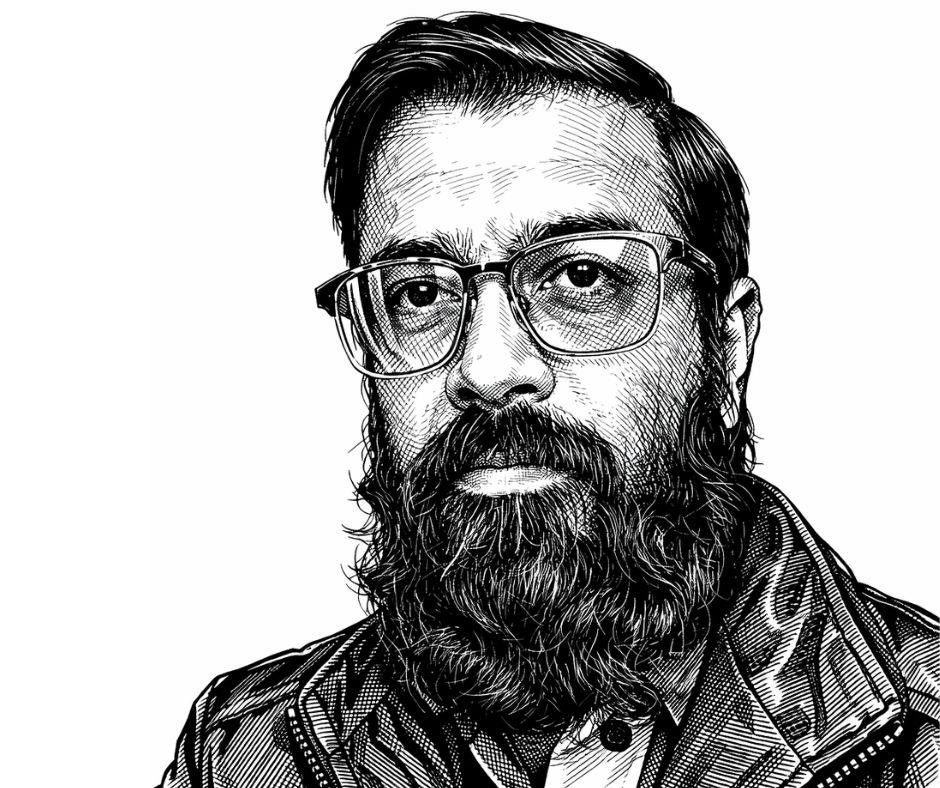
Trishikh Dasgupta
Adventurer, philosopher, writer, painter, photographer, craftsman, innovator, or just a momentary speck in the universe flickering to leave behind a footprint on the sands of time... READ MORE
This story is Free, and if you have found something here that stayed with you, some of my other books (collection of short stories, novels, and more) are available in print and digital editions. They gather many unique journeys, quieter questions, grand adventures, hair-raising anticipation, and stories that continue beyond this page.
 Weekend Stories by Trishikh
🙏👍
Aum Shanti
LikeLiked by 1 person
Thank you so much.
LikeLike
A powerful and unsettling story, but very interesting. I liked how it blends history with mystery and reveals a little-known aspect of life during that era. The ending leaves a profound feeling and much to ponder.
LikeLiked by 2 people